What a Cabin Air Filter Actually Does
Every time you switch on your car's heat, air conditioning, or fan, outside air is pulled into the vehicle through the HVAC system. Before that air reaches the vents inside the cabin, it passes through the cabin air filter. The filter's job is to physically capture particles - dust, pollen, mold spores, insects, and road grime - so they don't circulate around you while you drive.
Most cabin air filters are made of pleated paper or a synthetic fiber material, similar in concept to a furnace filter in a home HVAC system. The pleated design increases surface area, which means more filtration capacity before the filter becomes saturated. Some filters also incorporate an activated carbon layer that can absorb certain odors and gaseous pollutants, such as exhaust fumes from nearby traffic.
It's worth noting that the cabin air filter only treats the air entering the passenger compartment. It has no effect on engine performance - that's the job of a separate engine air filter, which operates in a completely different part of the vehicle.
Cabin Filter vs. Engine Air Filter
These two filters are often confused but serve entirely different purposes. The engine air filter protects the engine from debris that could damage internal components and is typically located in the engine bay. The cabin air filter protects occupants from airborne particles and is part of the HVAC system. Both need regular attention, but they have separate replacement schedules. Check your owner's manual for both intervals.
Why a Clogged Filter Is More Than a Minor Nuisance
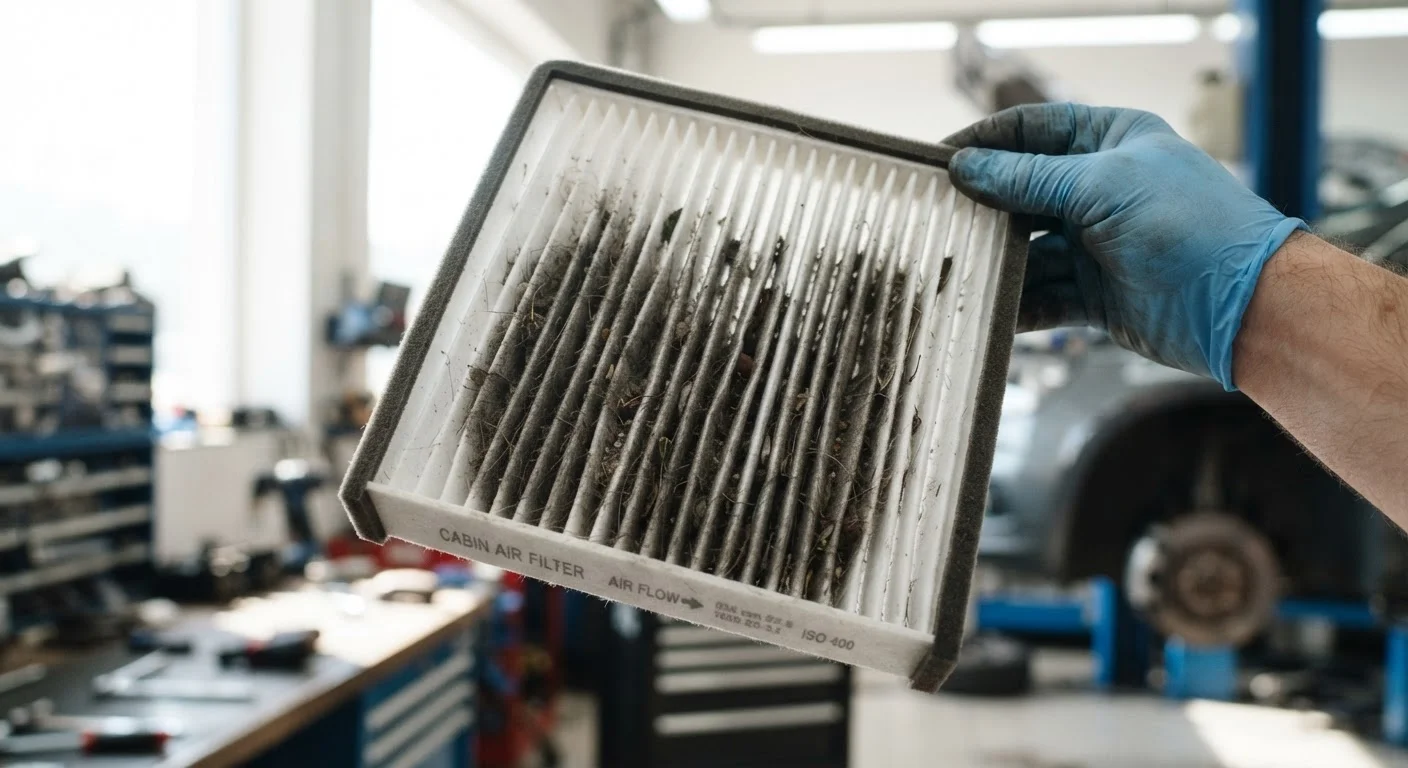
Over time, every cabin air filter becomes saturated with the particles it's collected. Once it reaches that point, airflow through the HVAC system is restricted. You might notice it first as weaker output from your vents - the fan seems less powerful even on high settings. Musty or stale odors are another giveaway, especially when you first turn on the heat or AC.
The less obvious consequence involves your blower motor - the component that pushes air through the system. When a clogged filter forces that motor to work harder to move the same volume of air, it experiences more strain over time. In some cases, this kind of ongoing stress contributes to premature motor failure. Skipping filter replacements is exactly the kind of small, repeated oversight that quietly adds up - as covered in more detail in our article on maintenance habits that quietly shorten a vehicle's lifespan.
15,000-25,000 mi
Typical cabin air filter replacement interval
Most vehicle manufacturers publish this range in owner's manuals, though driving conditions can shorten it considerably.
~15 min
Average DIY replacement time
In many common vehicle models, the filter housing is accessible without tools, making this a quick task for most drivers.
6x
Indoor vs. outdoor air pollution ratio
The U.S. EPA has noted that indoor air - including inside vehicles - can contain significantly higher concentrations of pollutants than outdoor air in some conditions.
How Often to Replace It - and What to Watch For
Most manufacturers recommend replacing the cabin air filter every 15,000 to 25,000 miles. That said, the right interval depends significantly on where and how you drive. Dusty rural roads, heavily congested city driving, high-pollen seasons, and areas prone to wildfire smoke all load a filter faster than typical highway driving.
Rather than guessing, inspect the filter visually when you're near the interval or notice any of these signs:
- Reduced airflow from vents even at maximum fan speed
- Musty, dusty, or stale odors when the HVAC system is running
- Increased dust buildup on the dashboard and interior surfaces
- Allergy symptoms that seem worse inside the car than outside
A filter visually packed with debris, discolored, or deformed should be replaced regardless of mileage. Your owner's manual is the most reliable guide for your specific vehicle.
Check the Filter When You Change Your Oil
A practical habit is to inspect your cabin air filter every time you get an oil change. It takes seconds to pull and glance at, costs nothing to inspect, and keeps you on top of the replacement schedule without needing to track mileage separately. If a shop checks it for you, ask to see the filter yourself so you can assess the condition firsthand.
Replacing the Filter: What to Expect
Cabin air filter replacement is one of the more approachable maintenance tasks for everyday drivers. In most vehicles, the filter sits in one of three locations: behind the glove box (the most common), beneath the dashboard on the passenger side, or under a panel near the base of the windshield on the engine side.
Access typically requires opening a housing or panel - in many cases, no tools are needed. The old filter slides out, the new one slides in, and the housing is reattached. The entire process often takes less than 15 minutes. Because filter placement and housing designs vary by make and model, consult your owner's manual or a vehicle-specific guide before starting. If you're uncomfortable with the process or can't locate the filter, any service shop can handle it quickly and inexpensively.
Maintaining the filter is a small habit with a real payoff: cleaner cabin air, better HVAC performance, and one less source of unnecessary wear on your vehicle's systems.