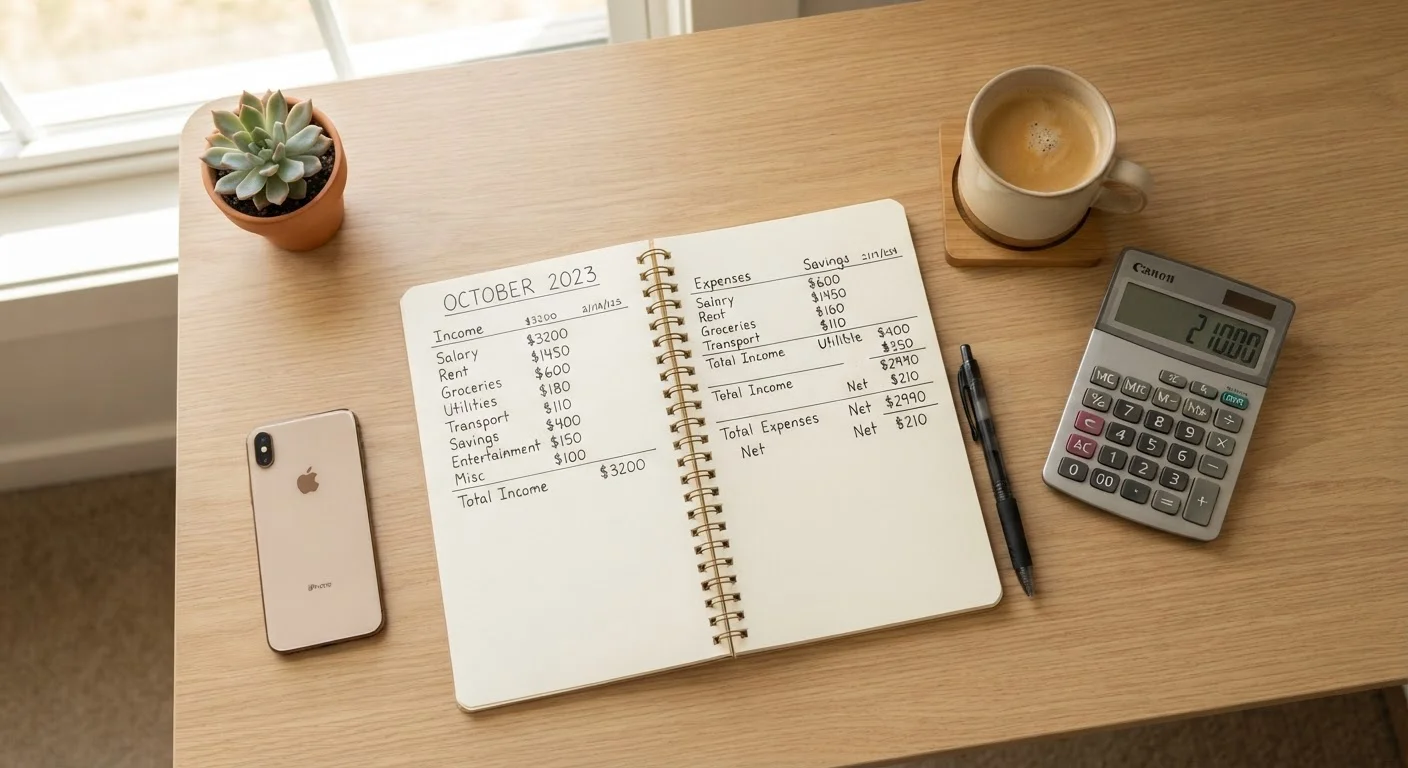
Why Most Budgets Don't Survive Month Two
Most people who try budgeting don't fail because they're careless with money. They fail because the budget they built was never designed to survive real life. It was too rigid, too detailed, or didn't account for the irregular expenses that predictably show up every few months.
Understanding what causes budgets to collapse is the first step toward building one that doesn't. If this pattern sounds familiar, our article on why budgets fail in month two covers the most common design flaws in detail. The practices below address those flaws directly.
“A budget is telling your money where to go instead of wondering where it went.”
— Dave Ramsey, Personal finance author and radio host
Budgeting Practices That Hold Up Over Time
These aren't hacks or shortcuts. They're behavioral habits, supported by personal finance research and widely endorsed by financial educators, that help you maintain a spending plan without burning out.
Budget from your actual take-home pay, not your gross salary
Basing a budget on pre-tax income creates an immediate gap between what you plan to spend and what you actually have available. Starting with net income keeps the plan grounded in reality from day one and prevents chronic overspending on paper.
Create a dedicated category for irregular expenses
Car registration, annual subscriptions, medical copays, and holiday gifts are predictable in the sense that they will happen - just not every month. Without a dedicated buffer, these expenses feel like emergencies and blow up otherwise solid budgets.
Schedule a brief weekly spending check-in
A monthly budget review is too infrequent to catch problems while there's still time to adjust. A 10-minute weekly check lets you see if a category is running low early enough to change behavior before the month ends.
Automate fixed, recurring expenses wherever possible
Rent, utilities, loan payments, and similar fixed costs are the most predictable part of any budget. Automating them removes the mental load of remembering due dates and reduces the risk of late fees disrupting your plan.
Build a small 'flex' allowance into your budget
A budget with no room for spontaneity feels like punishment, and people abandon punishing systems. A modest flex category - even $30-$50 - lets you handle minor unplanned spending without feeling like you've broken the rules.
Review and adjust your budget categories every 2-3 months
Spending patterns shift with seasons, life events, and income changes. A budget that matched your life in January may be misaligned by spring. Treating the budget as a living document rather than a fixed rule prevents the slow drift where planned amounts no longer reflect reality.
This article is for general informational and educational purposes only and does not constitute personalized financial advice. Consult a qualified financial professional for guidance specific to your situation.
Start With What You Can Do Today
You don't need to overhaul your finances in a single weekend. The readers who build the most durable budgets tend to start with one or two changes, let those settle into routine, and then add more structure over time - similar to the approach outlined in our guide on developing a consistent savings habit.
For a deeper look at how spending patterns affect budget success, see our piece on spending patterns worth knowing before you build a budget. Recognizing your own blind spots - subscription creep, underestimated food costs - makes every practice here more effective.
Tracking Tools: Paper vs. Digital
Whether you prefer a notebook or an app matters less than whether you'll actually use it consistently. Both approaches work. Cash-based systems like envelopes create a physical sense of limits; digital trackers automate categorization and send alerts before you overspend. Our comparison of envelope budgeting vs. digital spending trackers can help you decide which format fits your habits better.
~1 in 3
Americans who follow a formal monthly budget
According to Gallup polling, roughly one-third of U.S. adults report maintaining a detailed household budget, suggesting most people manage money reactively rather than proactively.
74%
Adults who feel anxious about their financial situation
An American Psychological Association survey found that money is consistently among the top sources of stress for American adults, underscoring why a predictable spending plan can reduce anxiety.
The strongest predictor of budget success isn't the tool - it's the regularity of review. A simple spreadsheet checked every Sunday beats a sophisticated app opened once a month.