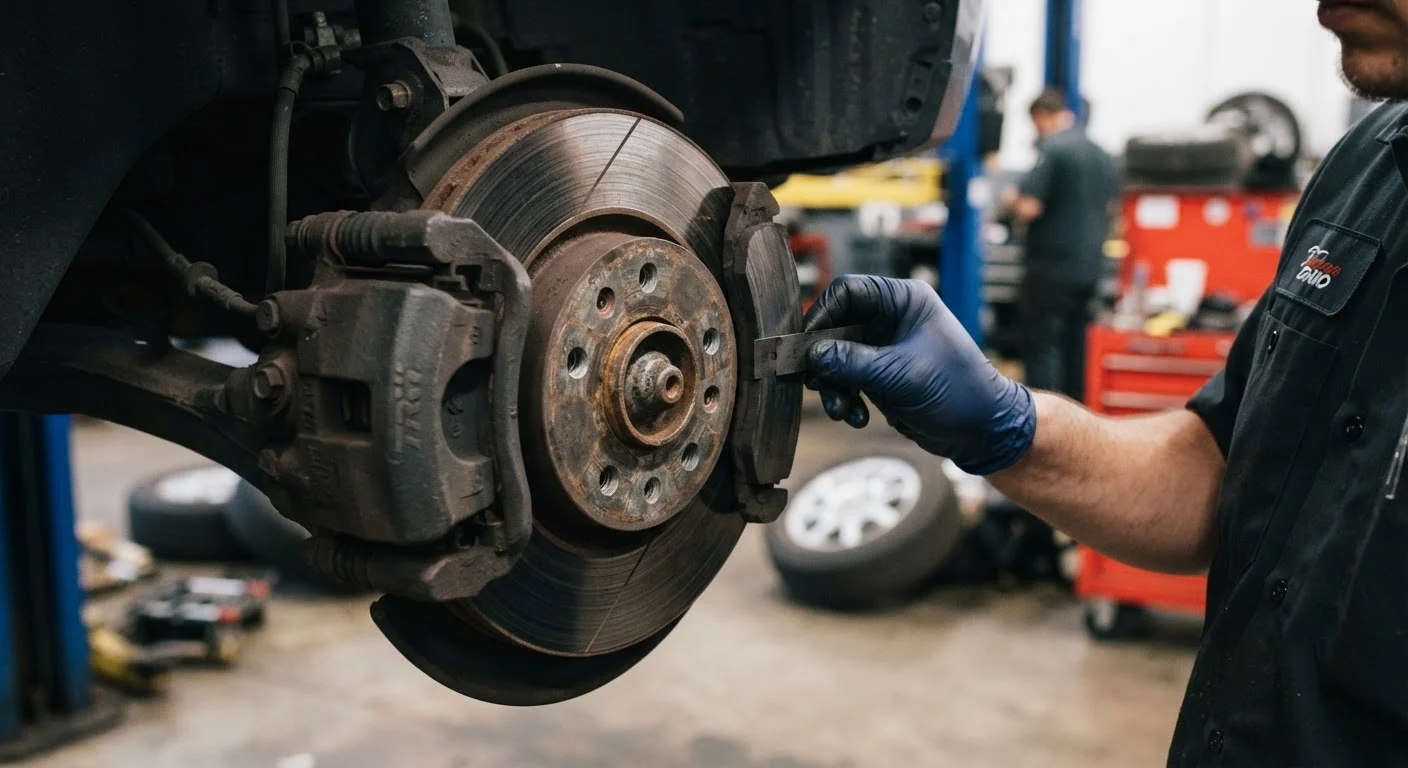
What's Actually Making That Noise
Brake squeal comes down to vibration. When brake pads clamp against a spinning rotor, any inconsistency in surface contact - caused by worn material, temperature changes, or missing hardware - creates a frequency you can hear. Think of it like pressing a wet finger against a wine glass rim: the friction produces a tone.
The most common culprits break down into a few clear categories:
- Worn brake pad wear indicators: Most pads are manufactured with a small metal tab designed to contact the rotor when the friction material gets too thin. That contact is intentional - it's your car telling you pads need replacing.
- Surface rust: Rotors are iron, and iron rusts quickly when exposed to moisture. A thin layer of surface rust after overnight rain or dew is normal. It scrubs off within the first few stops.
- Glazed pads or rotors: Excessive heat - from riding the brakes on long downhill grades, for example - can harden the pad surface or leave a glassy film on the rotor. Glazed surfaces don't grip evenly and vibrate under pressure.
- Missing or worn anti-squeal shims: These thin layers of rubber or metal sit between the pad and caliper to dampen vibration. When they degrade or are omitted during a pad replacement, squeal becomes more likely.
- Debris between pad and rotor: A small stone or piece of road grit lodged in the caliper can produce a sharp, intermittent squeal.
For a broader look at how brake noise fits into the larger picture of vehicle sounds, see our guide to warning sounds your car makes.
Brake Pad Materials Affect Noise
Semi-metallic brake pads - common on performance-oriented vehicles - tend to squeal more than ceramic or organic pads, especially when cold. If you've recently had pads replaced and the vehicle is new to you, check what type of pad was installed. Some squeal with metallic pads is considered within normal range by manufacturers.
When the Squeal Is a Serious Warning
Not every squeal demands immediate action - but certain combinations of symptoms do. Pay attention to these escalating warning signs:
Persistent squeal every time you brake
If the noise happens consistently whenever you apply the brakes, and doesn't clear up after a few stops, your wear indicators are almost certainly the cause. Pads at this stage need replacement soon. Delaying turns a relatively straightforward job into a more expensive one if metal-on-metal contact damages the rotor.
Grinding instead of (or alongside) squealing
A grinding or growling sound during braking means metal is contacting metal directly - the pad friction material is likely gone entirely. This is a situation that warrants parking the vehicle and scheduling immediate professional service. Continuing to drive risks damaging the rotor and caliper, and more importantly, compromises your ability to stop safely.
Squealing combined with other symptoms
Treat any of these combinations as urgent:
- Squeal plus the vehicle pulling to one side during braking
- Squeal plus vibration or pulsing felt through the brake pedal
- Squeal plus a brake pedal that feels soft or spongy
- Squeal plus a burning smell after stopping
These pairings point to problems beyond simple pad wear - potentially a seized caliper, warped rotor, or hydraulic system issue. Have a qualified mechanic inspect the system promptly.
Use the Pattern to Guide the Conversation
Before visiting a mechanic, spend a day or two noting exactly when the squeal happens - first thing in the morning only, at every stop, at high speeds, or only when braking lightly. This detail narrows down the cause quickly and helps you get a faster, more accurate diagnosis.
What Drivers Can Do - and What They Should Leave to a Mechanic
There are a few things you can check yourself without tools. First, look through your wheel spokes at the brake rotor. You should see a relatively smooth disc surface; deep grooves etched into the rotor face indicate significant wear. Next, note when exactly the squeal occurs - only in the morning, only at low speed, every single stop - because that pattern gives a mechanic useful diagnostic information.
For anything beyond observation, brake work is best handled by a qualified technician. Brakes are a safety-critical system, and mistakes in pad installation, caliper hardware, or rotor specification can affect stopping performance in ways that aren't immediately obvious until you need them most.
One habit that shortens brake life quietly: riding the brake pedal while driving, especially on highways or long descents. Consistent light pressure generates heat and can glaze pads without giving any visible warning. Our article on maintenance habits that quietly shorten a vehicle's lifespan covers this and other easily overlooked patterns that add up over time.
When you do take the vehicle in, describe the sound clearly: what it sounds like, when it happens, whether it's changed over time, and any other symptoms you've noticed. The more specific you are, the faster a mechanic can pinpoint the source.
~$150-$300
Typical cost of a standard brake pad replacement (per axle)
General industry estimates for pad-only replacement; rotor replacement typically adds significantly more to the total.
25-65 mm
Range of stopping distances affected by worn brake pads
Research by brake safety organizations has shown that severely worn pads can meaningfully extend stopping distance compared to pads in good condition.
12-18 months
Recommended brake inspection interval for most drivers
Many vehicle manufacturers and automotive safety organizations recommend having brakes visually inspected at least annually or with every tire rotation.