Where the Framework Comes From
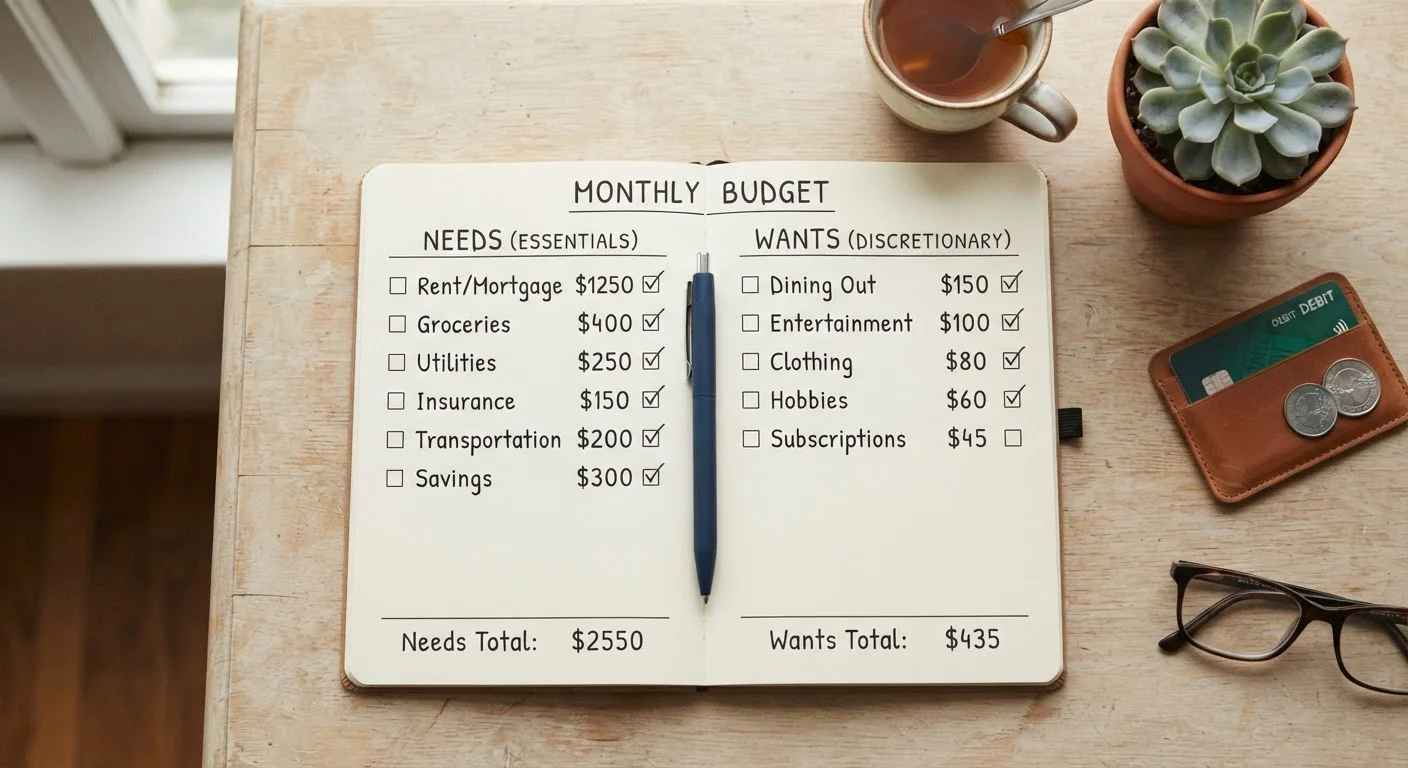
The needs vs. wants distinction is a foundational concept in personal finance education. At its most basic: a need is something required to maintain basic health, safety, and functioning - housing, food, utilities, basic transportation. A want is something that improves your life but isn't strictly necessary - streaming subscriptions, dining out, upgraded tech.
This binary thinking forms the backbone of the popular 50/30/20 rule, which suggests allocating roughly 50% of after-tax income to needs, 30% to wants, and 20% to savings and debt repayment. It's a reasonable starting point for beginners. But real spending rarely maps cleanly onto two columns. The framework holds up well in theory and starts fraying at the edges the moment you open your actual bank statement.
For a closer look at how specific expense categories are typically defined, see the spending category glossary - it breaks down common budget lines with plain-language definitions.
Why the Gray Area Exists
The middle ground between needs and wants is wide, and it's not a sign of weak willpower - it's a sign that spending is contextual. Consider a few examples:
- Internet access: Technically a utility, but for remote workers it's also a job requirement. Need or want?
- A gym membership: Discretionary for some, medically advised for others with chronic conditions.
- A car: Absolutely essential if you live rurally with no transit options; arguably optional in a walkable city.
- Reliable childcare: Functionally a need if both partners work, even though it's not a traditional utility.
Income level also shapes the landscape. A household earning $40,000 a year may genuinely need every dollar going toward rent, food, and transportation. A household earning $150,000 has the same basic needs at a fraction of take-home pay - meaning a much larger share of spending falls into elective territory, even if it doesn't feel that way.
| Strict Needs Only | Gray-Area Middle | Clear Wants | |
|---|---|---|---|
| Examples | Rent, groceries, utilities | Internet, gym, reliable car | Dining out, streaming, travel |
| Budget priority | Always fund first | Fund based on context | Fund after needs and savings |
| Context-dependent? | Rarely | Almost always | Occasionally |
| Risk if cut | High - safety or function | Moderate - depends on role | Low - inconvenience only |
| Emotional weight | Non-negotiable | Often feels like a need | Variable - impulse or valued |
This isn't moral judgment - it's math. The same expense can be a need for one person and a want for another, and both can be right.
A More Useful Way to Ask the Question
Instead of asking is this a need or a want?, try asking: What happens if I cut this? If the answer involves serious disruption - losing your job, compromising your health, creating a safety risk - it's a need. If the answer is inconvenience or disappointment, it's likely a want. That discomfort can still be worth the expense, but be honest about what you're paying for.
A second useful question: Is this expense aligned with something I actually value? Spending that feels bad after the fact - not because you can't afford it, but because it didn't match what you care about - is often emotional rather than intentional spending. Learning to tell the difference is a skill that pays long-term dividends in both financial clarity and satisfaction.
Try a One-Month Spending Audit
Pull three months of bank and credit card statements and label each transaction as need, want, or gray area - without judging yourself. Patterns often emerge quickly. You may find that a large share of your gray-area spending clusters around a handful of categories, making it much easier to decide where to draw lines deliberately rather than by default.
The goal isn't to strip all wants from your budget. A budget that eliminates every discretionary dollar is usually unsustainable. The goal is to make sure your wants reflect your actual priorities, not just habit or impulse.
Building a Budget That Reflects Reality
Once you've developed a clearer sense of your own needs-wants mix, the next step is building a budget that reflects it honestly. A few practical notes:
- Start with fixed needs first. Rent or mortgage, utilities, insurance, minimum debt payments - these come off the top.
- Identify your non-negotiable wants. Not all discretionary spending is equal. A few categories may genuinely improve your wellbeing or work performance. Budget for them explicitly rather than letting them creep in unplanned.
- Review the gray area periodically. What felt essential a year ago may no longer apply. Life circumstances change - so should your categories. Understanding your spending patterns before building a full budget makes this review much easier.
- Don't over-optimize. A budget built on guilt rather than intention rarely lasts. The aim is clarity, not punishment.
This article is for general informational and educational purposes only and does not constitute personalized financial advice. For guidance specific to your situation, consider consulting a qualified financial professional.