What the Framing Effect Actually Does to Your Brain
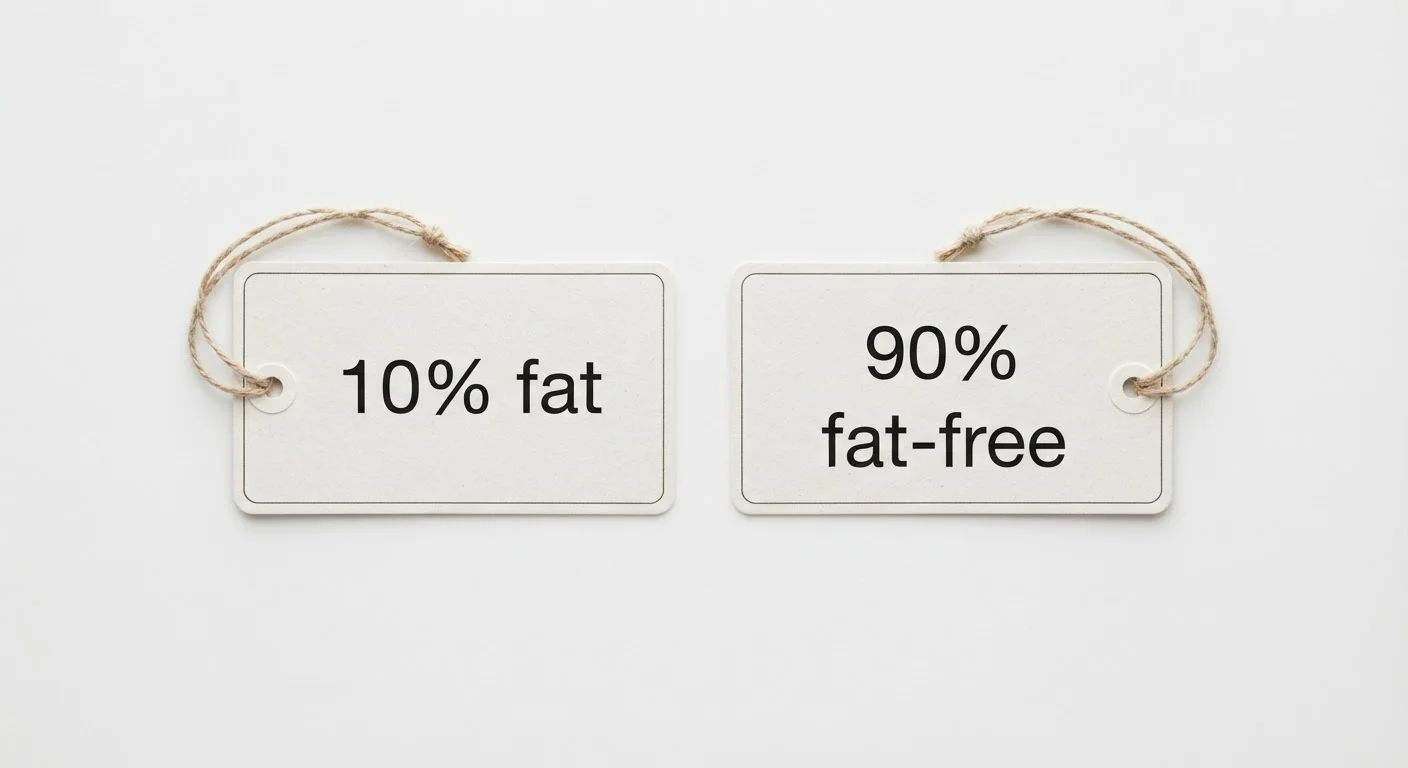
Imagine two credit card offers. The first says you'll pay a 3% foreign transaction fee. The second says there's a 3% surcharge on overseas purchases. Same cost, different words-yet consumer research consistently shows that framing influences which option feels more acceptable. This is the framing effect in action.
The core mechanism is straightforward: humans don't evaluate options in a vacuum. We evaluate them relative to a reference point, and the way information is presented sets that reference point. Kahneman and Tversky's foundational research showed that people are not the rational calculators classical economics assumed. Instead, we are pattern-recognizers responding to context, and that context can be deliberately shaped.
This matters for everyday money decisions because nearly every financial product, offer, or conversation involves some framing. Understanding this is closely tied to the broader concept of your money mindset-the mental lens through which you interpret all financial information.
“It is not the objective situation that determines behavior, but the way that situation is framed and perceived.”
— Daniel Kahneman, Nobel Prize-winning psychologist and author of 'Thinking, Fast and Slow'
Loss Framing vs. Gain Framing: Why Losses Hit Harder
The most powerful version of the framing effect in finance involves loss aversion-the well-documented tendency for potential losses to feel more painful than equivalent gains feel rewarding. A financial choice presented as "don't miss out on $500" typically generates stronger motivation than "earn an extra $500," even though both describe the same outcome.
Lenders, insurers, and marketers are well aware of this asymmetry. Warnings like "You could be leaving money on the table" or "Most people in your situation don't have this coverage" are designed to trigger loss-avoidance instincts rather than rational cost-benefit analysis.
~2x
How much more painful losses feel than gains
Kahneman and Tversky's prospect theory research suggested losses are felt roughly twice as intensely as equivalent gains, explaining why loss framing is such an effective motivator.
40-90%
Retirement plan participation under auto-enrollment
Research on workplace retirement plans has found that automatic enrollment (an opt-out frame) can push participation rates to 85-90%, compared to 40-60% under opt-in designs with otherwise identical terms.
This also shows up in retirement plan design. Research in behavioral economics has found that framing employee benefits as an opt-out (where enrollment is the default) rather than opt-in dramatically increases participation rates-the "loss" of giving something up feels worse than never having it. The underlying plan is identical; only the frame changes.
Real-World Examples of Financial Framing
Framing is embedded in financial life at every level, from major purchases to everyday spending. Recognizing it in practice makes it easier to neutralize.
These examples illustrate that framing rarely involves deception about facts-the numbers are usually accurate. What changes is the context around those numbers, and that context influences emotion and intuition more than most people realize. Thinking through how scarcity versus abundance thinking shapes your interpretation can add another layer of self-awareness here.
How to Make Decisions Less Vulnerable to Framing
You can't fully opt out of framing-every description of a choice involves some presentation choice. But you can develop habits that reduce how much framing distorts your financial decisions.
- Translate to raw numbers. Convert every offer into total dollars paid or saved over the full term. Monthly minimums, percentage discounts, and headline figures are framing devices. Total cost is the fact.
- Flip the frame yourself. If an offer is presented as a gain, rewrite it as a loss, and vice versa. If your enthusiasm changes significantly, framing is doing work that the underlying numbers shouldn't be doing.
- Pause on high-stakes decisions. Framing is most effective under time pressure or emotional stress. A 24-hour pause on significant financial choices disrupts the automatic reaction framing depends on.
- Seek a neutral description. Ask a trusted person who has no stake in the outcome to describe the same choice in their own words. A fresh frame can reveal what the original was obscuring.
If framing-driven decisions are compounding into broader financial stress, it may be worth exploring how financial anxiety shapes everyday choices-anxiety makes cognitive shortcuts like framing even more influential.
A Simple De-Framing Habit
Before agreeing to any significant financial offer, write down the total dollar cost or benefit in plain terms-ignoring the percentage labels, savings callouts, and monthly figures used in the pitch. Then ask whether the raw number still makes sense for your situation. This one step alone can counteract much of the framing that surrounds financial products.
This article is for general informational and educational purposes only and does not constitute personalized financial advice. Consult a qualified financial professional for guidance specific to your situation.