How Each Method Works
Both the debt avalanche and the debt snowball share the same foundation: you continue making minimum payments on every debt you carry, then direct any additional money toward one specific debt at a time. The difference lies entirely in which debt you prioritize.
Debt Avalanche: You rank your debts by interest rate - the annual percentage rate, or APR - from highest to lowest. Extra payments go toward the highest-rate debt first. Once that balance reaches zero, you roll those funds into the next-highest-rate debt, and so on. Because you're eliminating the debt that costs the most per dollar owed, you reduce overall interest expense. Understanding how interest compounds is essential here - see how high-interest debt accumulates over time for the underlying math.
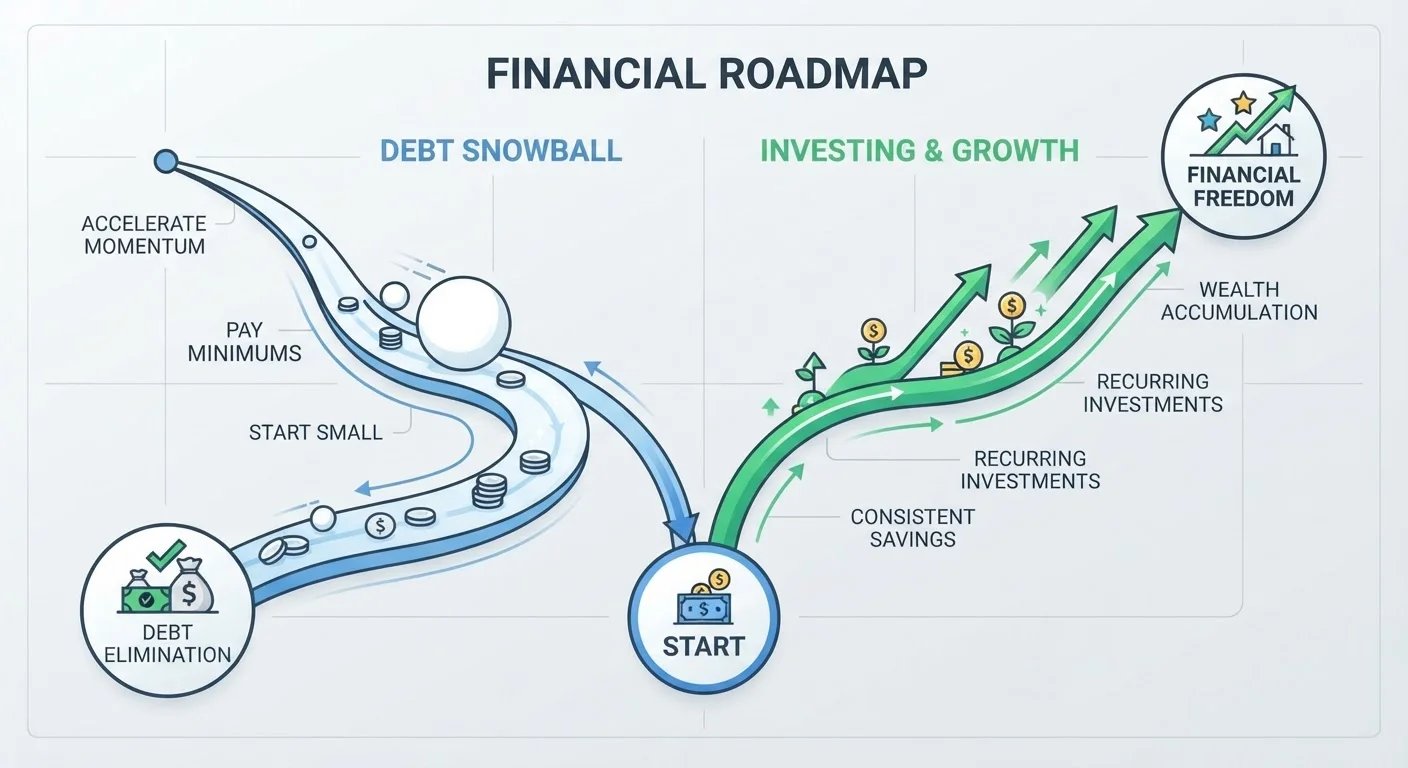
Debt Snowball: You rank your debts by balance size - smallest to largest - regardless of interest rate. Extra payments go to the smallest balance first. Once it's cleared, that payment amount gets added to the next-smallest debt's payment, creating a growing "snowball" of cash flow directed at each successive balance.
| Criterion | Debt Avalanche | Debt Snowball |
|---|---|---|
| Payoff order | Highest interest rate first | Smallest balance first |
| Total interest paid | Lower over time | Potentially higher |
| Speed to first payoff | Slower (if high-rate debt is large) | Faster (smaller balances clear quickly) |
| Psychological reward | Delayed - progress can feel slow | Early wins provide momentum |
| Best when | Rates vary significantly across debts | Rates are similar or motivation is low |
| Complexity | Requires tracking APRs closely | Simple balance ranking |
If you're unfamiliar with terms like APR, minimum payment, or principal, this plain-language debt glossary covers the vocabulary you'll need before choosing either strategy.
The Real Difference: Math vs. Motivation
On paper, the avalanche wins every time. Because you're retiring high-rate balances first, interest has less time to compound on those expensive debts. For someone carrying a 24% APR credit card alongside a 6% auto loan, prioritizing the credit card is the financially efficient choice.
But personal finance research consistently shows that behavior - not formulas - determines whether a debt payoff plan succeeds. People who have struggled to stick with repayment plans in the past may find that the snowball's early wins provide the reinforcement needed to keep going. Paying off a $400 medical bill in two months feels tangible in a way that shaving interest off a $12,000 credit card balance does not, even if the latter saves more money.
~$6,500
Average American credit card balance
The Federal Reserve's consumer credit data shows revolving credit balances - primarily credit cards - remain a significant and costly component of household debt.
20%+
Typical credit card APR in recent years
Federal Reserve data on consumer credit rates has shown average credit card interest rates exceeding 20% in recent reporting periods, underscoring the cost of carrying balances.
Neither approach is wrong. The best strategy is the one you'll actually sustain. If you're weighing debt payoff against other financial priorities, balancing debt repayment with saving goals offers a practical framework for managing both simultaneously.
Putting a Method Into Practice
Whichever method you choose, the mechanics are the same. Start by listing every debt you carry - balance, minimum payment, and interest rate. Calculate how much money beyond your minimums you can realistically direct toward debt each month. Even an extra $50 or $100 accelerates your payoff timeline significantly compared to minimum payments alone.
Rank the list according to your chosen method, then automate minimum payments on all debts to avoid late fees or missed payments. Direct your extra funds manually - or through a scheduled transfer - to the target debt each month. When that debt is cleared, add its former payment to the next account on your list.
Some people discover that neither standalone method fits cleanly - for example, they may have one outlier high-rate balance they want to address first for peace of mind, then switch to the snowball for the remaining debts. That hybrid approach is reasonable, provided you stay consistent. For a broader view of how these strategies fit within a complete financial plan, the full saving and debt picture covers everything from emergency funds to long-term stability.
If managing multiple debts feels unworkable, debt consolidation is one alternative worth understanding before committing to a payoff order. How consolidation works and when it helps explains the mechanics and trade-offs honestly.
This article is for general informational and educational purposes only and does not constitute personalized financial advice. Consider consulting a licensed financial professional before making decisions specific to your situation.