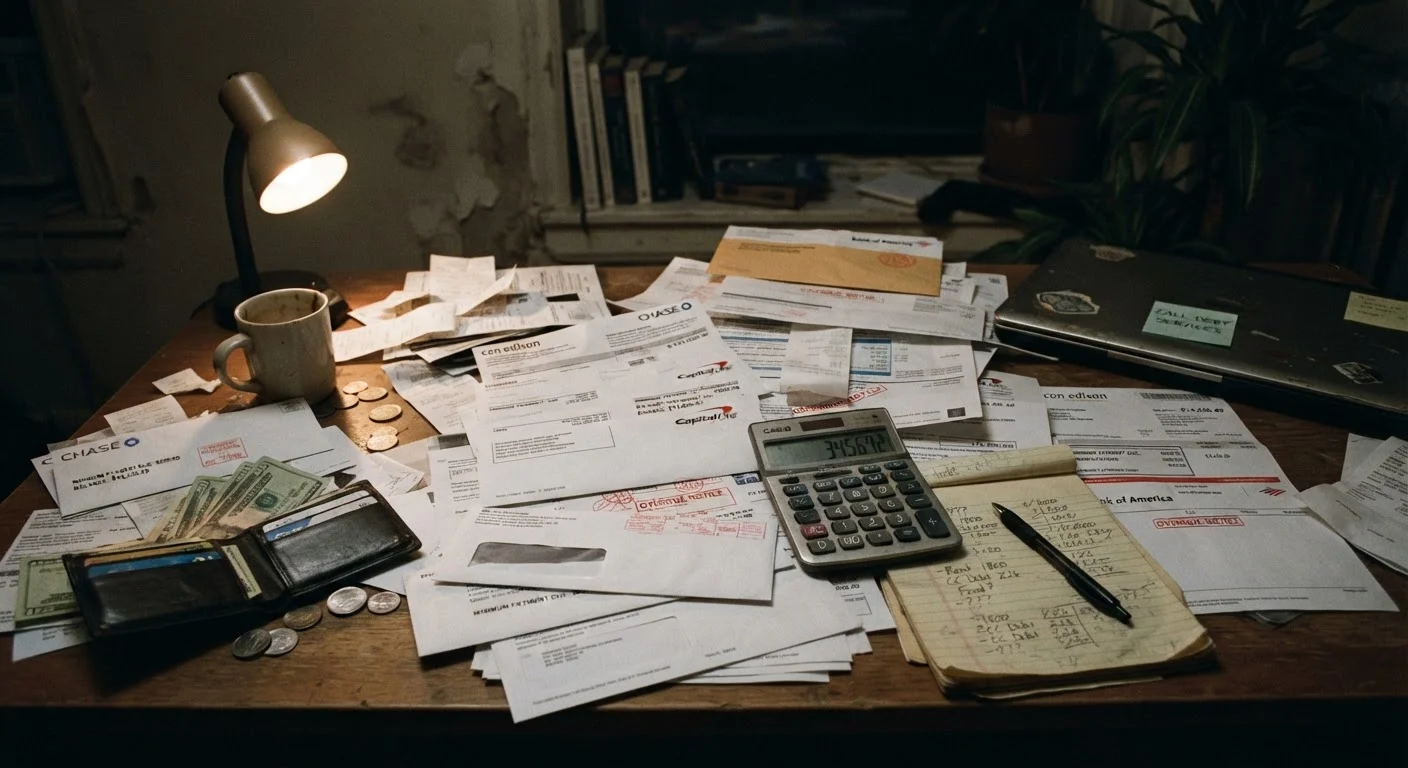
Why Debt Grows Even When You're Trying to Be Careful
Most people don't go into debt recklessly. They make what feel like reasonable, manageable decisions - paying what they can, taking advantage of a promotional offer, or putting one expense on a card to smooth over a tight month. The problem is that debt has a way of growing in the background, powered by mechanics that aren't always obvious at the point of decision.
Understanding where these quiet leaks come from is the first step toward plugging them. The mistakes below are common precisely because they don't feel like mistakes at the time. For a broader look at the unconscious patterns that compound these issues, see financial self-sabotage patterns that can hold back your progress.
Making only the minimum payment on credit cards each month.
Why it happens: Minimum payments feel responsible - you're paying something, after all. Card issuers set minimums low, often 1-2% of the balance, which makes them feel affordable without revealing the long-term cost.
Misunderstanding deferred interest promotions as true zero-interest deals.
Why it happens: "No interest if paid in full" offers are easy to confuse with 0% APR promotions. The fine print differs significantly: deferred interest charges accumulate the entire time and apply retroactively if any balance remains at the end of the promotional period.
Using a credit card to cover an expense without a plan to pay it off.
Why it happens: Putting a purchase on credit feels like a neutral act, especially when cash flow is tight. Without a specific repayment plan attached, that balance simply joins the revolving total and starts accruing interest.
Letting subscription services and automatic renewals accumulate unchecked.
Why it happens: Individual subscription costs are small enough to feel negligible, and auto-renewal makes it easy to forget they exist. But six to eight small recurring charges add up to a meaningful monthly outflow. See common spending blind spots for more on how these charges go unnoticed.
Treating a credit limit as though it represents available spending money.
Why it happens: Seeing a $5,000 available balance can feel like having $5,000 to use. This framing is reinforced by lenders, who often increase limits as a reward - but higher limits simply mean higher potential debt.
Consolidating debt without changing the habits that created it.
Why it happens: Debt consolidation can lower your interest rate and simplify payments, which feels like progress. But if underlying spending patterns stay the same, original balances often rebuild alongside the new consolidated loan.
The Numbers Behind Accidental Debt Growth
It helps to put concrete figures to these habits. The math of interest compounding is one of the most underestimated forces in personal finance - and one of the most consequential.
22%+
Average credit card APR in the U.S.
According to Federal Reserve data, average credit card interest rates have risen significantly in recent years, making carrying balances increasingly costly.
~$6,000
Average American credit card balance
Federal Reserve and consumer credit data consistently show the average U.S. household carries several thousand dollars in revolving credit card debt.
10+ years
Time to pay off balance on minimums only
Financial regulators note that a mid-size credit card balance paid only at the minimum can take a decade or more to eliminate at typical interest rates.
Consider that a $3,000 credit card balance at 22% APR, paid down only by minimum payments, can take over a decade to eliminate and cost nearly as much in interest as the original balance. That outcome isn't the result of irresponsibility - it's the result of not fully understanding what minimum payments actually do. Our guide on high-interest debt costs walks through the math in plain terms.
Balancing debt paydown with saving doesn't require perfection - it requires awareness. If you're weighing how to split limited income between the two goals, paying off debt while saving at the same time offers a practical framework for doing both without sacrificing long-term stability.
Consolidation Isn't a Cure on Its Own
Balance transfer offers and personal loans can reduce interest costs, but they don't address the spending patterns that built the debt. Without a budget adjustment, many people find their original credit card balances climbing again within months of consolidating. Any consolidation strategy should be paired with an honest review of where money is going each month.
This article is for general informational purposes only and does not constitute personalized financial or legal advice. Consult a qualified financial professional for guidance specific to your situation.