Why Dog Food Myths Persist - And Why They Matter
Feeding your dog a scrap of last night's dinner feels natural - dogs have lived alongside humans and our food for thousands of years. But the internet has amplified both genuine warnings and exaggerated fears, leaving many owners genuinely unsure what's safe and what's dangerous. Sorting myth from fact isn't just academic: misplaced fear can lead to unnecessary anxiety, while misplaced confidence can lead to real harm.
The myths below represent the most common points of confusion our editorial team encounters - each corrected with vet-aligned, evidence-grounded guidance. For a broader look at how feeding habits affect long-term health, see feeding routines that undermine a dog's long-term health.
Myth
All human food is bad for dogs and should never be shared.
Fact
Many human foods are safe - and some offer real nutritional value - when given plain, in modest amounts, and without harmful additives.
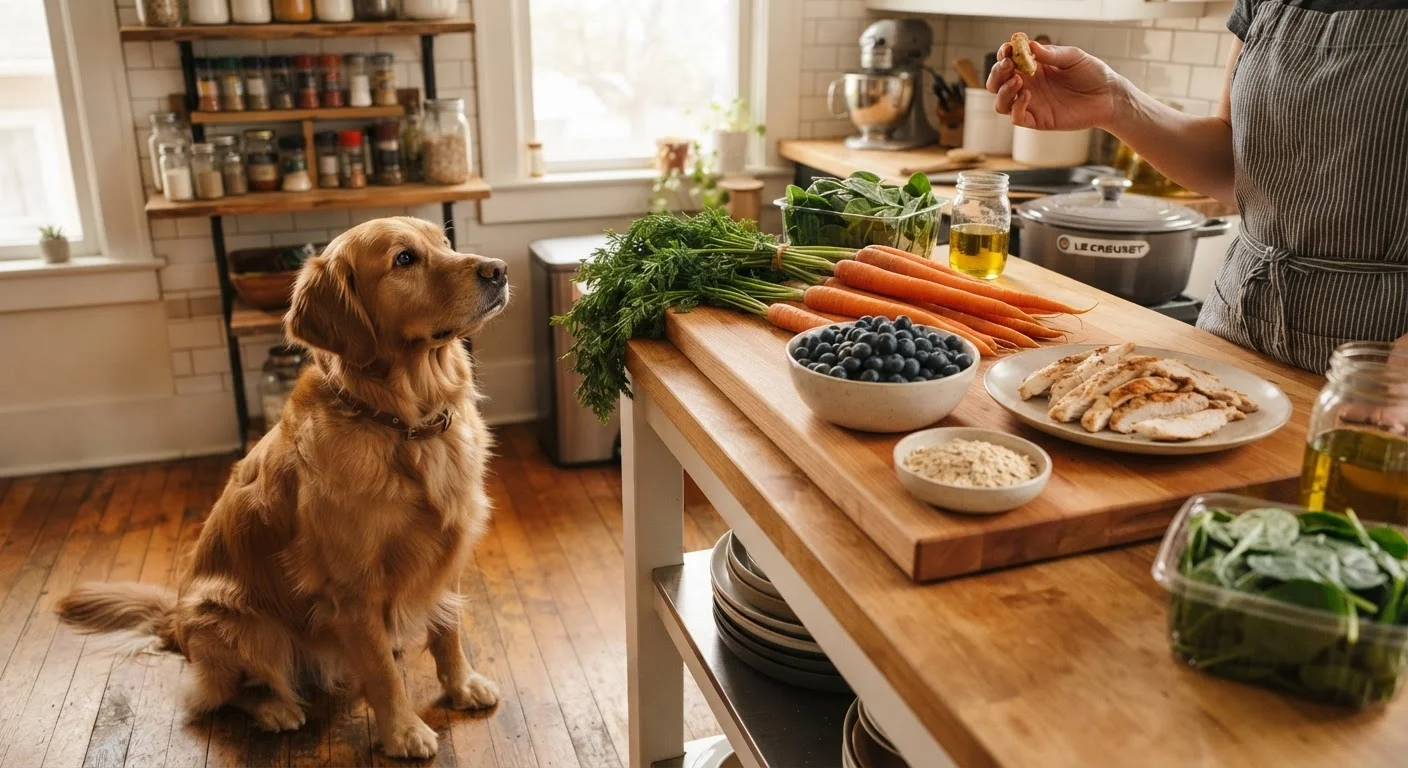
This sweeping myth leads owners to feel guilty over genuinely harmless moments. Plain cooked chicken, carrots, blueberries, plain cooked rice, and cucumber slices are among the foods that veterinary nutrition guidance generally recognizes as safe for most dogs. The real concern isn't human food as a category - it's specific ingredients, preparation methods, and portion sizes. Sharing plain, whole foods occasionally is very different from feeding seasoned table scraps regularly.
Myth
Chocolate is instantly fatal to dogs - even a tiny piece will kill them.
Fact
Chocolate is genuinely toxic to dogs, but the severity depends on the type of chocolate, the amount eaten, and the dog's body weight.
Chocolate contains theobromine, which dogs metabolize far more slowly than humans. Dark chocolate and baking chocolate contain significantly higher concentrations than milk chocolate or white chocolate. A large dog eating a small piece of milk chocolate is a very different situation from a small dog eating a bar of dark chocolate. That said, any chocolate ingestion warrants monitoring, and significant amounts - especially dark or unsweetened varieties - require prompt veterinary contact. The myth of instant death discourages nuanced thinking; the reality is a genuine but dose-dependent risk.
Myth
Grapes and raisins are only a problem in large amounts - a few won't hurt.
Fact
Grapes and raisins can cause acute kidney failure in dogs, and there is no established safe minimum dose.
Unlike many food toxins where the risk scales predictably with body weight, grape and raisin toxicity in dogs is poorly understood and appears idiosyncratic - meaning some dogs have severe reactions to small quantities while others seem unaffected. Because the toxic compound has not been conclusively identified and safe thresholds cannot be reliably predicted, veterinarians advise avoiding grapes and raisins entirely. If your dog eats any amount, contact your vet or an animal poison control line promptly rather than waiting to observe symptoms.
Myth
Garlic and onion are fine in small amounts - they're used in many commercial dog treats.
Fact
Garlic and onion belong to the Allium family and are toxic to dogs; they damage red blood cells and can cause hemolytic anemia.
Reputable commercial dog treats do not contain garlic or onion for this reason. The confusion often arises from products that list 'natural flavors' or from human recipes that include these aromatics. Garlic is actually more concentrated in its toxic compounds than onion by weight. Cumulative low-dose exposure over time can be just as problematic as a single large amount. Symptoms of toxicity - lethargy, pale gums, reduced appetite - may not appear for several days after ingestion, which can cause owners to miss the connection.
Myth
Dogs can eat any cooked meat without concern.
Fact
Cooked meat is generally safe for dogs when plain and boneless, but preparation method and additions change the picture significantly.
Plain cooked chicken, turkey, or lean beef is a common and appropriate protein source for dogs. The problems arise with bones - cooked bones splinter and create serious gastrointestinal and choking hazards - and with seasonings. Meats cooked with onion, garlic, salt, marinades, or butter can be harmful. Fat trimmings, even from otherwise safe meats, can contribute to pancreatitis, particularly in dogs predisposed to the condition. 'Cooked meat' is not a monolithic category; what goes into the preparation matters as much as the protein itself.
Myth
Peanut butter is always a safe and healthy dog treat.
Fact
Plain peanut butter without xylitol is generally safe in small amounts, but many formulations contain xylitol - a sweetener that is highly toxic to dogs.
Xylitol, a sugar alcohol used in some peanut butters and many sugar-free products, causes a rapid and dangerous drop in blood sugar in dogs and can lead to liver failure. It is found in some peanut butters marketed as 'natural' or 'reduced sugar.' Always read the ingredient label before giving peanut butter to your dog. Even xylitol-free peanut butter is calorie-dense and should be an occasional treat rather than a regular addition - and dogs with weight management challenges should receive it only with veterinary guidance.
Putting It All Together: Practical Guidance for Dog Owners
The single most reliable rule is this: dose and preparation matter as much as the food itself. Grapes are unsafe at any amount. Garlic is a problem at significant doses but a trace in a commercially prepared meal is rarely an emergency. Cooked, plain chicken is safe; chicken cooked with onion, garlic, and seasoning is not. Raw versus cooked, seasoned versus plain, whole fruit versus seeds - these distinctions are what separate a safe snack from a vet visit.
Foods That Require Immediate Veterinary Attention
If your dog consumes grapes, raisins, xylitol-containing products, macadamia nuts, raw yeast dough, or any amount of dark or baking chocolate, contact your veterinarian or the ASPCA Animal Poison Control Center (888-426-4435) right away. Do not wait for symptoms to appear - for several of these, early intervention significantly improves outcomes.
Keep in mind that individual dogs vary. Age, breed, existing health conditions, and body weight all influence how a dog processes food. A healthy 70-pound Labrador and a senior 9-pound Chihuahua are not equivalent when it comes to safe portion sizes or risk thresholds.
If you're ever uncertain whether a food is safe, the ASPCA Animal Poison Control Center and your own veterinarian are the most reliable resources. Curiosity about why dogs eat grass and when it's worth a vet call is common too - and similarly benefits from a clear-headed, evidence-based approach.
This article is for general informational purposes only and does not constitute veterinary advice. Always consult a licensed veterinarian regarding your individual dog's health and diet.