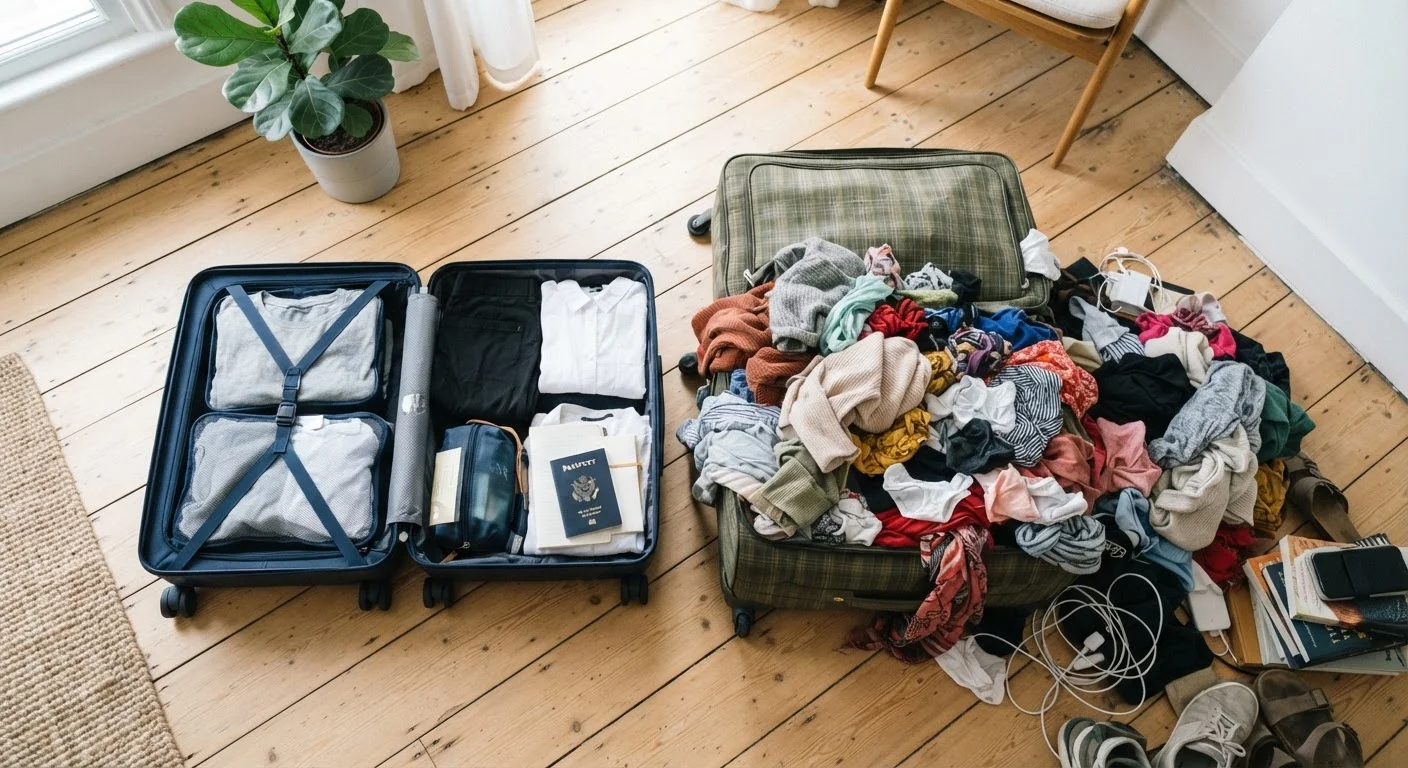
Why This Decision Matters More Than You Think
The choice between packing light and packing for every contingency isn't just about luggage - it shapes your entire travel experience. How much you carry affects airport wait times, transit ease, accommodation storage, spontaneous detours, and even how tired you feel by day three. Understanding the real trade-offs before you zip up is one of the most practical things you can do for any trip.
For a deeper look at how seasoned travelers handle this decision, see what frequent flyers actually do differently when packing. And if your packing strategy connects to broader trip preparation, a pre-trip safety checklist can help you cover what a lighter bag doesn't.
~26 million
Bags mishandled by airlines annually worldwide
According to SITA's annual Baggage IT Insights report, tens of millions of bags are delayed, damaged, or lost each year - a risk that disappears when you carry on.
30-60 min
Time saved per trip leg by skipping baggage claim
Travel industry analysts commonly estimate that avoiding checked baggage saves travelers between half an hour and a full hour at each destination arrival.
The Case for Packing Light
Minimalist packing - often called one-bag travel - has gained real traction among frequent travelers for practical reasons. Skipping checked baggage eliminates airline fees, removes the risk of lost luggage, and cuts the time you spend at carousels and check-in counters. Moving through airports, train stations, and city streets is significantly easier with a single carry-on or backpack.
Beyond logistics, carrying less tends to reduce decision fatigue. When every item in your bag earns its place, you spend less mental energy managing your belongings and more time focused on the trip itself. Many travelers also find that constraints inspire creativity - fewer clothing options often leads to more intentional, versatile outfit choices.
Eliminates checked baggage fees and wait times
Many domestic and international carriers charge $30-$70 or more per checked bag each way. Fitting everything into a carry-on removes this cost entirely and keeps you moving through airports faster.
Reduces risk of lost or delayed luggage
Checked bags can be misrouted, especially on connecting flights. Keeping everything with you eliminates this risk and the disruption it causes at the start of a trip.
Greater physical freedom and spontaneity
A lighter load means you can walk longer distances, take stairs, board public transit, and make last-minute route changes without the burden of heavy luggage.
Faster check-in, boarding, and departure
Skipping the checked-bag queue and avoiding baggage claim can save 30-60 minutes on each leg of a journey, adding up significantly across a multi-destination trip.
Simpler decisions and less to manage
With fewer items, there's less to organize, track, and worry about - reducing the low-level mental load that accumulates over a long trip.
For a comprehensive look at the one-bag philosophy, the full picture on one-bag travel covers the benefits, real limitations, and what to realistically expect.
The Case for Packing for Every Scenario
There are legitimate situations where bringing more makes sense. Remote destinations may have limited access to pharmacies, outdoor gear shops, or specific clothing types. Cold-weather or adventure trips often require specialized equipment - hiking boots, layers, rain gear - that simply can't be improvised on arrival. Travelers with medical equipment, mobility aids, or specific dietary needs may have little choice but to pack comprehensively.
Even on standard trips, some travelers find that having familiar comforts - a preferred pillow, specific toiletries, a backup pair of shoes - meaningfully improves their experience. For travelers who aren't staying in one city but moving between climates or activity types, the "pack for everything" approach can prevent real discomfort.
Limited options for unpredictable weather or activities
Packing light works best when you know your itinerary well. Unexpected cold snaps, formal events, or outdoor activities can leave a minimalist traveler underprepared.
Requires laundry access or planning
Traveling with fewer clothing items typically means doing laundry mid-trip, which requires time, access to facilities, and a willingness to plan around wash cycles.
Carry-on size restrictions vary by airline
Not all carriers have the same carry-on dimensions or weight allowances, particularly budget airlines. What fits on one flight may need to be gate-checked on another.
May not suit longer trips or multiple climates
A two-week trip spanning beach and mountain destinations often demands a broader range of clothing and gear than a single carry-on can realistically hold.
The key distinction is whether your extra items are genuinely needed or simply reflecting anxiety about the unknown. Thinking through what kind of traveler you are can help you identify which items are essential versus precautionary.
How to Find Your Packing Balance
Most travelers fall somewhere between pure minimalism and maximum preparedness - and that middle ground is where smart packing lives. A few practical strategies help narrow the gap:
- Work backward from your itinerary. List every activity type you'll actually do, then identify what clothing or gear each genuinely requires. Items that don't serve a specific activity on your list are candidates to leave behind.
- Favor versatile, layerable items. Neutral-colored, wrinkle-resistant clothing that mixes and matches reduces the total count without limiting your options.
- Research destination availability. Most cities worldwide have pharmacies, laundromats, and clothing stores. Knowing you can buy forgotten items on arrival reduces the pressure to pack defensively.
- Set a weight or volume limit before you start. Committing to a specific bag size forces prioritization from the outset, rather than editing after you've already packed.
When 'Just In Case' Becomes a Habit
Many travelers pack defensively out of anxiety rather than genuine need - bringing items 'just in case' that never leave the bag. Before adding anything to your packing list, ask yourself: 'If I don't use this, will I regret carrying it the entire trip?' That single question eliminates a surprising number of items. If an item can be purchased at most destinations for under $20, it's usually not worth the weight.
For more actionable travel tips and packing habits, the Travel Tips hub covers smart preparation across all trip types.