Why the Estimate Deserves More Than a Quick Glance
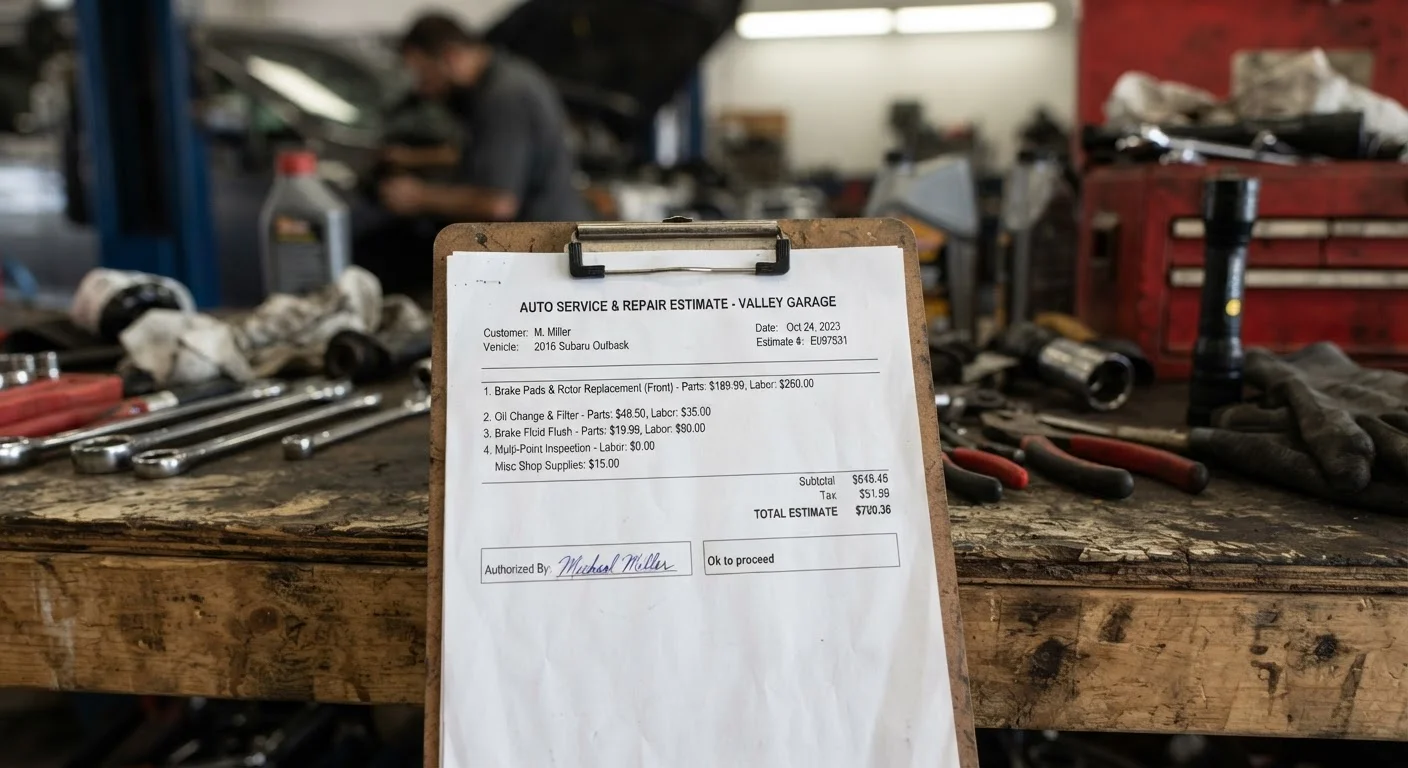
A mechanic's estimate is a legal and financial document. It outlines what will be done to your vehicle, what parts will be used, and what you'll owe when the work is finished. Most drivers sign it in under a minute - often because the language feels unfamiliar and the situation feels urgent. That's understandable, but a few minutes of careful reading can prevent surprises when you pick up your car.
The three areas that trip up most drivers are: how labor charges are calculated, what the difference between OEM and aftermarket parts actually means for quality and cost, and why a diagnostic fee exists as a separate line. Once those concepts are clear, the rest of the document tends to fall into place.
What you will need
Step-by-Step: Reading Your Estimate
Work through the estimate methodically using the steps below. You don't need mechanical expertise - you need to know what each section represents and what questions to ask.
Request a fully itemized written estimate
Before any wrench turns, ask the service advisor for a written estimate that breaks out every line item: each part by name and unit cost, the labor hours assigned to each task, any shop fees, and taxes. A single lump-sum number tells you almost nothing and gives you nothing to verify.
Understand the labor line
Labor charges are calculated using a flat-rate system: industry-published guides (such as those from Chilton or AllData) assign a standard number of hours to each repair job, regardless of how long it actually takes a specific technician. The shop multiplies those hours by their labor rate - typically expressed as a dollar amount per hour - to produce the labor charge. A job listed as 2.5 hours at a $120/hr rate will appear as $300 in labor, even if a skilled tech finishes in 90 minutes.
The labor rate itself varies widely by region, shop type (dealership vs. independent), and specialization. Neither figure is automatically unreasonable - but knowing how it works lets you ask informed questions.
Decode the parts section: OEM vs. aftermarket
Every parts line should list what's being installed. The two main categories are:
- OEM (Original Equipment Manufacturer): Parts made by or to the specifications of your vehicle's manufacturer. Generally the most reliable fit, but usually more expensive.
- Aftermarket: Parts made by independent companies. Quality ranges widely - some aftermarket parts meet or exceed OEM specs; others don't. Ask the shop which brand they plan to use and whether they stand behind it with a warranty.
For most routine repairs, quality aftermarket parts are a reasonable choice. For complex or safety-critical systems - airbags, ABS components, certain sensors - it's worth discussing OEM options with your technician.
Identify the diagnostic fee
If a diagnostic fee appears on your estimate, it's a charge for the technician's time spent pinpointing the problem - not for fixing it. This typically includes connecting a scan tool to read fault codes, performing tests, and documenting findings. Diagnostic time is legitimate skilled labor. Some shops apply the diagnostic fee toward the repair cost if you proceed; others do not. Clarify this upfront.
Be cautious if a shop offers to waive the diagnostic fee entirely - thorough diagnosis takes real time, and skipping it can lead to misdiagnosis and repeat visits. See our overview of how vehicle systems work if you want more background before your appointment.
Check for shop supply fees and other line items
Near the bottom of many estimates you'll find charges labeled shop supplies, environmental fees, or hazardous waste disposal. These are standard in the industry - they cover items like rags, cleaning solvents, and disposal of fluids. They are usually small percentages of the total. If a fee appears large or unexplained, ask for a brief description before authorizing.
Compare and authorize - or ask for time to think
Once you've reviewed every line, you can make an informed decision. If anything seems unclear or high, ask the service advisor to explain the specific charge. You are not obligated to authorize work on the spot. Getting a second opinion on larger repairs is entirely reasonable and a common practice - no reputable shop will penalize you for it.
Skipping or delaying necessary repairs often costs more in the long run. Our article on why deferred maintenance compounds costs explains the same principle as it applies to home upkeep - the underlying logic is identical for vehicles.
Authorize Before Work Begins
In most U.S. states, auto repair shops are legally required to get your written or verbal authorization before performing work that exceeds a specified dollar threshold. Never let a shop proceed on a verbal assumption. If you're unsure about your state's rules, ask the shop to show you the authorization form before any work starts.
Ask for Your Old Parts Back
Requesting that the shop return your replaced parts is a straightforward way to confirm the work was actually done. Most reputable shops will comply without hesitation. If a shop refuses without a clear reason, that's worth noting.
What to Do If Something Doesn't Add Up
If a line item is missing a description, if the labor hours seem disproportionate to the job's complexity, or if a part is listed without specifying OEM or aftermarket, put your questions in writing before authorizing. Ask the service advisor to annotate the estimate with the answers.
For repairs above a few hundred dollars, a second opinion from another licensed shop is a prudent step - not an insult to the first shop. Bring the original written estimate with you; any competent technician can review another shop's quoted scope of work.
Verbal Estimates Offer Limited Protection
A verbal quote is difficult to dispute later. Always ask for a written, itemized estimate - including parts, labor, and fees - before authorizing any service. Keep a copy for your records.
Keeping records of all estimates and invoices also builds a maintenance history that can be valuable when selling the vehicle or diagnosing recurring issues down the road. That same habit of documentation applies to other types of upkeep - see how it's framed in our discussion of building a maintenance budget.