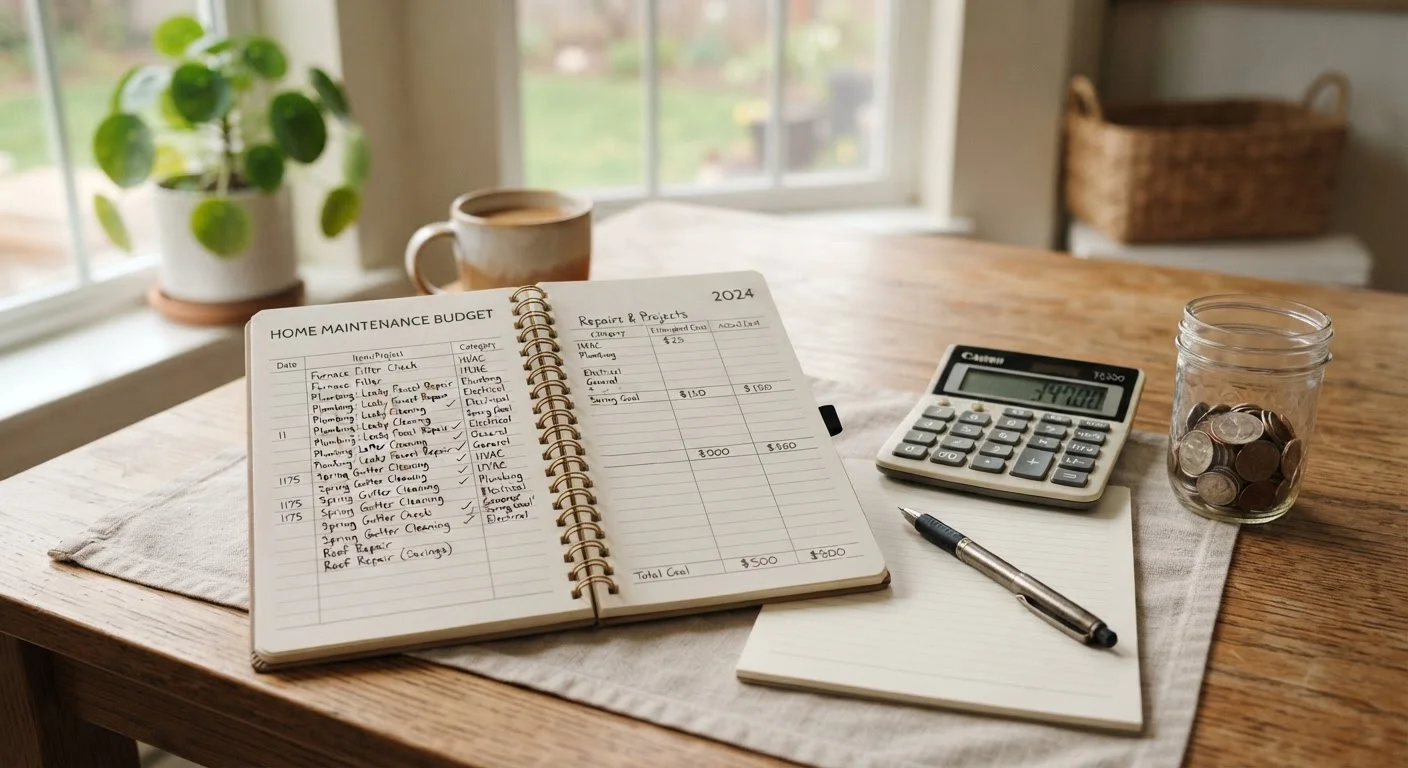
Why a Dedicated Maintenance Budget Matters
Most homeowners think about maintenance only when something breaks - a leaking pipe, a furnace that won't start, or a roof that suddenly needs attention. The problem with that approach is that reactive repairs almost always cost more than planned ones, and they arrive at inconvenient times. A dedicated maintenance budget shifts you from scrambling to prepared.
Unlike a general emergency fund, a maintenance fund is specifically meant for the wear and tear that every home accumulates over time. Keeping them separate prevents you from draining your safety net every time a water heater ages out. For a broader look at common financial planning blind spots that affect this kind of budgeting, see spending patterns worth knowing before you build a budget.
Common Rules of Thumb - and Their Limits
Two guidelines come up most often among home maintenance professionals:
- The 1% rule: Set aside roughly 1% of your home's current value per year. On a $300,000 home, that's about $3,000 annually, or $250 per month.
- The square footage rule: Budget approximately $1 per square foot of living space per year. A 1,800-square-foot home would target around $1,800 annually.
Both are useful starting points, not precise formulas. An older home with aging mechanical systems, a property in a region with extreme weather, or a house where maintenance has been deferred for several years may realistically need closer to 2% - or more - to stay ahead of repairs.
Rules of Thumb Have Real Limits
The 1% and square-footage guidelines are starting points, not guarantees of coverage. Factors like local labor costs, the age of your systems, and regional climate can all push actual maintenance spending well above these estimates. Use the rules to begin saving, then adjust based on your home's specific history and condition.
It's also worth noting that neither rule accounts for major planned replacements - a roof, HVAC system, or water heater - which have finite lifespans and predictable replacement windows. Professionals often suggest tracking those separately as a capital reserve, distinct from routine annual maintenance.
Best Practices for Building and Maintaining Your Budget
Start with a realistic baseline savings target based on your home's age and condition
A newer home in good repair can often get by near the lower end of the 1% guideline, while an older home with aging systems warrants a higher reserve. Calibrating to your actual situation prevents both under-saving and unnecessarily constraining your budget.
Open a dedicated savings account specifically for home maintenance
Keeping maintenance funds separate from day-to-day checking and your general emergency fund makes it much easier to track balances, avoid accidental spending, and recognize when the fund is underfunded. Visibility drives better decisions.
Track every maintenance expense, no matter how small
Most homeowners underestimate what they actually spend on upkeep because small costs feel incidental. A running log reveals patterns, helps you anticipate recurring costs, and gives you real data for future budget adjustments.
Inventory your home's major systems and note their approximate age
Roof, HVAC, water heater, plumbing, and electrical panels all have typical lifespans. Knowing where each system stands helps you anticipate large expenses and start setting aside money in advance rather than scrambling when replacement is urgent.
Prioritize preventive tasks that are proven to reduce larger repair costs
Routine maintenance - cleaning gutters, replacing HVAC filters, caulking around windows - costs relatively little but consistently prevents failures that are far more expensive to address. Preventive work is the highest-return use of your maintenance budget.
After establishing your baseline savings target, the next step is putting systems in place so the money is actually there when you need it. Consistency matters more than precision at the start - you can always refine based on what you actually spend each year.
Quick Actions You Can Take This Month
Getting started doesn't require a perfect system. Even small, immediate steps move you from reactive to proactive. For ongoing guidance on what to schedule throughout the year, your home's annual maintenance calendar provides a practical month-by-month breakdown of upkeep tasks.
Adjusting Over Time
A maintenance budget isn't static. After your first full year, review what you actually spent and compare it to what you set aside. Many homeowners find their initial estimate was either too conservative or slightly too high for their specific situation. Adjusting annually makes the budget more accurate and less stressful over time.
Factor in any planned upgrades or systems nearing end of life. If your roof is 18 years old, for example, it makes sense to start building toward that cost before it becomes urgent. See roof maintenance habits that add years to its lifespan for guidance on extending the life of systems you already have.
Finally, not every maintenance task requires a professional. Knowing where the line is between safe DIY work and jobs that need licensed help can significantly affect what you spend. DIY maintenance vs. calling a professional walks through how to think through that decision for common home repairs.