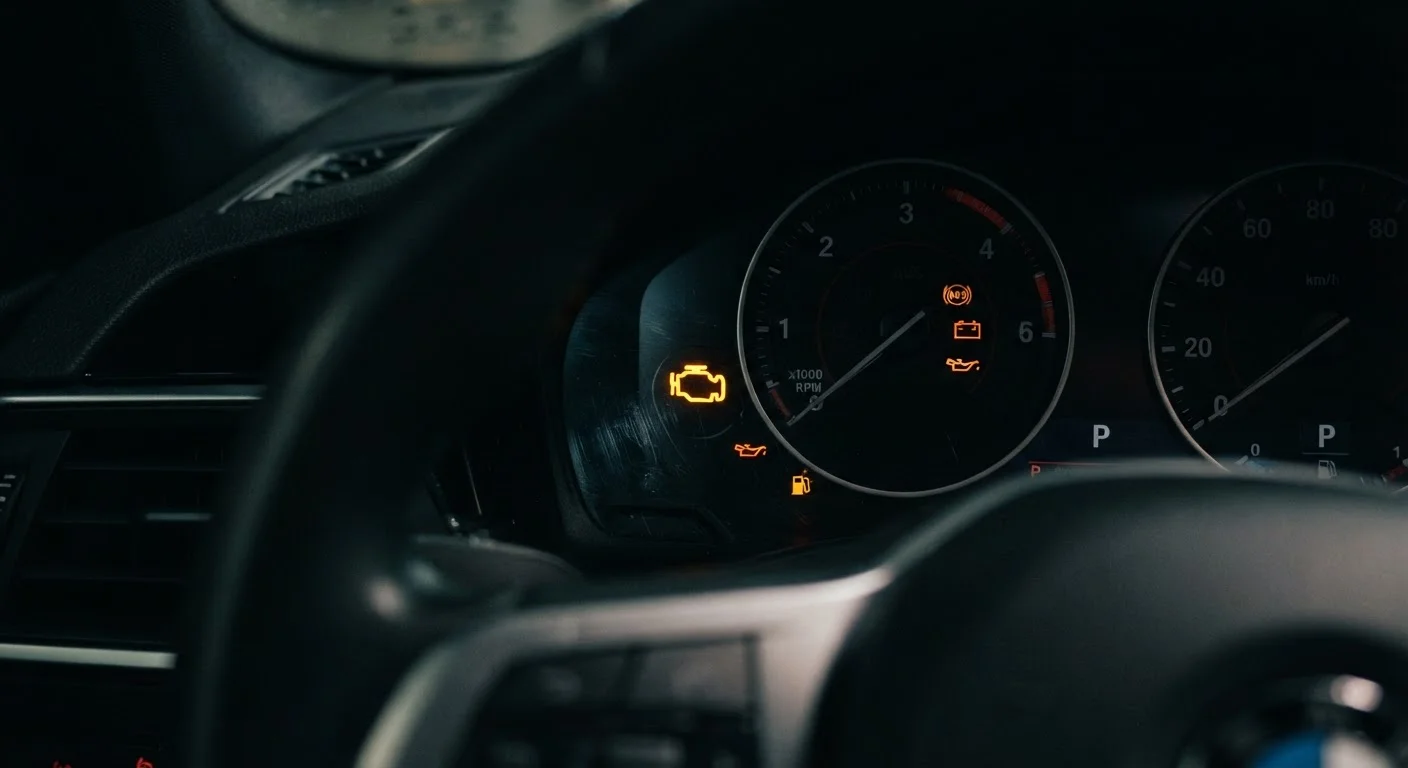
Why That Light Comes On
Your vehicle continuously monitors dozens of systems through sensors feeding data to the Engine Control Module (ECM) - essentially the car's central computer. When a sensor reading falls outside its expected range, the ECM logs a Diagnostic Trouble Code and switches on the Malfunction Indicator Lamp. The system doesn't distinguish between a trivial fault and a serious one purely by illuminating the light; that's why understanding the light's behavior matters.
Common triggers span a wide range of severity. On the minor end: a loose fuel cap, a worn spark plug, or a faulty evaporative emissions purge valve. On the more serious end: a failing mass airflow sensor, a degraded oxygen sensor, or catalytic converter inefficiency. The engine warning light is essentially a messenger - it tells you a conversation needs to happen between your car and a scan tool.
The Light Doesn't Reset Without a Reason
If your check engine light turns off on its own, it typically means the fault condition was intermittent and the ECM no longer detects it. However, the trouble code usually remains stored in the system's memory. A mechanic can still retrieve it with a scan tool, which is why a light that came and went is still worth mentioning at your next service visit.
Solid vs. Flashing: The Difference That Matters Most
The single most important thing to notice when your check engine light comes on is whether it's steady or flashing.
- Steady amber light: A persistent but stable fault. The car may drive normally. This warrants a diagnosis within the next few days - not an emergency, but not something to ignore for weeks either.
- Flashing amber light: An active engine misfire is occurring. Unburned fuel is entering the exhaust and can destroy the catalytic converter within minutes of continued driving. Reduce your speed, minimize engine load, and get the vehicle to a shop as quickly as safely possible - or arrange a tow.
Other warning lights appearing alongside the check engine light - such as the oil pressure or temperature gauge - should always be treated as urgent, regardless of whether the CEL is solid or flashing.
~40%
CEL triggers related to oxygen sensors or fuel system
Automotive diagnostic data consistently shows oxygen sensor faults and evaporative emission system leaks among the most frequently recorded fault codes across vehicle makes.
10-20
Drive cycles needed for light to self-clear after fix
After correcting the underlying fault, most OBD-II systems require multiple complete drive cycles before the Malfunction Indicator Lamp resets automatically.
Getting It Diagnosed: What Actually Happens
A fault code stored in the ECM is a starting point for diagnosis, not a final answer. For example, a code indicating an oxygen sensor circuit fault could mean the sensor itself has failed, there's a wiring issue, or an exhaust leak is affecting the reading. A qualified mechanic interprets the code alongside a physical inspection and, often, live data from the scan tool.
Many auto parts retailers offer free OBD-II code reads, which can give you a general idea of what system is flagged before you visit a mechanic. This is useful context, but it shouldn't replace a proper diagnosis - knowing the code category helps you ask informed questions, not perform your own repair based on a code alone.
For a broader picture of what your vehicle may be communicating, see our guide to warning sounds your car makes - noises often accompany dashboard warnings and add important context to a diagnosis.
When Waiting Costs You More
The check engine light has a reputation for being cried wolf - drivers have left it illuminated for months without visible consequence. Sometimes that works out; often it doesn't. A minor oxygen sensor fault left unaddressed forces the ECM to run the engine on estimated fuel calculations, which can reduce fuel efficiency and, over time, stress the catalytic converter. What starts as a $150 sensor replacement can become a $1,000-plus catalytic converter job.
A straightforward rule: if the light is steady and the car runs normally, schedule a diagnosis within a week. If the light flashes, or if performance changes - rough idle, hesitation, reduced power - treat it as urgent. Catching faults early is almost always cheaper than waiting.
For more detail specifically on the check engine light, including what steps to take before your shop visit, see our in-depth check engine light guide.