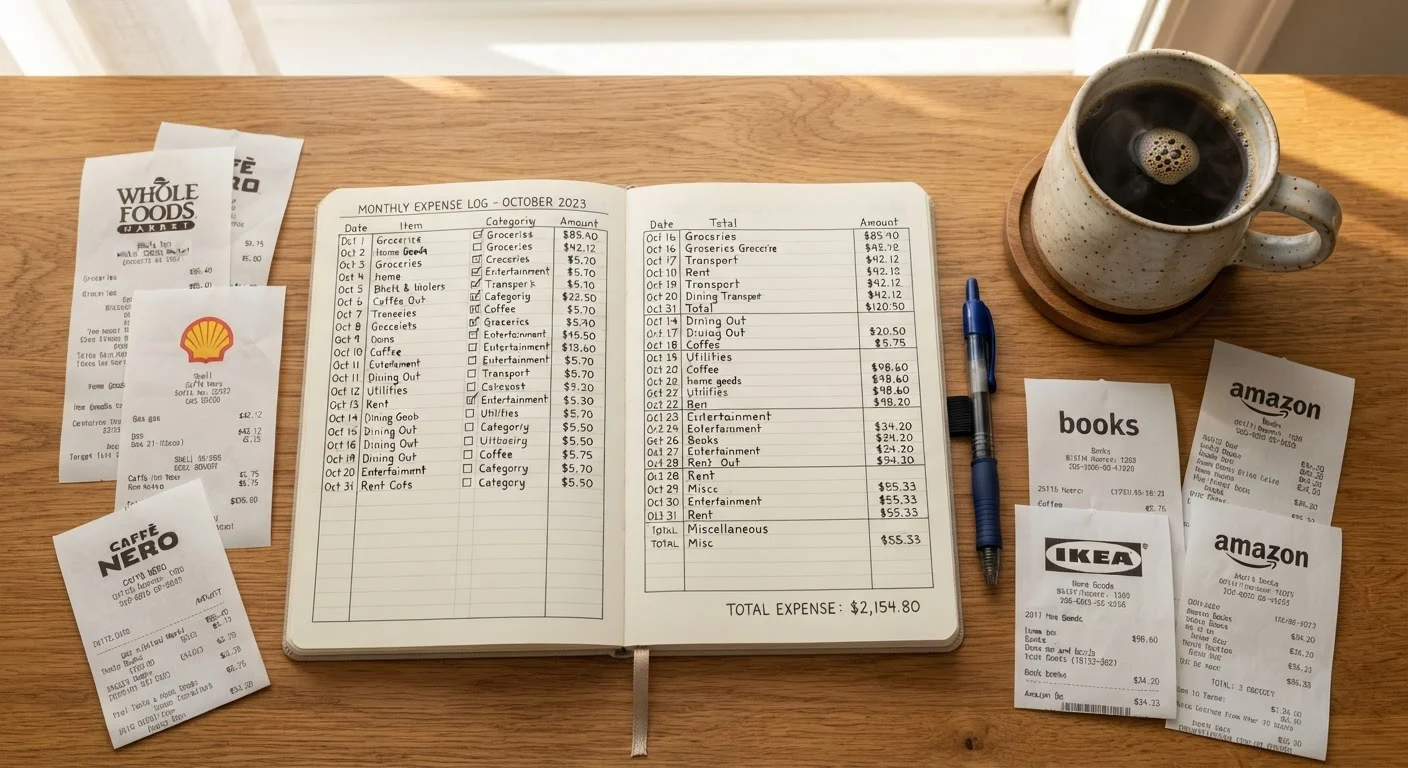
What Tracking Every Purchase Actually Means
Tracking every purchase means recording each transaction - from a $2 vending machine snack to a monthly rent payment - in a log, spreadsheet, or budgeting app. The goal is a complete picture of your spending, not just the big-ticket items that are easy to remember.
This is distinct from reviewing your bank statement at the end of the month. Real-time or near-real-time tracking captures context: why you spent, where you were, and what category the expense falls into. Done consistently, it turns raw spending into usable data. If you want to understand the behavioral patterns behind your spending, our money habits audit guide lays out a structured process for doing exactly that.
The Genuine Advantages
The strongest case for tracking every purchase is visibility. Most people significantly underestimate spending in discretionary categories like dining out, entertainment, and subscriptions. A granular log removes the guesswork.
Reveals exactly where money is going
Categorized transaction data shows spending patterns across weeks and months that memory alone consistently gets wrong. This is especially useful in discretionary categories where spending tends to drift.
Identifies budget leaks quickly
Subscription services, recurring small purchases, and impulse buys often go unnoticed until they're logged. Tracking makes these visible before they compound.
Supports more accurate budget-building
A budget built on real spending history is far more realistic than one built on estimates. Two to three months of tracked data gives you a reliable baseline.
Can reduce mindless or impulsive spending
The act of logging a purchase creates a moment of awareness. Over time, that friction can shift spending behavior without requiring constant willpower or restriction.
Creates accountability without external pressure
Seeing your own data - not someone else's judgment - is often a more motivating and less shame-inducing way to recognize patterns worth changing.
There's also a behavioral effect worth noting: the act of recording a purchase - even just logging it in an app - can introduce a brief pause before spending. Over time, that awareness can shift decision-making without requiring willpower alone. This distinction between reactive and deliberate spending is explored further in our piece on emotional vs. intentional spending.
The Real Downsides
No financial habit is without trade-offs, and meticulous purchase tracking has meaningful ones.
Requires consistent daily time and effort
Keeping a complete log means recording purchases promptly, before receipts are lost and memory fades. For busy people, this adds a regular task that's easy to skip.
Can become anxiety-inducing rather than empowering
For some people, constant scrutiny of spending triggers stress or guilt rather than productive action. The habit should clarify your finances, not make you dread them.
Data is only useful if regularly reviewed
Logging transactions without scheduling regular review sessions means the information just accumulates without informing decisions. The tracking itself doesn't automatically produce insight.
App-based tracking introduces privacy trade-offs
Connecting bank accounts to third-party apps involves sharing sensitive financial data. It's worth reading the data-sharing and privacy policies of any tool you use.
Manual tracking is prone to gaps and errors
Cash purchases, shared expenses, and split bills are easy to forget or miscategorize. Even diligent trackers often have incomplete records for certain transaction types.
It's also worth flagging that data without interpretation doesn't help much. Collecting weeks of transaction logs and never reviewing them is a common failure mode - the habit generates information but not necessarily insight, unless you build in regular review time.
Common Spending Blind Spots Tracking Reveals
One reason detailed tracking is so useful for beginners is that it surfaces patterns that category-level budgets miss entirely. Most Americans have predictable spending blind spots - subscription creep, underestimated grocery runs, the irregular expenses that feel surprising every single time. Recognizing these is a prerequisite for budgeting accurately. Our article on spending patterns worth knowing before you budget breaks down the most common ones.
Tracking and Budgeting Are Not the Same Thing
Tracking is the act of recording what you spend; budgeting is the process of planning what you intend to spend. The two work best together, but they're separate habits. You can track without having a formal budget, and you can budget without tracking every individual transaction. Understanding which piece you're missing helps you choose the right practice to add first.
If you're weighing whether to track manually or use an app, the comparison isn't just about convenience - it affects accuracy and consistency too. Our envelope budgeting vs. digital trackers breakdown covers how each method holds up in practice.
Who Should - and Shouldn't - Track This Closely
Granular tracking tends to deliver the highest return on effort in specific situations: building a first real budget, working through a debt repayment plan, or recovering from a period of financial instability. In those cases, the detailed data is directly actionable.
For people already meeting savings goals and operating within a stable plan, tracking every single transaction may add friction without adding meaningful insight. A middle-ground approach - logging by category rather than individual purchase - often preserves the core benefit while reducing the daily maintenance burden.
~33%
Americans with a written or detailed budget
Various surveys over the years consistently find that only about one-third of U.S. adults maintain a detailed household budget, suggesting most people operate without granular spending data.
$200-$300
Typical monthly underestimate in discretionary spending
Financial counselors and budgeting researchers commonly note that individuals tend to underestimate their discretionary spending by hundreds of dollars per month before tracking closely.
Ultimately, the right level of tracking is the one you'll actually maintain. A system you abandon after three weeks provides far less value than a simpler one you sustain for months.
This article is for general informational purposes only and does not constitute personalized financial advice. For guidance specific to your financial situation, consider consulting a qualified financial professional.