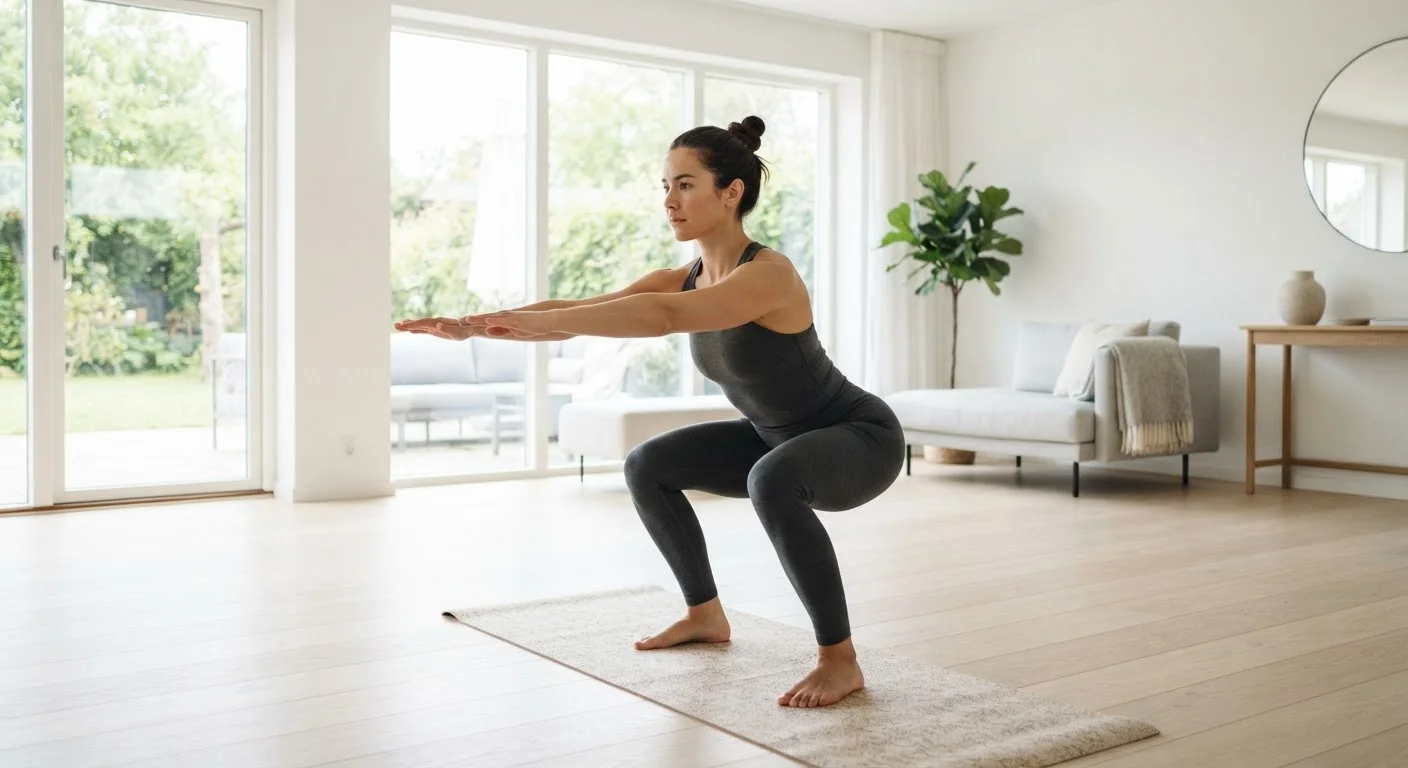
Why Equipment-Free Training Is More Than a Compromise
The fitness industry often implies that meaningful training requires a gym membership, a rack of dumbbells, or expensive machines. The evidence doesn't support that framing. Bodyweight training - when structured thoughtfully - develops strength, endurance, and mobility just as effectively as equipment-based training for the vast majority of people, particularly those at beginner and intermediate levels.
What equipment-free training does require is deliberate structure. Without the natural scaffolding of a gym environment, it's easy to drift toward random movement rather than a coherent plan. That's what this guide addresses. For a balanced look at what each training environment genuinely offers, see our article on home workouts vs. gym training.
What you will need
What You'll Need
Equipment-free doesn't mean completely without resources. A few basic items make sessions more comfortable and effective, though most are optional.
Yoga or exercise mat
Provides cushioning for floor-based movements like planks, bridges, and stretches.
Timer or interval app
Helps you track work and rest periods accurately during circuit-style training.
Water bottle
Keeps you hydrated throughout each session, especially during higher-intensity work.
Training journal or notes app
Tracks which exercises, sets, and reps you completed so you can progress intelligently week to week.
How to Build Your Routine
Follow the steps below to construct a weekly movement plan that fits your schedule, fitness level, and goals. Each step builds on the last - work through them in order rather than skipping ahead.
Consult a Professional Before Starting
This article provides general fitness education, not personalized medical advice. If you have a known injury, chronic condition, or have been inactive for an extended period, speak with a qualified healthcare provider before beginning a new exercise routine. Listen to your body and stop any movement that causes sharp or unusual pain.
Don't Skip Your Warm-Up
Jumping straight into intense bodyweight movements without preparing your joints and muscles increases injury risk. Spend five to eight minutes on light movement - marching in place, arm circles, hip rotations, and gentle leg swings - before any strength or cardio work. A brief warm-up also helps you shift mentally into the session.
Decide how many days per week you can realistically commit
Before selecting exercises, anchor your plan to your actual life. Three to four days per week is a practical starting point for most people - enough to make meaningful progress while leaving room for recovery and the unexpected. Avoid the trap of designing a seven-day plan only to burn out by day five.
Sketch out which days work given your schedule, and block them as you would any other commitment. Even 20-minute sessions count.
Map your week across three movement categories
A balanced routine addresses three areas: strength (building muscle and joint resilience), cardiovascular endurance (heart and lung health), and mobility (joint range of motion and tissue quality). All three can be developed using only your body weight.
- Strength days (2-3x/week): Squats, lunges, push-ups, glute bridges, planks, and single-leg variations
- Cardio days (1-2x/week): Brisk walking, stair climbing, jumping jacks, mountain climbers, or shadow boxing
- Mobility sessions (1-2x/week): Hip 90/90 stretches, thoracic rotations, ankle circles, and slow controlled movements through full range
These categories can overlap - a strength session often has a cardio effect, and a mobility session aids recovery.
Build each strength session around movement patterns
Rather than thinking in individual muscles, organize strength sessions around fundamental movement patterns. This ensures balanced development and reduces overuse risk:
- Squat pattern
- Bodyweight squat, sumo squat, or split squat
- Hinge pattern
- Glute bridge, single-leg bridge, or Romanian deadlift with no weight
- Push pattern
- Wall push-up, incline push-up, or standard push-up
- Core anti-movement
- Plank hold, dead bug, or side plank
Choose one or two exercises per pattern per session. Aim for 2-3 sets of 8-15 controlled repetitions.
Structure cardio sessions to match your current fitness level
Cardiovascular work without equipment doesn't have to mean jumping around your living room. Walking briskly - even indoors up and down stairs - is a legitimate and effective form of cardio. For higher intensity, circuit-style work using jumping jacks, high knees, or mountain climbers raises heart rate effectively.
A useful starting structure: 20-30 minutes at a pace where you can still hold a conversation, or shorter intervals of 30-40 seconds of effort followed by 20-30 seconds of rest, repeated for 15-20 minutes.
Incorporate dedicated mobility work - don't skip it
Mobility sessions are consistently under-valued and overlooked, yet they support posture, reduce injury risk, and make strength movements more effective. You don't need a full class - even 10-15 minutes of focused joint mobility work two times per week adds up significantly over a month.
Focus on commonly restricted areas: hips, thoracic spine (mid-back), ankles, and shoulders. Move slowly and with control, spending 30-60 seconds per position. For a deeper look at how mobility differs from simple flexibility, see our guide to mobility training.
Plan rest and review your week after four weeks
Rest days are not wasted days - muscle tissue repairs and adapts during recovery, not during the workout itself. Plan at least two to three rest or light-activity days per week. Light activity on these days (a walk, gentle stretching) is fine and often beneficial.
After four weeks, review your routine. Are you completing sessions as planned? Are the movements feeling easier? Adjust difficulty, volume, or variety accordingly. Be aware that some common habits can quietly work against your progress - worth reading our piece on habits that undermine exercise progress before your first review.
Progressively Challenge Yourself Each Week
Once a movement starts to feel manageable, introduce a small increase in difficulty - add a second set, slow the lowering phase to three seconds, or try a more challenging variation. Small, consistent progressions compound into significant fitness gains over months. Avoid jumping to advanced variations too quickly, as form should always come before load or complexity.
Keeping Momentum Over Time
The single biggest differentiator between people who sustain a movement practice and those who don't is not motivation - it's consistency built on realistic expectations. A routine you complete at 80% effort three times a week will produce far better results than an ambitious program you abandon after two weeks.
Expect progress to feel slow at first. Strength and endurance adaptations are happening at a cellular level before they're visible or measurable in performance. Trust the process, keep sessions logged, and make incremental adjustments. Movement is a lifelong practice, not a short-term project.
This article is for general informational and educational purposes only and does not constitute medical advice. Always consult a qualified healthcare professional before starting a new exercise program, particularly if you have any existing health conditions or injuries.