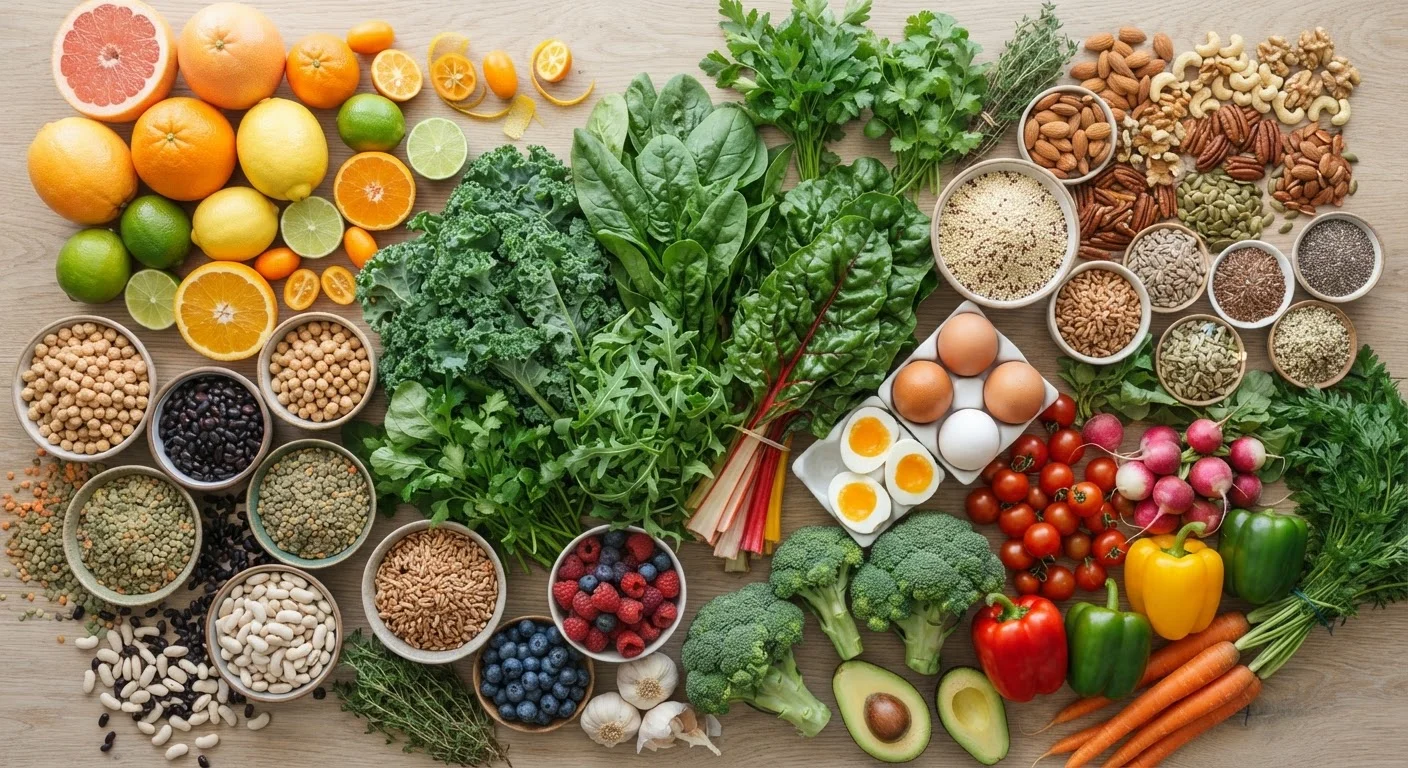
What Are Micronutrients?
If you've ever heard a nutrition professional talk about "getting enough" of something - iron, calcium, vitamin D - they were talking about micronutrients. Unlike macronutrients like carbs, protein, and fat, micronutrients don't supply calories. Instead, they make nearly every biological process in your body possible - from converting food into energy to building bone, clotting blood, and supporting immune function.
The term covers two broad categories: vitamins (organic compounds made by plants and animals) and minerals (inorganic elements found in soil and water that enter the food supply through plants and animals). Your body cannot synthesize most of them in adequate amounts on its own, which means food - and in some cases, supplementation under medical guidance - is the only reliable source.
If you're newer to thinking about nutrition overall, our foundation guide for nutrition beginners is a useful starting point before diving deeper here.
| Total essential vitamins | 13 (4 fat-soluble, 9 water-soluble) (National Institutes of Health, Office of Dietary Supplements) |
| Essential dietary minerals | At least 16 recognized as essential (Institute of Medicine dietary reference frameworks) |
| Most common deficiency globally | Iron deficiency (World Health Organization) |
| Vitamin D main natural source | UVB sunlight exposure on skin (NIH Office of Dietary Supplements) |
| B12 concern for plant-based diets | Found almost exclusively in animal foods (Academy of Nutrition and Dietetics position paper) |
| Vitamin C + iron interaction | Vitamin C enhances non-heme iron absorption (American Journal of Clinical Nutrition, established finding) |
Fat-Soluble vs. Water-Soluble Vitamins
Vitamins split into two groups based on how your body stores and handles them - and that distinction matters.
Fat-Soluble Vitamins (A, D, E, K)
These dissolve in fat and are stored in fatty tissue and the liver. Because they accumulate, eating them in excess - particularly through high-dose supplements - can reach toxic levels over time. On the other hand, they don't need to be replenished every single day.
- Vitamin A: Supports vision (especially night vision), immune function, and skin cell turnover. Found in liver, dairy, eggs, and as beta-carotene in orange and dark leafy vegetables.
- Vitamin D: Essential for calcium absorption and bone health; also plays a role in immune regulation. Produced by skin exposed to UVB sunlight, and found in fatty fish, fortified dairy, and egg yolks.
- Vitamin E: Acts as an antioxidant, protecting cell membranes from damage. Found in nuts, seeds, and vegetable oils.
- Vitamin K: Critical for blood clotting and bone metabolism. Found in leafy greens (K1) and fermented foods and some animal products (K2).
Water-Soluble Vitamins (C and the B vitamins)
These dissolve in water, are not stored in large amounts, and excess is generally excreted in urine - making daily intake more important but toxicity from food sources less of a concern.
- Vitamin C: Supports collagen production, immune function, and iron absorption. Found in citrus, bell peppers, strawberries, and broccoli.
- B vitamins (B1, B2, B3, B5, B6, B7, B9, B12): Collectively involved in energy metabolism, red blood cell production, and nervous system function. Sources vary - whole grains, legumes, meat, dairy, eggs, and leafy greens each supply different B vitamins. Vitamin B12 is found almost exclusively in animal products, making it a key consideration for people following plant-based diets.
Essential Minerals: Macro and Trace
Minerals are divided by how much your body requires. Macrominerals are needed in relatively larger amounts; trace minerals are needed in very small but still essential quantities.
Key Macrominerals
- Calcium: The most abundant mineral in the body - foundational for bone and tooth structure, muscle contraction, and nerve signaling. Found in dairy, fortified plant milks, tofu made with calcium sulfate, and leafy greens like kale.
- Magnesium: Involved in over 300 enzymatic reactions, including energy production, protein synthesis, and blood sugar regulation. Found in nuts, seeds, legumes, whole grains, and dark chocolate.
- Potassium: Helps regulate fluid balance, muscle contractions, and blood pressure. Found in bananas, potatoes, beans, and most fruits and vegetables.
- Sodium and Chloride: Maintain fluid balance and support nerve function. Most Americans consume these in excess; the challenge for most is reduction, not addition.
Important Trace Minerals
- Iron: Carries oxygen in red blood cells. Heme iron (from meat) is more readily absorbed than non-heme iron (from plants). Pairing plant iron sources with vitamin C improves absorption significantly.
- Zinc: Supports immune function, wound healing, and DNA synthesis. Found in meat, shellfish, legumes, and seeds.
- Iodine: Required for thyroid hormone production. Found in iodized salt, seafood, and dairy.
- Selenium: Plays a role in thyroid function and antioxidant defense. Brazil nuts are exceptionally high in selenium; other sources include fish, eggs, and whole grains.
Micronutrient
A vitamin or mineral required by the body in small amounts to support essential physiological functions. Unlike macronutrients, micronutrients do not provide calories.
Fat-soluble vitamin
A vitamin (A, D, E, or K) that dissolves in fat and is stored in body tissue. Because these accumulate, excessive intake - especially via supplements - can become problematic over time.
Water-soluble vitamin
A vitamin (C or any of the B vitamins) that dissolves in water and is not stored in significant amounts. Excess is typically excreted, making regular dietary intake more important.
Trace mineral
A mineral required by the body in very small quantities - typically less than 100 milligrams per day - but still essential for normal function. Examples include iron, zinc, and selenium.
Bioavailability
The proportion of a nutrient that your body actually absorbs and can use. Bioavailability varies by food source, cooking method, and what else is eaten alongside the nutrient.
Heme iron
A form of iron found in animal products (meat, poultry, seafood) that the body absorbs more efficiently than the non-heme iron found in plant-based foods.
Getting Enough Without Overthinking It
The clearest finding from decades of nutrition research is that dietary variety is the most effective buffer against micronutrient shortfalls. No single food covers every base, but a consistent pattern of eating across food groups - vegetables, fruits, whole grains, legumes, nuts, and animal products if consumed - dramatically reduces the likelihood of deficiency.
That said, certain gaps are common even in otherwise reasonable diets. Vitamin D, magnesium, calcium, and iron are among the nutrients most frequently under-consumed in population-level data. Our article on nutrient gaps in otherwise reasonable diets explores this in detail.
It's also worth noting that how well your body absorbs micronutrients is affected by hydration and digestive health - something the connection between hydration and nutrient absorption covers more thoroughly.
Supplements can help address specific deficiencies, but they aren't a substitute for a varied diet, and high-dose supplementation of some nutrients carries risks. If you suspect a deficiency - through fatigue, unusual symptoms, or a restricted diet - a healthcare provider can order bloodwork and guide appropriate next steps.
This article is for general informational and educational purposes only and is not a substitute for professional medical or dietary advice. Consult a qualified healthcare provider before making changes to your diet or starting any supplement regimen.