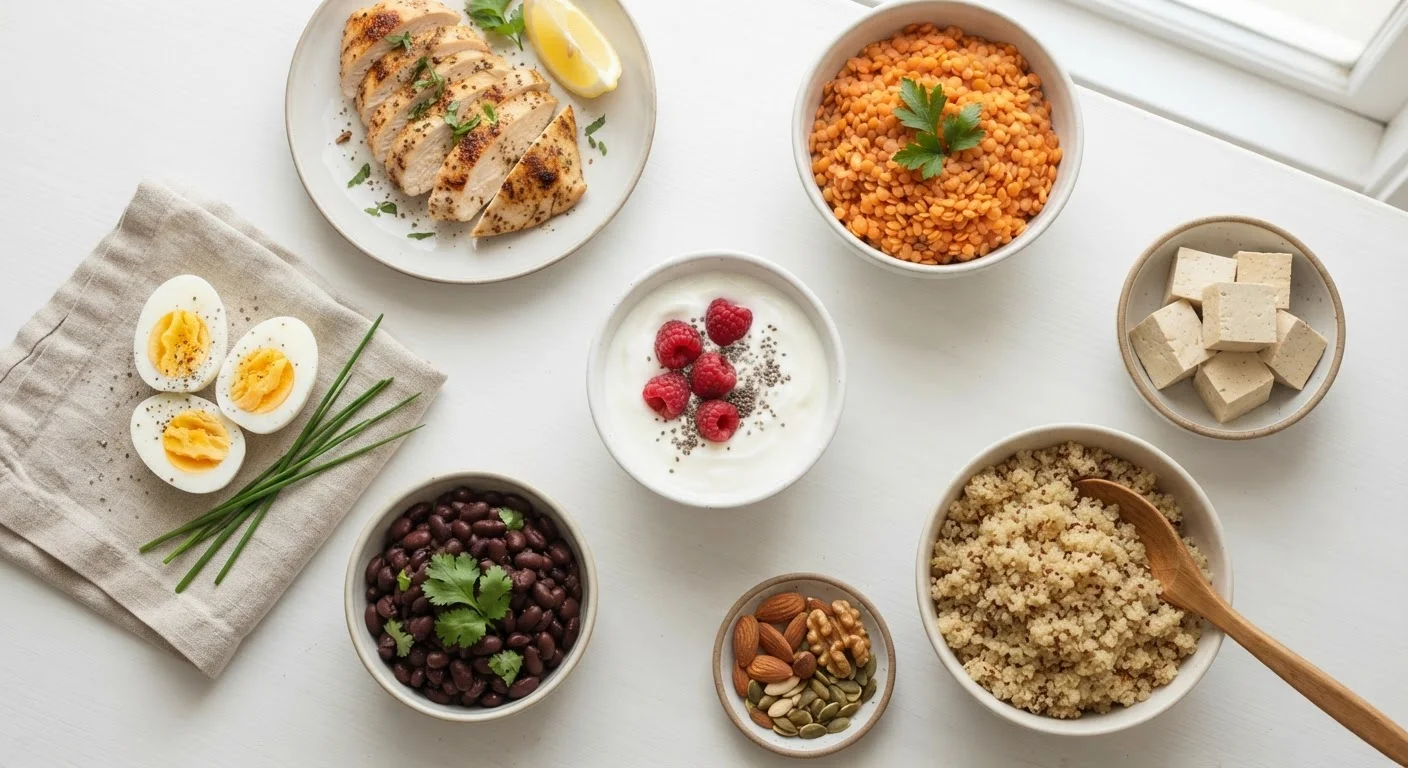
What Protein Actually Does - and Why Completeness Matters
Protein is one of three macronutrients the body relies on, but its role goes well beyond building muscle. It supports enzyme function, immune response, hormone production, and tissue repair. At the molecular level, proteins are assembled from amino acids - 20 in total, of which nine are classified as essential: the body cannot synthesize them, so they must come from food.
A complete protein contains all nine essential amino acids in proportions the body can use. Most animal foods - meat, poultry, fish, eggs, and dairy - meet this standard. Most plant foods do not, though they still contribute meaningfully to overall intake. Soy (edamame, tofu, tempeh) and quinoa are notable exceptions among plant sources, providing all nine essential amino acids.
This distinction matters practically, but not in an alarmist way. Research and mainstream nutritional science consistently confirm that people eating varied plant-based diets - even without deliberately "combining" proteins at each meal - can meet their essential amino acid needs over the course of a day. If you're just starting to think through these fundamentals, our nutrition basics primer offers a useful starting point.
Protein in Omnivore Diets
Omnivores - those who eat both animal and plant foods - generally have the easiest time meeting protein targets because animal-based sources are both protein-dense and complete. Common high-protein animal foods include:
- Poultry and lean meats - chicken breast, turkey, lean beef
- Fish and seafood - salmon, tuna, shrimp, cod
- Eggs - one of the most bioavailable protein sources available
- Dairy - Greek yogurt, cottage cheese, milk, hard cheeses
The omnivore diet also benefits from plant proteins as complementary contributors: beans added to a meat dish, or a handful of nuts alongside a meal with chicken. This layering approach tends to boost total intake with relatively little planning.
One consideration worth noting: heavily processed versions of meat-based foods often deliver less protein per calorie alongside more sodium and saturated fat. Choosing less-processed options generally serves nutritional goals better. For context on why processing level matters, see our article on whole foods vs. ultra-processed foods.
| Omnivore | Vegetarian | Vegan | |
|---|---|---|---|
| Access to complete proteins | High - multiple animal sources | Moderate - eggs and dairy help | Requires intentional food pairing |
| Top protein sources | Chicken, fish, eggs, dairy | Eggs, Greek yogurt, legumes | Soy, quinoa, lentils, seeds |
| Planning effort required | Low | Low to moderate | Moderate |
| Bioavailability of protein | Generally high | High for eggs and dairy | Slightly lower; varies by food |
| Risk of amino acid gaps | Low | Low with dairy or eggs | Manageable with food variety |
| Associated nutrient watch-outs | Saturated fat (red meat) | Vitamin B12 if dairy-free | B12, iron, zinc, calcium |
Protein in Vegetarian and Vegan Diets
Plant-based eaters have more sources available than many people realize. The key is understanding which plant foods are highest in protein and pairing them to cover the full amino acid spectrum.
For vegetarians (who include eggs and/or dairy), the task is relatively straightforward. Eggs and Greek yogurt alone can supply substantial complete protein. Add legumes, nuts, seeds, and whole grains, and hitting daily protein targets becomes manageable without much calculation.
For vegans, soy-based foods do the heaviest lifting as complete plant proteins. Beyond soy, strategic combinations fill the gaps:
- Rice + beans (together they cover all essential amino acids)
- Whole grain bread + peanut butter
- Lentil soup + whole grain crackers
- Quinoa bowls (quinoa alone is complete)
Hemp seeds and chia seeds also provide a reasonably complete amino acid profile and are easy to add to meals. Nutritional yeast, a staple in many vegan kitchens, adds both protein and B vitamins.
The nutrients most often under-supplied in plant-based diets - including iron, B12, zinc, and calcium - are worth monitoring. Our piece on common nutrient gaps covers what population-level data reveals about where well-intentioned eaters tend to fall short.
You Don't Have to Combine at Every Meal
The idea that plant-based eaters must carefully combine complementary proteins at every single meal has been largely revised by nutrition science. What matters more is eating a wide variety of plant proteins throughout the day. A breakfast of oatmeal with hemp seeds, a lunch of lentil soup, and a dinner with tofu and brown rice naturally covers the essential amino acid bases without requiring precise meal-by-meal calculation.
This article is for general informational purposes only and is not a substitute for personalized nutrition or medical advice. Consult a registered dietitian or qualified healthcare provider for guidance specific to your health needs and circumstances.