Why the Label Exists - and What It's Actually Telling You
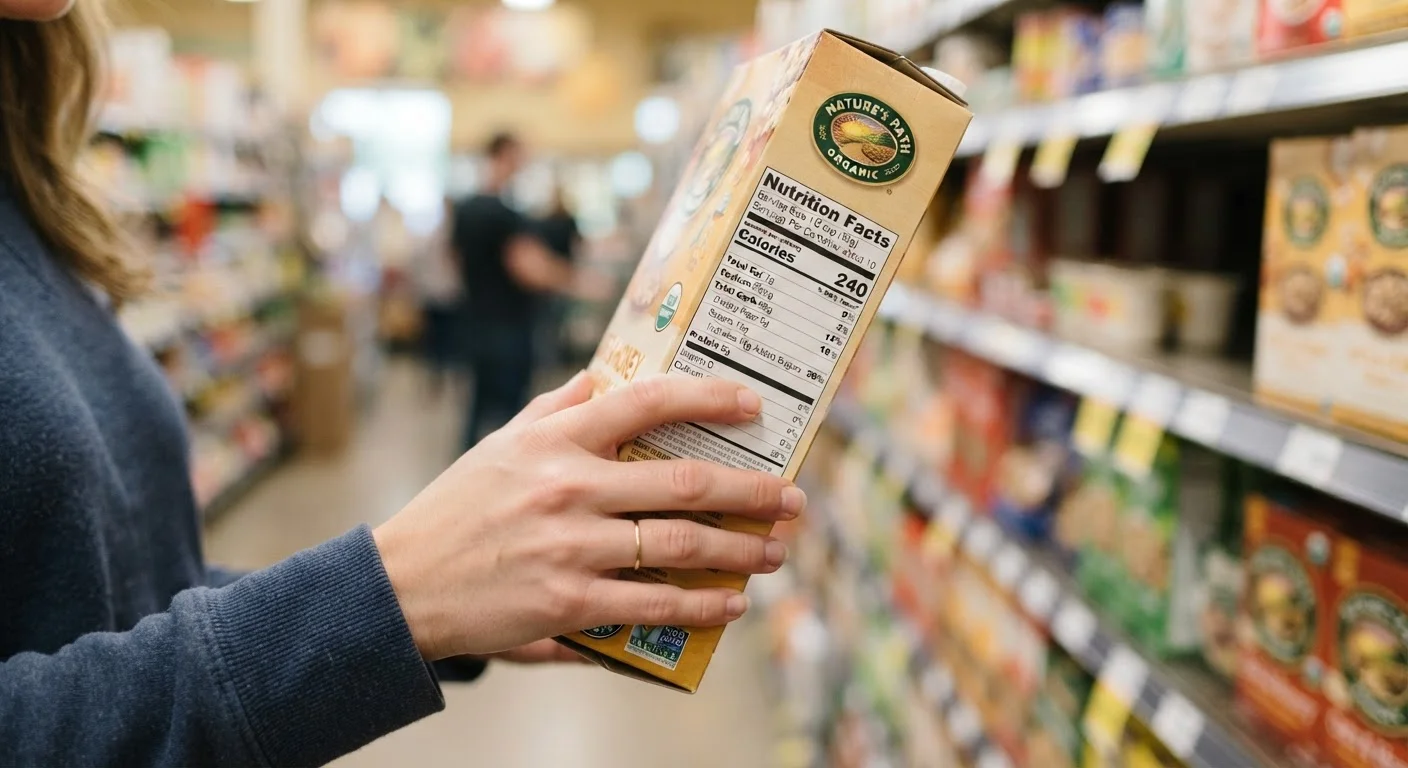
The Nutrition Facts label on packaged food in the United States is a federally standardized format regulated by the Food and Drug Administration (FDA). Its purpose is straightforward: give consumers a consistent, comparable snapshot of a food's nutritional content. The current label format, updated in 2016 and phased in through 2020, includes clearer serving size information, a prominent calorie display, and the now-mandatory added sugars line.
Reading a label well isn't about memorizing numbers - it's about understanding the structure so you can pull out the information that's relevant to your situation quickly. If you're just building your understanding of how food works nutritionally, our nutrition from scratch guide is a strong starting point before diving into label details.
Labels Reflect One Serving, Not the Package
Every number on a Nutrition Facts panel - calories, fat, sodium, everything - applies to one serving, not the whole container. Many packages contain two, three, or more servings. Always check the serving size first and adjust your math accordingly before drawing any conclusions about a food.
How to Read the Label Step by Step
Work through the label from top to bottom. Each section builds on the previous one, which is why the FDA designed the layout in that order. The steps below walk you through every major section.
Use % Daily Value as a Quick Compass
A %DV of 5% or less generally signals a low amount of that nutrient; 20% or more signals a high amount. This rule of thumb works across nearly every nutrient on the label and makes side-by-side product comparison much faster than trying to interpret raw grams.
Find the Serving Size and Servings Per Container
At the very top of any Nutrition Facts label you'll see two lines: Serving Size (expressed in a common household measure plus grams) and Servings Per Container. These two lines are your starting point - ignore everything else until you've read them.
If the package says a serving is 1 cup and there are 3 servings per container, a person who eats the whole package consumes three times every number listed on the label. This single step prevents the most common label-reading mistake.
Look at the Calorie Count in Context
Calories are displayed prominently just below the serving information. This number represents the energy a single serving provides. Rather than judging a food solely on its calorie count, consider what those calories come with - nutrients, fiber, protein - versus what they don't. Our article on calories vs. nutrients explores why energy content alone tells an incomplete story.
Scan the Nutrients to Limit
The label groups certain nutrients because many Americans tend to consume too much of them. These include saturated fat, trans fat, sodium, and added sugars. For each, check both the gram amount and the %DV.
Added sugars deserve special attention - they appear as their own line item under Total Sugars and reflect sugars added during processing, not those naturally present in fruit or dairy. For a deeper look at why this distinction matters, see our piece on added sugar in the American diet.
Check the Nutrients to Get Enough Of
The lower portion of the label lists nutrients most Americans tend to fall short on: dietary fiber, vitamin D, calcium, iron, and potassium. For these, a higher %DV is a positive sign.
Fiber is particularly worth tracking. Most American adults consume well below general recommendations - our article on dietary fiber and why most Americans fall short covers what fiber does and where to find it. Similarly, if you want to understand which nutrient gaps tend to appear even in otherwise healthy diets, see gaps that creep into a reasonable diet.
Read the Ingredient List
The ingredient list appears below the Nutrition Facts box and follows one firm rule: ingredients are listed in descending order by weight. The first ingredient is the most abundant by weight; the last is the least.
A short ingredient list doesn't automatically make a food healthier, and a long one doesn't automatically make it worse - but scanning the first three to five ingredients gives you a quick sense of what a product is primarily made of. If you're interested in how this connects to food processing levels, our article on whole foods vs. ultra-processed foods provides useful context.
Compare Products Using the Same Serving Size
Labels are most useful when you use them comparatively. When choosing between two similar products, adjust mentally for serving size differences before comparing sodium, sugar, or fiber content. A product with fewer calories per serving may simply have a smaller serving size - not a meaningfully different formula.
Understanding nutrient density can help you move beyond simple calorie comparisons toward a more complete picture of a food's value.
Putting It All Together at the Store
Reading a nutrition label is a skill that gets faster with practice. Most shoppers only need 15-20 seconds per product once they know the structure. The goal isn't to find a "perfect" food - it's to make comparisons that are genuinely informed rather than driven by front-of-package marketing claims like "low fat," "natural," or "made with whole grains," which are largely unregulated terms.
% Daily Values Are Based on a 2,000-Calorie Reference
The percent Daily Value (%DV) figures on labels use a 2,000-calorie daily intake as a reference point, as established by FDA guidelines. Your actual needs may be higher or lower depending on age, sex, activity level, and health status. Use %DV as a general guide for comparison, not as a personal target. A registered dietitian can help you determine what numbers are appropriate for your situation.
For a broader picture of how individual food choices fit into overall eating patterns, understanding nutrient density is a practical next step. And because hydration affects how your body processes nutrients, you may also find value in exploring the connection between hydration and nutrition.
This article is for general informational and educational purposes only and is not a substitute for personalized dietary or medical advice. Consult a registered dietitian or qualified healthcare provider for guidance tailored to your individual health needs.