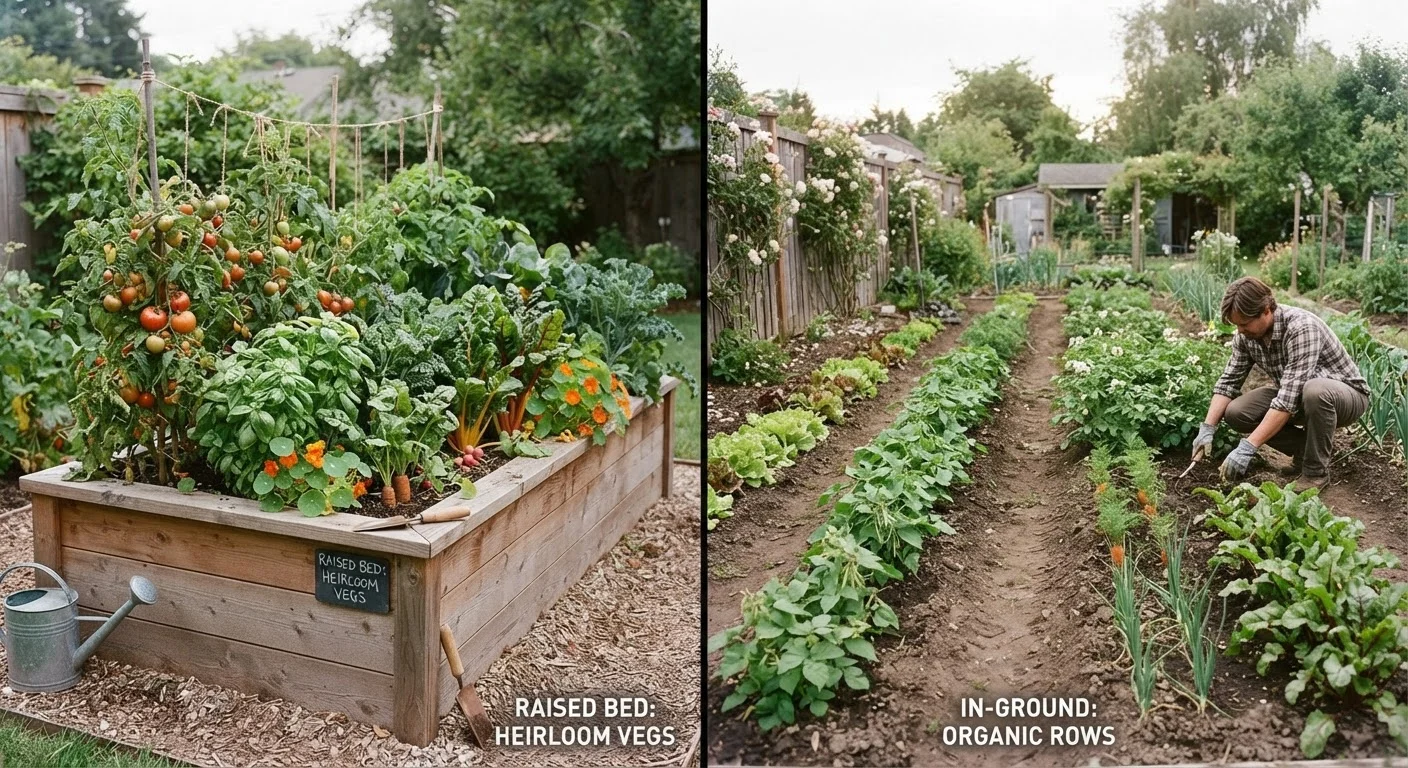
What You're Actually Deciding
Choosing between a raised bed and in-ground planting isn't just an aesthetic preference - it shapes how much work you'll do upfront, what your ongoing maintenance looks like, and how well your plants perform over time. If you're just getting started, our ground-up gardening primer covers the foundational decisions that come before this one.
The core trade-off is simple: raised beds let you build the environment your plants need, while in-ground planting asks you to work with - and gradually improve - what's already there. Both strategies are legitimate paths to a productive garden.
How They Compare Across Key Factors
Looking at the two methods side by side across the criteria that matter most to everyday gardeners helps cut through the noise.
| Raised Beds | In-Ground Planting | |
|---|---|---|
| Upfront cost | Moderate to high (materials + fill soil) | Low (amendments only) |
| Soil control | Complete - you fill with chosen mix | Gradual - amend existing soil over time |
| Drainage | Excellent by design | Depends on native soil type |
| Weed pressure | Lower in early years | Higher, especially from surrounding areas |
| Accessibility | Easier - less bending required | Ground level - more physical effort |
| Season length | Warms faster in spring | Slower to warm, more stable temperature |
| Root depth | Limited to bed depth (usually 12-18 in.) | Unrestricted - ideal for deep-rooted plants |
| Scalability | Costs increase with each new bed | Easier and cheaper to expand area |
A few of these factors deserve more detail before you decide.
Soil, Drainage, and Growing Conditions
Raised beds win decisively on soil control. You fill them with a mix you choose - typically a blend of topsoil, compost, and other amendments - which means you're not at the mercy of whatever's in your yard. This matters enormously if your native soil is heavy clay (which drains poorly and compacts easily) or very sandy (which drains too fast and holds few nutrients).
In-ground gardens require you to test and amend your existing soil, which takes time and repeated seasons to achieve good structure. That said, well-established in-ground beds develop a rich, living soil ecosystem - with earthworms, beneficial microbes, and a deep root network - that can be harder to replicate in a contained bed. Common gardening myths sometimes cloud the picture here, so it's worth reading up on what soil amendments actually do.
Test Before You Amend
If you're considering in-ground planting, a basic soil test (available through many county extension offices) gives you a clear starting point. It reveals pH, nutrient levels, and texture - so you know what to add rather than guessing. Raised bed gardeners can benefit from testing their fill mix after the first season to catch any deficiencies before they affect plant performance.
Cost and Setup Effort
In-ground planting has a lower barrier to entry. Clear the ground, loosen the soil, add some compost, and you're ready to plant. The primary investment is labor and soil amendments - not materials.
Raised beds require building materials (lumber, composite boards, stone, or galvanized metal) and enough quality soil to fill the structure - costs that add up quickly, especially for larger or taller beds. A single 4×8-foot raised bed filled to a 12-inch depth requires roughly one cubic yard of soil mix, which may cost anywhere from $30 to well over $100 depending on your region and what materials you use. Plan your budget carefully before committing to multiple beds.
Accessibility, Weeds, and Pest Pressure
Raised beds sit above ground level, which reduces bending and kneeling - a meaningful advantage for gardeners with back issues or mobility limitations. The elevated position and defined borders also tend to reduce weed pressure in the early years, since you're starting with fresh soil rather than ground that contains years of weed seeds.
In-ground gardens are more vulnerable to weeds migrating in from surrounding areas, and ground-level pests like slugs and some root-feeding insects can be more active. However, raised beds aren't pest-free - deer, rabbits, and many insects operate above ground level regardless of bed height.
For gardeners thinking about what to plant, native plant species often thrive in either setting and tend to need fewer interventions overall.
Season Length and Root Depth
Raised beds warm up faster in spring because the soil mass is exposed to air on all sides. This can extend your growing season by a week or two at either end - genuinely useful in shorter-season climates. The flip side is that raised beds also lose heat faster and can dry out more quickly during heat waves, requiring more consistent watering.
For deep-rooted plants - think established fruit trees, pumpkins, or large shrubs - in-ground planting provides unrestricted root expansion that a raised bed simply can't match. Most annual vegetables and herbs, however, do perfectly well within a 12-inch-deep bed. When you're planning what to grow and how to start it, choosing between seeds and transplants is another decision that intersects directly with your setup method.