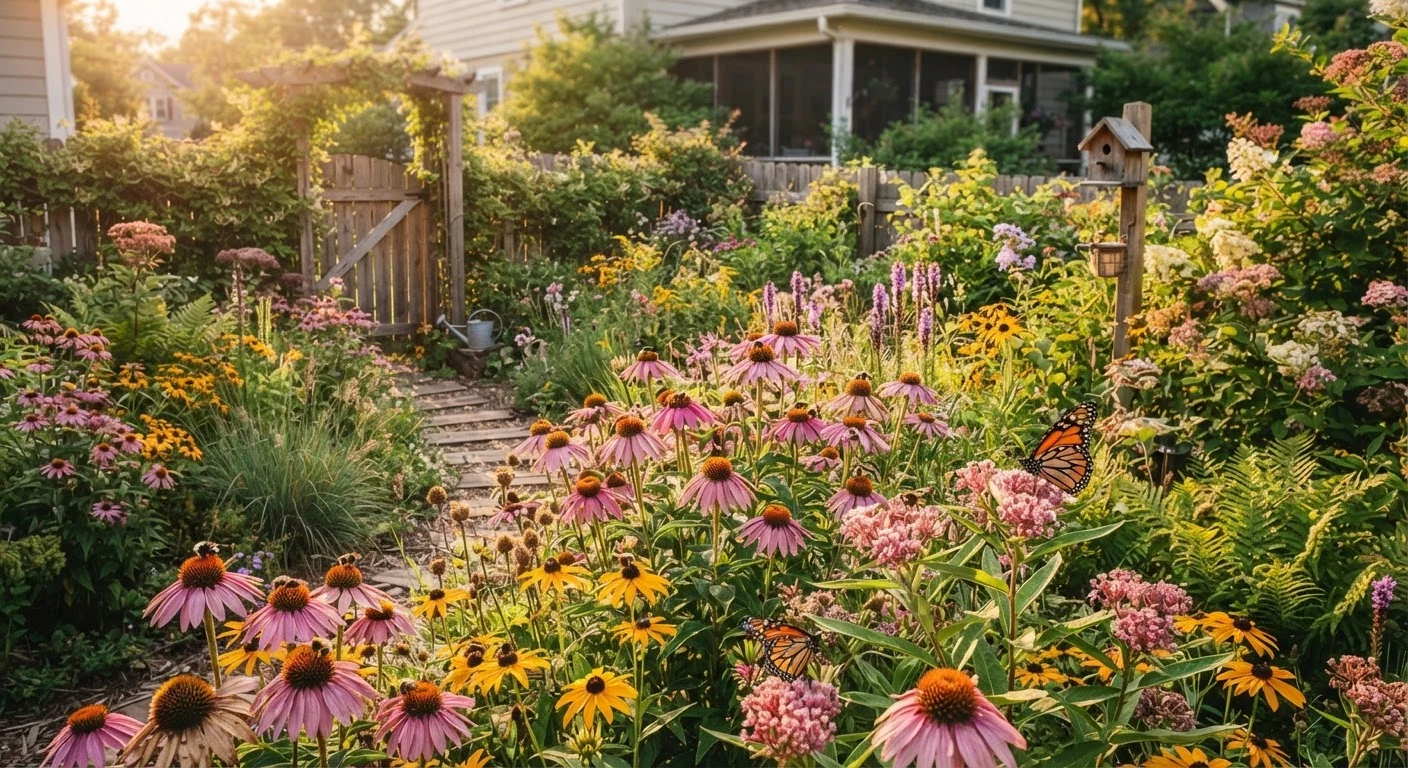
Why Native Plants Make Sense for American Backyards
Native plants - species that evolved naturally in a particular region before European settlement - have spent thousands of years adapting to local soils, rainfall patterns, and temperature swings. That history pays practical dividends for today's homeowners. Once established, natives generally need far less supplemental watering, fewer soil amendments, and little to no synthetic fertilizer compared with many ornamental imports.
Beyond low-maintenance appeal, native plantings support the web of life in your yard. Pollinators like native bees, monarch butterflies, and hummingbirds depend on specific plant relationships that non-native species simply cannot replicate. Birds that eat insects rely on the caterpillars and larvae those plants host. Even a modest native planting can meaningfully support local biodiversity.
Before you choose plants, it helps to understand your yard's light conditions. Our guide on sunlight zones every gardener should know explains how to assess full sun, part shade, and everything in between - a critical first step before selecting any plant. Also consider whether you'll be planting directly in the ground or in a contained setup; raised beds versus in-ground planting covers the trade-offs worth thinking through.
Start With a Regional Native Plant List
Your state's native plant society or local cooperative extension office typically publishes free lists of native species suited to your county or ecoregion. These resources account for local soil types, rainfall averages, and climate extremes - giving you a more reliable starting point than general national guides. Searching '[your state] native plant society' is a quick way to find them.
Native Plants to Consider, by Type and Region
Purple Coneflower (Echinacea purpurea) - Eastern and Central U.S.
Purple coneflower is one of the most versatile native perennials available to American gardeners. Native to prairies and open woodlands from the Midwest to the Southeast, it tolerates clay-heavy soils, summer drought, and humidity. The daisy-like blooms appear from early summer through fall, drawing long-tongued bees, butterflies, and goldfinches that feed on the seed heads in winter. It thrives in full to partial sun and self-seeds reliably once established, gradually expanding a planting without aggressive spreading.
Purple coneflower feeds pollinators in summer and goldfinches all winter long.
Black-Eyed Susan (Rudbeckia hirta) - Nationwide
Few native wildflowers are as adaptable across U.S. climates as black-eyed Susan. Found naturally from the Eastern Seaboard to the Rocky Mountains, it tolerates poor soils, low rainfall, and full sun with ease. The bright golden-yellow blooms with dark centers appear midsummer and persist for weeks, attracting native bees and small butterflies. It works well as a short-lived perennial or annual depending on your region, and it pairs beautifully with native grasses for a naturalistic meadow look.
Black-eyed Susan thrives in poor soils where many ornamentals simply fail.
Common Milkweed (Asclepias syriaca) - Eastern Half of the U.S.
Milkweed is the sole host plant for monarch butterfly larvae, making it one of the most ecologically important native plants a homeowner can grow. Common milkweed grows vigorously in sunny, well-drained spots and spreads via underground rhizomes - so give it room or use it to fill a naturalistic border. Its fragrant pink flower clusters also draw a wide range of native bees. For drier Western gardens, narrowleaf milkweed (Asclepias fascicularis) is a regionally appropriate alternative.
Milkweed is the only plant monarch caterpillars can eat - it's irreplaceable in the garden.
Wild Columbine (Aquilegia canadensis) - Eastern Woodlands
Wild columbine is an elegant native perennial suited to shaded or partly shaded spots that many sun-loving natives cannot fill. Its nodding red-and-yellow blooms arrive in early spring - precisely when ruby-throated hummingbirds return from migration - providing a critical early nectar source. It grows naturally along rocky slopes and forest edges, so it handles thin, dry, or even slightly alkaline soils well. Wild columbine self-seeds modestly, gradually naturalizing in spots where it's happy without becoming invasive.
Wild columbine blooms just as hummingbirds return, making it a perfectly timed food source.
Little Bluestem (Schizachyrium scoparium) - Prairies and Open Slopes Nationwide
Little bluestem is a native warm-season bunchgrass found across much of the continental U.S. and is one of the backbone plants of North American prairies. Growing 2-4 feet tall, it turns a stunning copper-red in fall and holds its color and structure through winter, providing visual interest and overwintering habitat for beneficial insects. It is highly drought-tolerant once established, performs well in sandy or rocky soils with poor fertility, and requires no fertilization. Many sparrows and other seed-eating birds forage through it during colder months.
Little bluestem turns brilliant copper in fall and keeps its structure all winter.
California Poppy (Eschscholzia californica) - Western U.S.
California's state flower is native to open, sunny slopes from the Pacific Coast inland to parts of the Southwest. It thrives in poor, fast-draining soils and tolerates drought and heat with minimal care once established. The vivid orange blooms attract native ground-nesting bees and provide pollen early in the season. California poppy is typically grown as an annual in most gardens and reseeds prolifically, often returning year after year without replanting. It is an excellent choice for slopes, parking strips, or any difficult sunny spot where other plants struggle.
California poppy reseeds freely, filling difficult sunny spots with almost no effort.
Buttonbush (Cephalanthus occidentalis) - Wetland Edges, Eastern to Central U.S.
For homeowners dealing with a consistently wet or low-lying area of the yard, buttonbush is a native shrub worth knowing. It grows naturally along stream banks and pond margins, tolerating standing water better than nearly any other native woody plant. Its unusual spherical white flower clusters, which appear in midsummer, are magnets for bumblebees, hummingbirds, and butterflies. In fall, the round seed heads feed migratory waterfowl and shorebirds. Buttonbush grows 6-12 feet tall, so it works best as a background or screen planting in larger yards.
Buttonbush is one of the few native shrubs that thrives in chronically wet or flooded soil.
Native vs. Native Cultivar: A Useful Distinction
Many garden centers sell cultivated varieties (cultivars) of native plants - selections bred for traits like double flowers, unusual leaf color, or compact size. While these are often labeled 'native,' some cultivars provide reduced ecological benefit because breeding has altered their pollen, nectar, or seed availability. When ecological support for pollinators and wildlife is your primary goal, straight species (unmodified natives) tend to offer the most value. Cultivars can still be worthwhile for ornamental purposes; it's simply helpful to know the difference.
Getting Your Native Plants Established
Even drought-tolerant natives need consistent moisture during their first growing season while roots anchor into native soil. Plan to water regularly through the first summer, then step back and let the plants find their footing. Mulching around the base helps retain moisture and suppresses weeds without smothering crowns.
When starting out, you can either grow from seed or purchase transplants - each approach has real trade-offs. Our article on seeds vs. transplants can help you decide which fits your timeline and budget. Whichever route you choose, sourcing plants from reputable native plant nurseries or regional seed suppliers helps ensure you're getting locally appropriate genotypes rather than cultivated varieties that may offer reduced ecological benefit.
Timing matters, too. Planting in fall gives roots months to establish before summer heat arrives, while spring planting works well when paired with consistent early-season watering. For a season-by-season checklist of what to do and when, see our seasonal gardening tasks guide. With a little planning upfront, a native garden tends to reward patience with years of reliable, low-effort beauty.