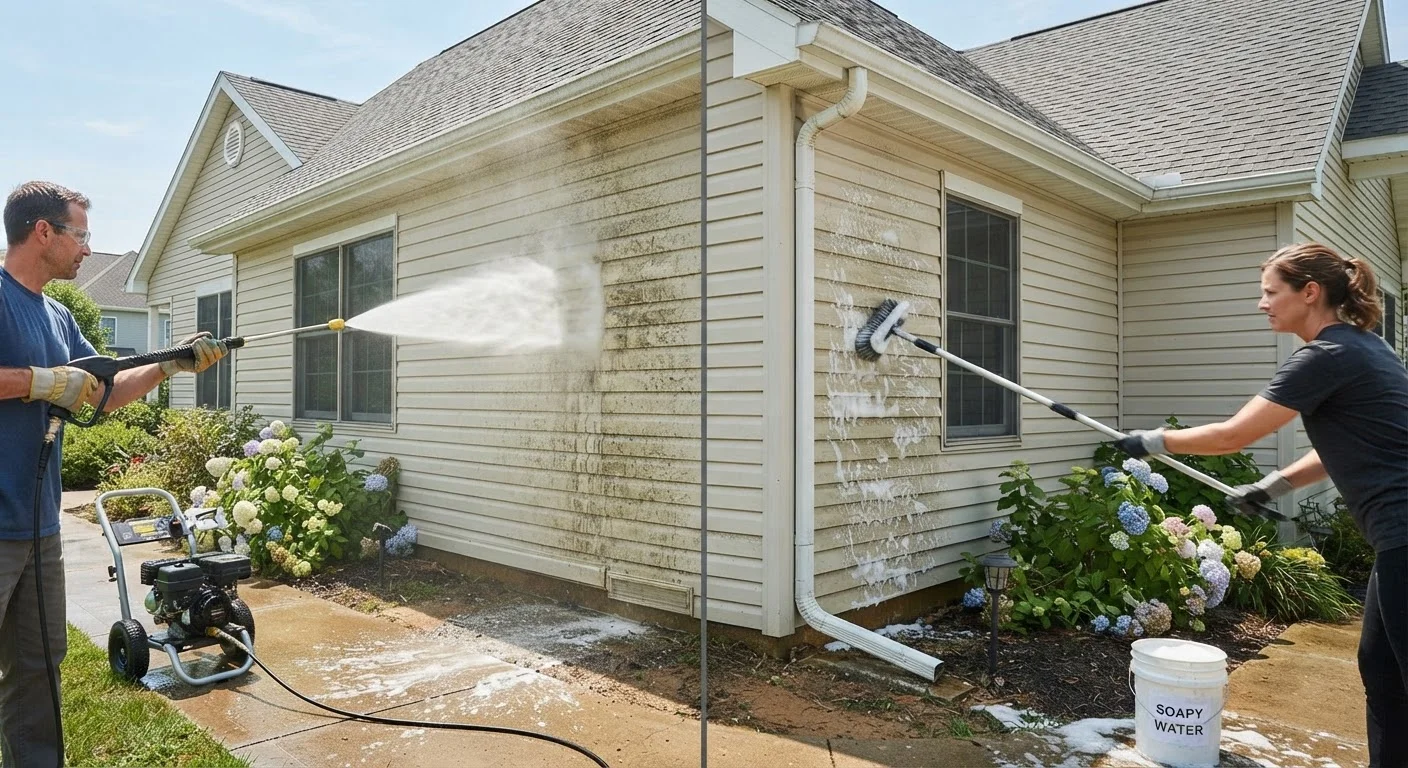
How Each Method Works
Pressure washing uses a motorized pump to force water through a narrow nozzle at high velocity, typically measured in PSI (pounds per square inch). Residential pressure washers generally range from 1,300 to 2,800 PSI. The concentrated stream strips away dirt, algae, mold, and grime quickly - often in a fraction of the time manual cleaning would take.
Hand scrubbing, by contrast, relies on physical agitation using brushes, sponges, or scrub pads combined with water and a cleaning solution. It's slower but puts you in direct control of how much pressure is applied and exactly where the cleaner goes. That tactile feedback is valuable when you're working around windows, caulk lines, or decorative elements.
Both methods can be paired with cleaning solutions - mild detergent, oxygen bleach, or surface-specific cleaners - to improve effectiveness. The method you choose should be driven primarily by what material you're cleaning, not simply by convenience.
| Criterion | Pressure Washing | Hand Scrubbing |
|---|---|---|
| Speed | Fast - covers large areas quickly | Slow - labor-intensive on big surfaces |
| Surface Control | Limited - nozzle choice matters | High - direct tactile feedback |
| Best Surfaces | Concrete, brick, stone, large decks | Wood trim, painted surfaces, delicate areas |
| Risk of Damage | Higher if technique is incorrect | Lower with appropriate tools |
| Equipment Needed | Pressure washer, nozzles, hose | Brushes, bucket, cleaning solution |
| Water Use | Moderate to high | Lower overall |
| Cleaning Power | Excellent on heavy grime and mold | Good for light to moderate soil |
Surface Compatibility: Matching Method to Material
Not every exterior surface tolerates pressure washing equally. Hard, dense materials like poured concrete, brick pavers, and natural stone are well-suited to high-pressure cleaning. They can handle the force without sustaining damage, and the spray effectively dislodges years of embedded grime.
Softer materials demand more caution. Vinyl siding can be pressure washed but only at lower pressure settings (typically under 1,500 PSI) and with a wide-angle spray tip. Directing a narrow jet too close can crack panels or drive water behind the siding - a setup for mold and rot inside your walls.
Wood surfaces like cedar siding or a pressure-treated deck sit in the middle ground. Light pressure washing is often fine, but high PSI or a zero-degree nozzle can raise wood grain, splinter fibers, and force water deep into the wood. In these cases, hand scrubbing with a stiff-bristled brush gives you the control needed to clean effectively without causing damage.
A Word on Water Infiltration
One of the most overlooked risks of pressure washing is water infiltration behind siding or into wood joints. Even small gaps in caulk or flashing can allow pressurized water to penetrate wall cavities, leading to mold growth or structural damage that isn't immediately visible. Before pressure washing, inspect your exterior for cracked caulk, gaps around windows, and loose siding panels - and address those issues first. If you notice water staining inside your home after exterior washing, consult a contractor promptly.
Time, Effort, and Practical Trade-offs
Pressure washing dramatically cuts cleaning time on large surfaces. A driveway that might take two hours to hand scrub can often be done in 30 to 45 minutes with a pressure washer. That speed advantage matters for homeowners maintaining large or multiple exterior surfaces.
However, pressure washing requires setup time, safety awareness, and some skill. Using the wrong nozzle or holding the wand too close to a surface can cause real damage. Always start farther away and move closer gradually to gauge the surface's response. Safety gear - closed-toe shoes and eye protection - is also essential, as the spray can ricochet debris at significant force.
Hand scrubbing is accessible to nearly anyone with no equipment investment beyond brushes and a bucket. It's also quieter and less disruptive, which matters in dense neighborhoods. The trade-off is physical effort and time - especially on large areas or heavily soiled surfaces.
For tasks that fall into a gray area, or if you're unsure whether a surface can handle pressure washing, it's worth reading through when to DIY vs. call a professional to decide whether to tackle it yourself or bring in someone with the right equipment and experience.