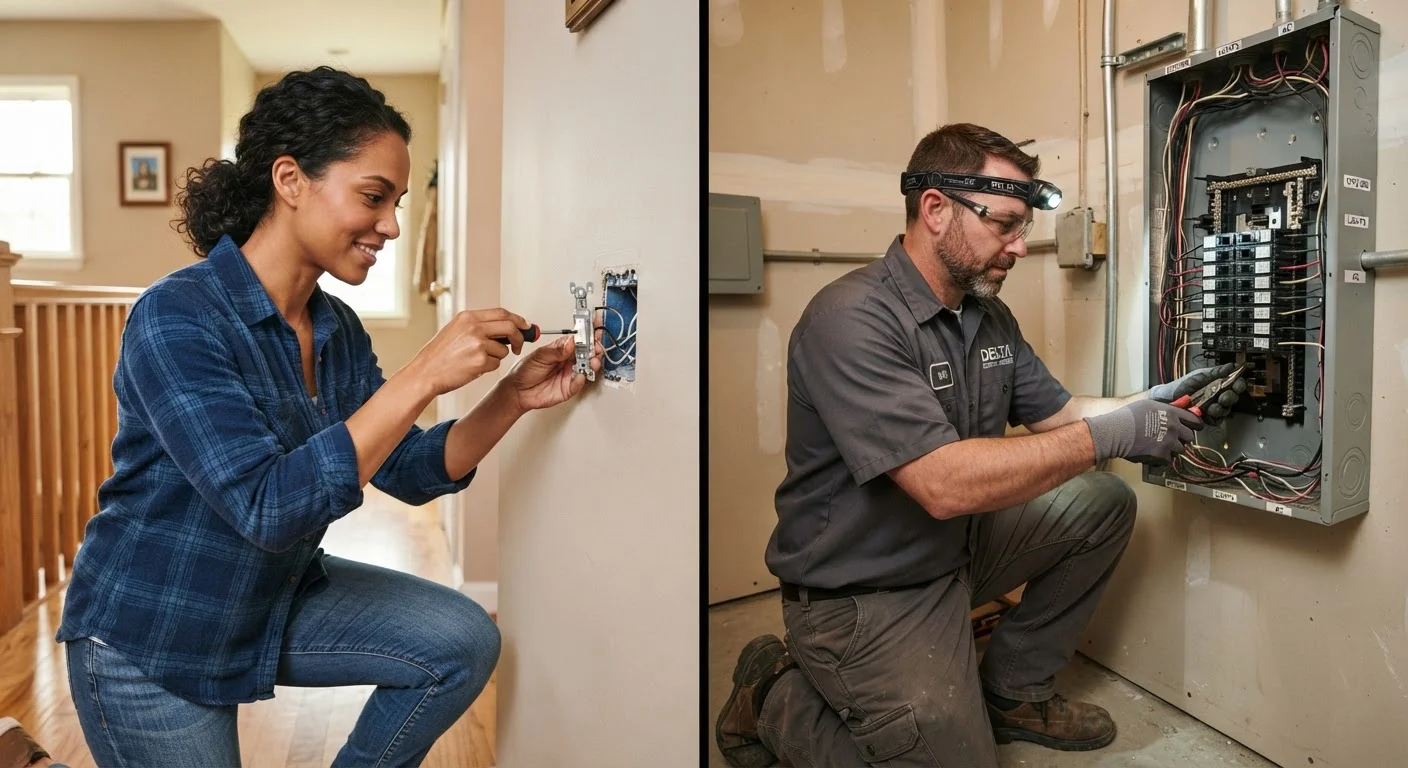
The Real Question Isn't Skill - It's Stakes
Most homeowners frame the DIY-vs.-professional decision around confidence: Do I know how to do this? That's the wrong starting question. The better question is: What happens if this goes wrong?
A poorly painted wall can be repainted. A mishandled gas connection can kill. The consequences of a mistake are what determine whether a task belongs in your hands or a licensed contractor's - not just whether you've watched a tutorial online.
Think of home tasks in two broad categories: those where a mistake is recoverable, and those where it isn't. Keeping that distinction in mind will guide almost every decision you face. You can also avoid common misconceptions by reviewing home maintenance myths that cost homeowners money before starting any project.
Tasks That Are Genuinely DIY-Friendly
A wide range of maintenance tasks carry low risk and don't require permits, specialized licensing, or hazardous system access. These are reasonable for most homeowners to handle:
- Replacing HVAC filters - a simple swap that makes a measurable difference in air quality and system efficiency
- Caulking around tubs, sinks, and windows - straightforward with proper prep and the right product for the surface
- Patching small drywall holes - cosmetic fixes that require patience more than expertise
- Fixing a running toilet - typically a flapper or fill valve replacement available at any hardware store
- Painting interior walls - time-consuming but low-stakes; see common DIY painting myths to avoid wasted effort
- Cleaning gutters and downspouts - ladder safety matters here, but no specialized knowledge is required
- Installing a smart thermostat - many are genuinely designed for DIY installation; this guide to smart thermostat setup walks through when a pro is still warranted
What these share: the systems involved are low-voltage or non-hazardous, the failure modes are visible and manageable, and no permits are typically required.
Build Your Skills Gradually
Start with the lowest-stakes tasks and build confidence methodically. Replacing a toilet fill valve is a great first plumbing project - if something goes wrong, you shut off the water supply valve and call a plumber. Knowing your home's shut-off locations is foundational; this guide to shut-off valves is a smart starting point before tackling any plumbing task.
Where You Should Stop and Call a Professional
Certain categories of work carry risks that make DIY genuinely inadvisable - not because homeowners aren't capable of learning, but because the margin for error is too narrow and the consequences too serious.
Electrical Panel and Wiring Work
Replacing a light switch or outlet on a dead circuit is one thing. Working inside a breaker panel, adding circuits, or touching service entrance wiring is another entirely. This work requires permits in most jurisdictions, and mistakes can cause fires or electrocution. A licensed electrician carries insurance and must meet code.
Gas Lines and Appliances
Any work involving gas supply lines - moving, extending, or connecting them - should always involve a licensed plumber or gas fitter. Even a slow leak is a serious hazard.
Structural Changes
Removing or modifying walls, especially load-bearing walls, requires engineering knowledge and almost always a permit. Guessing wrong can compromise the structural integrity of the entire home.
Roofing and Major Waterproofing
Patching a small flashing issue is manageable for some homeowners. Replacing a roof or addressing systemic water infiltration is not - improper work can void manufacturer warranties and lead to interior damage that compounds over time, as detailed in our article on why deferred maintenance costs more.
| Task Type | DIY-Appropriate | Call a Professional | |
|---|---|---|---|
| Electrical | Switch/outlet replacement (dead circuit) | Panel work, new circuits, service entrance | |
| Plumbing | Faucet washers, toilet flappers, drain clogs | Main line, gas connections, supply line rerouting | |
| Structural | Minor patching, surface repairs | Wall removal, foundation, load-bearing changes | |
| Roofing | Replacing a few shingles, minor caulking | Full replacement, major flashing, underlayment | |
| HVAC | Filter changes, thermostat swap | Refrigerant, ductwork modification, furnace repair | |
| Permits typically required | Usually no | Usually yes |
The Permit Question Changes Everything
Many homeowners skip permits to save time or money, but this decision has real consequences. Unpermitted work can complicate or void homeowner's insurance claims, create problems when selling the home, and result in fines if discovered. In some cases, it means tearing out completed work.
Understanding which projects trigger permit requirements is worth doing before you pick up a tool. This guide to permits for indoor projects breaks down what typically requires official approval. Local requirements vary, so always verify with your municipal building department.
If a project requires a permit, it almost certainly also requires a licensed contractor to pull that permit and complete the work to code. That's not bureaucracy for its own sake - it's a mechanism that protects you, future occupants, and your neighbors.
For a broader look at how to budget for both DIY and professional maintenance costs, this budgeting guide offers a practical framework homeowners can build on over time.
This article provides general home maintenance education and is not a substitute for advice from a licensed contractor, building inspector, or local code authority. Always verify permit and safety requirements with qualified professionals in your area before beginning any home improvement project.