Why Cats Are the Most Under-Examined Pet in America
Dogs visit the veterinarian nearly twice as often as cats, despite cats being the most popular pet in the United States by population. The reasons are partly behavioral - cats are independent, carriers are stressful, and because cats are subtle about discomfort, owners frequently assume a quiet, eating cat is a healthy one.
That assumption is dangerous. Cats are hardwired by evolutionary instinct to suppress signs of pain and illness, a survival mechanism that served wild ancestors but works against domestic cats when it delays diagnosis. By the time a cat shows obvious symptoms - significant weight loss, labored breathing, obvious lethargy - a disease may already be well advanced.
If you're still establishing the basics of cat care, our new cat owner preparation checklist covers the foundational steps, including scheduling that first vet visit.
2x
Rate at which dogs visit vets more often than cats
Industry surveys consistently show dogs receive veterinary care at roughly twice the rate of cats, despite cats outnumbering dogs in U.S. households.
~70%
Cats with dental disease by age three
The American Veterinary Dental College estimates that the majority of cats show signs of periodontal disease by their third birthday.
Top 3
Cause of death in older cats: kidney disease
Chronic kidney disease is consistently reported as one of the leading causes of illness and death in cats over age 10, according to veterinary epidemiology data.
What Actually Happens During a Feline Wellness Exam
A standard annual wellness exam is a systematic evaluation that moves through multiple body systems. Here's what a typical appointment covers:
- Weight and body condition: Weight is recorded and compared to previous visits. Vets use a body condition score (BCS) to assess whether a cat is at a healthy weight, underweight, or obese - each carries specific health implications.
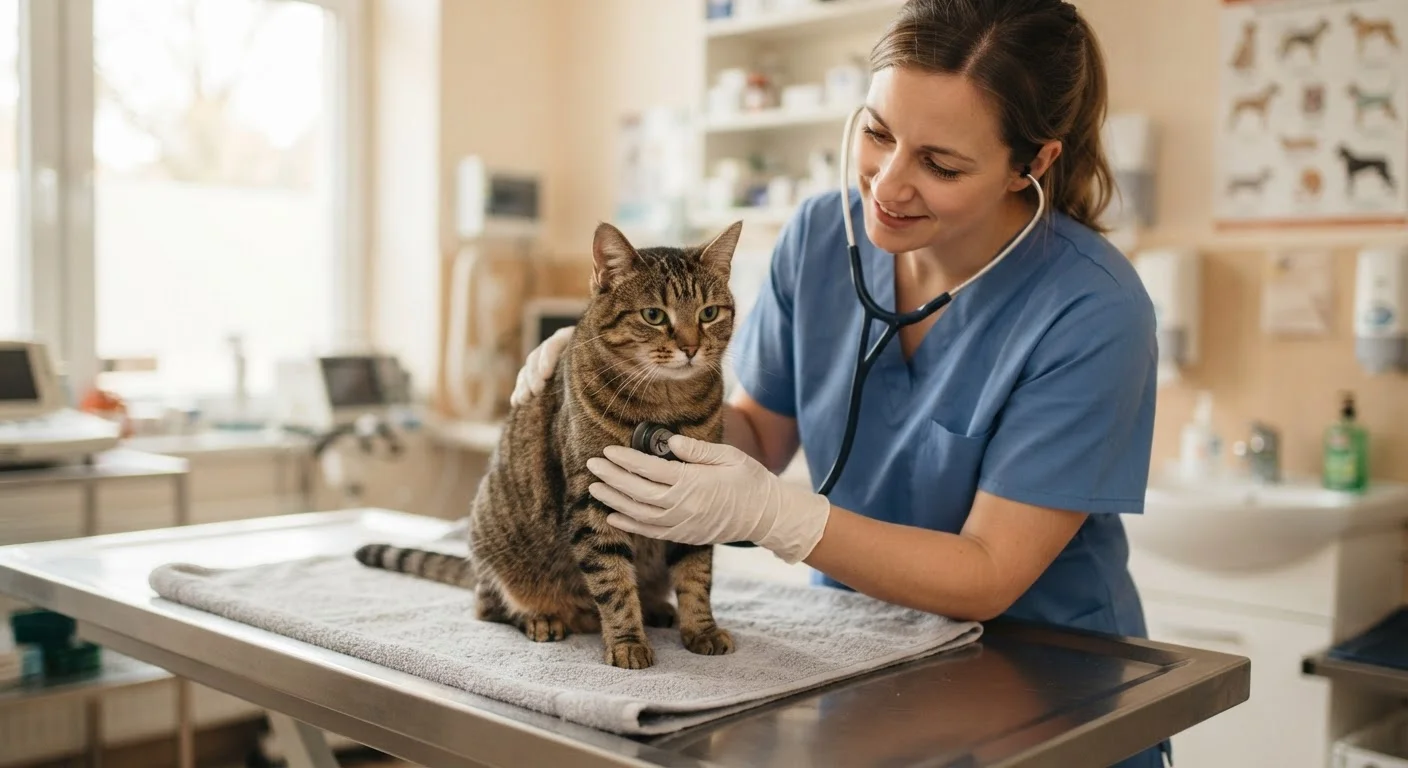
- Heart and lungs: Auscultation (listening with a stethoscope) checks for heart murmurs, arrhythmias, and abnormal lung sounds.
- Abdominal palpation: The vet manually feels the abdomen to assess kidney size and texture, detect masses, and check for bladder or intestinal abnormalities.
- Oral health: Dental disease affects the majority of cats by age three. The vet examines teeth and gums for tartar buildup, gingivitis, and tooth resorption.
- Eyes, ears, and coat: These surface assessments can reveal parasites, infections, early signs of systemic disease, or nutritional deficiencies.
- Vaccinations and parasite prevention: Core vaccines are updated on schedule, and flea, tick, and heartworm prevention is reviewed.
For cats seven and older, the vet will often recommend bloodwork and a urinalysis - critical tools for detecting kidney disease, hyperthyroidism, diabetes, and anemia before symptoms appear.
Bring a Fresh Stool Sample When Possible
Many vets recommend a fecal examination at least once a year, especially for cats that spend any time outdoors. Intestinal parasites like roundworms and giardia don't always cause visible symptoms but can affect long-term health. A small, fresh sample collected the morning of the appointment is usually sufficient - ask your clinic in advance for their preferred collection method.
Conditions That Routine Exams Catch Early
Early detection isn't a marketing phrase - it's clinically meaningful for several of the most common feline diseases.
Chronic kidney disease (CKD) is one of the leading causes of illness in older cats. By the time a cat drinks more water or loses noticeable weight, significant kidney function may already be lost. Blood creatinine levels and SDMA (a more sensitive kidney marker now included in many senior panels) can flag declining function years earlier.
Hyperthyroidism, caused by a benign tumor on the thyroid gland, typically affects cats over 10. Symptoms - increased appetite, weight loss, hyperactivity - can creep in gradually and be mistaken for normal aging. A simple blood test measures thyroid hormone levels and enables early treatment, which meaningfully changes outcomes.
Dental disease is consistently underestimated by owners. Tooth resorption and periodontitis are painful and can contribute to systemic inflammation. Regular oral assessments catch problems before they require emergency extractions.
Nutrition is closely linked to many of these conditions. Our guide on what cats actually need from their diet provides context for the dietary discussions your vet may raise during the exam.
How to Make the Visit Work for You and Your Cat
The quality of a wellness visit depends in part on what you bring to it. Vets typically have limited time per appointment, so arriving prepared makes a meaningful difference.
Keep a running list. Note any changes in behavior, appetite, litter box habits, water intake, or energy levels since the last visit - even if they seem minor. Changes you've normalized over months can be clinically significant.
Practice carrier comfort. Leave the carrier out at home with bedding inside so your cat associates it with rest, not dread. A calmer cat allows for a more thorough exam.
Ask specific questions. Dental cleaning timing, parasite prevention for your region, weight management, or whether bloodwork is appropriate for your cat's age are all worthwhile topics to raise proactively.
If your cat has recently been spayed or neutered, annual exams are also the right time to revisit post-procedure health. Our article on spaying and neutering covers what to expect and how it intersects with long-term wellness care.
This article is for general informational purposes only and does not constitute veterinary medical advice. Always consult a licensed veterinarian for guidance specific to your cat's health and care needs.