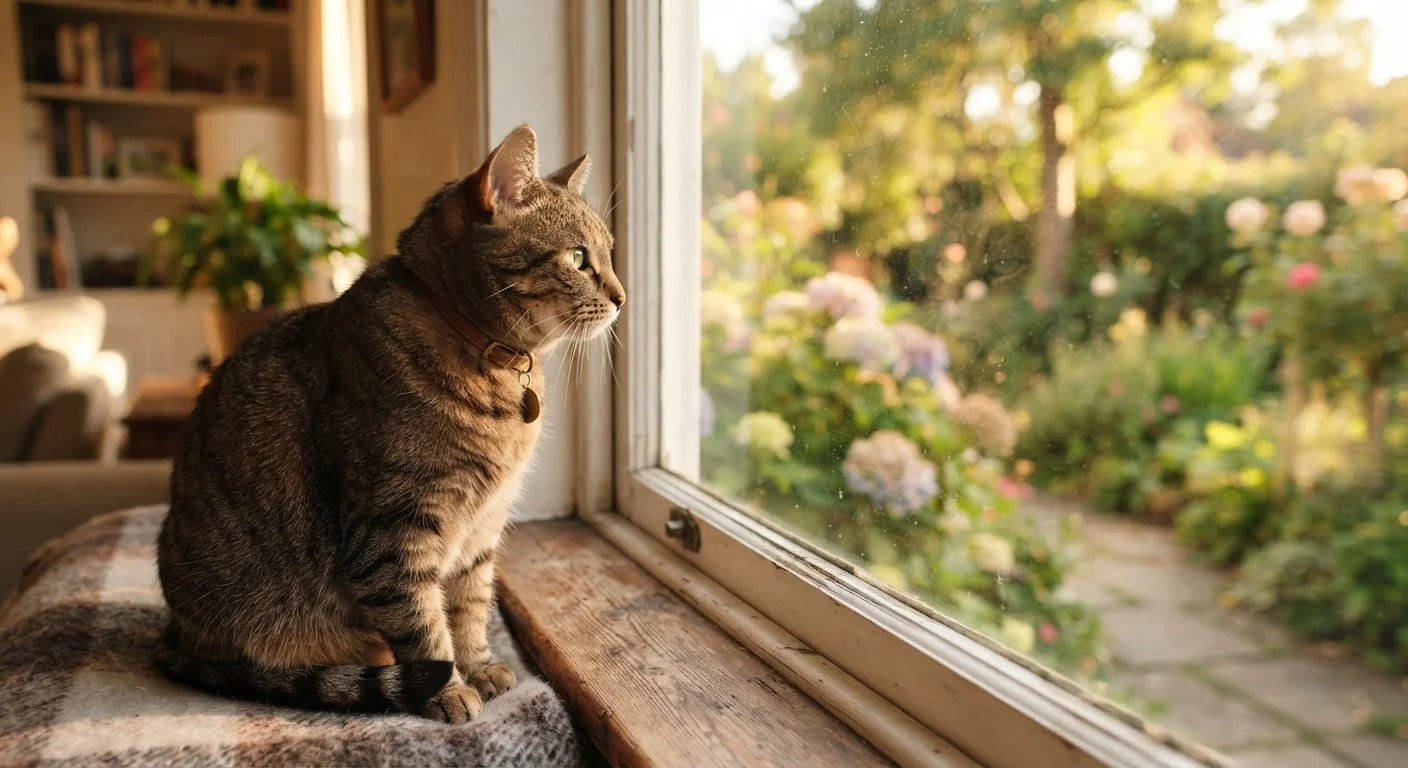
The Core Trade-Off: Lifespan vs. Lifestyle
Veterinary and animal welfare research has consistently found that indoor cats live longer than their outdoor counterparts. Studies suggest the average indoor cat lives 12-18 years, while outdoor cats average closer to 2-5 years, depending on environment. The gap is largely explained by external hazards - not by indoor cats being inherently healthier.
That said, longevity is not the only measure of feline wellbeing. Cats evolved as active hunters with complex territorial and sensory needs. A life spent indoors without adequate stimulation can produce chronic stress, obesity, and behavioral problems. The question is not simply where a cat lives, but how well its environment meets its species-specific needs.
Significantly longer average lifespan
Indoor cats are sheltered from the primary causes of early feline mortality - traffic, predation, and infectious disease - which contributes to lifespans two to three times longer than free-roaming cats.
Lower risk of infectious disease
Cats kept indoors have dramatically reduced exposure to FeLV, FIV, rabies, and parasites, even when vaccinations are current.
No wildlife predation impact
Indoor cats do not contribute to the predation of native birds and small mammals, which is a documented ecological concern associated with free-roaming cats.
Easier to monitor health changes
Owners of indoor cats can more readily observe changes in appetite, litter box habits, and behavior - all of which are early indicators of illness.
Protection from environmental toxins
Rodenticides, antifreeze, and toxic garden plants pose less risk to cats who are never exposed to them outdoors.
Why Indoor Life Is Safer
The risks cats face outdoors are both numerous and well-documented. Traffic is among the leading causes of injury and death in free-roaming cats. Encounters with wildlife - coyotes, larger birds of prey, and other cats - carry significant injury risk, particularly in suburban and rural areas.
Disease exposure is another major concern. Outdoor cats are more likely to contract feline leukemia virus (FeLV), feline immunodeficiency virus (FIV), rabies, and various parasitic infections including toxoplasmosis and heartworm. Even vaccinated cats face higher exposure frequency outdoors.
Toxin exposure is underappreciated: rodenticides, antifreeze, pesticides, and toxic plants are common in neighborhoods. Cats are also responsible for significant wildlife predation - a concern with ecological implications beyond the individual animal.
Higher risk of obesity without active management
Reduced activity combined with ad libitum feeding makes indoor cats prone to weight gain, which carries its own serious health consequences.
Behavioral issues from understimulation
Cats without adequate outlets for natural behaviors - hunting, climbing, scratching - can develop stress-related problems including aggression and inappropriate elimination.
Limited sensory and environmental variety
Outdoor environments provide unpredictable sensory input that is difficult to fully replicate indoors; some cats may show signs of chronic understimulation or boredom.
Requires consistent owner investment in enrichment
Indoor cats depend entirely on their owners for physical and mental stimulation, making the quality of their environment directly contingent on owner engagement.
The Real Challenges of Indoor Living
An indoor environment becomes a welfare problem when it fails to address a cat's behavioral repertoire. Cats need opportunities to stalk, climb, scratch, hide, and engage in predatory play. Without these outlets, behavioral issues such as aggression, inappropriate elimination, excessive vocalization, and destructive scratching are common outcomes.
Weight gain is a persistent concern. Indoor cats tend to be less active, and many owners inadvertently overfeed, especially with free-fed dry kibble. Obesity in cats is linked to diabetes, joint disease, and shorter lifespan - meaning poor indoor management can erode some of the safety advantages of keeping a cat inside. Our guide to feline nutritional needs covers how diet choices affect long-term health.
Indoor Cats Still Need Veterinary Preventives
Even strictly indoor cats should remain on core vaccines and parasite prevention protocols. Insects, other pets, and brief escapes can still expose them to fleas, heartworm-carrying mosquitoes, and respiratory viruses. Consult your veterinarian about the appropriate prevention schedule for an indoor cat's specific risk profile.
For owners who want practical strategies to keep an indoor cat engaged, see low-cost ways to mentally stimulate an indoor cat.
The Middle Ground: Supervised and Structured Outdoor Access
Many animal welfare organizations now recommend a compromise approach for cats whose owners want to provide outdoor enrichment without full free-roaming risk. Catios - enclosed outdoor structures - allow cats to experience fresh air, natural light, and sensory stimulation while eliminating predator exposure and roaming hazards.
Harness training with a well-fitted cat harness allows some cats to explore supervised outdoor environments. Not all cats adapt to leash walks, but those that do often show measurable reductions in stress-related behaviors. The key is that outdoor access is controlled, predictable, and escape-proof.
12-18 years
Average indoor cat lifespan
Veterinary literature consistently places average indoor cat lifespan in this range, compared to roughly 2-5 years for free-roaming outdoor cats.
~60%
Estimated overweight rate in domestic cats
Various veterinary prevalence studies estimate that a majority of pet cats in the U.S. are overweight or obese, with indoor lifestyle and feeding habits as contributing factors.
Whatever the arrangement, the quality of the indoor environment remains the foundation. Food-puzzle feeders, vertical space, window perches, interactive play sessions, and rotated enrichment items are among the evidence-supported strategies for meeting indoor cats' cognitive and physical needs.