Why Mental Stimulation Matters for Indoor Cats
Indoor cats live safer, longer lives on average - but that safety comes with a trade-off. Without thoughtful enrichment, the indoor environment can become mentally barren for an animal whose instincts are built around hunting, exploring, and problem-solving. The result is often boredom, and boredom in cats rarely stays quiet. It tends to surface as destructive scratching, excessive vocalization, overgrooming, or aggression. Understanding the root cause is the first step - and if you're already puzzled by your cat's quirky habits, this breakdown of common feline behaviors offers useful context.
The good news is that meeting a cat's mental needs doesn't require a big budget. Most of what cats respond to - novelty, movement, scent, and challenge - can be provided with minimal cost and some creativity. The strategies below are practical, vet-aligned, and built around how cats actually think and behave.
Schedule daily interactive play sessions
A wand toy, a shoelace, or even a crinkled piece of paper can trigger a cat's prey drive just as effectively as a store-bought gadget. What matters is that you are actively involved. Move the toy unpredictably - letting it dart behind furniture, pause, then dash away - to mimic real prey behavior. Two sessions of 10-15 minutes per day are generally considered beneficial for adult cats. Kittens and younger cats may benefit from more frequent, shorter bursts of activity.
Unpredictable movement - not fancy materials - is what activates a cat's prey drive.
Rotate toys to prevent habituation
Cats lose interest in familiar objects quickly - a phenomenon rooted in their survival instinct to focus on novel stimuli. Rather than leaving every toy out permanently, keep most of them stored and cycle a few into rotation every few days. Even a toy your cat previously ignored may spark renewed interest after a week away. This approach costs nothing and extends the effective life of whatever toys you already own.
A toy that's been out of sight for a week can feel brand new to a cat.
Use food puzzles and foraging to slow feeding
In the wild, cats spend a significant portion of their waking hours hunting for food. Replacing a standard bowl with a food puzzle - even a homemade one using a muffin tin or egg carton with kibble hidden in each cup - forces cats to work for their meal. This engages problem-solving skills, slows eating (which can help with digestive comfort), and provides meaningful mental activity. Scatter feeding on a snuffle mat or across a textured surface offers a similar effect.
Making cats work for food mimics natural foraging and reduces mealtime boredom in minutes.
Create vertical space and hiding spots
Cats are both predators and prey animals, which means they're instinctively drawn to elevated vantage points and concealed spaces. Adding cat-accessible shelving, clearing a sturdy bookshelf, or placing a cardboard box on its side costs little but dramatically increases the complexity of your cat's environment. Multiple vertical levels allow cats to survey their territory, retreat when overstimulated, and feel genuinely in control of their space - all of which support psychological wellbeing.
Vertical space and hiding spots address cats' dual instinct to survey and seek cover.
Offer window access with outdoor views
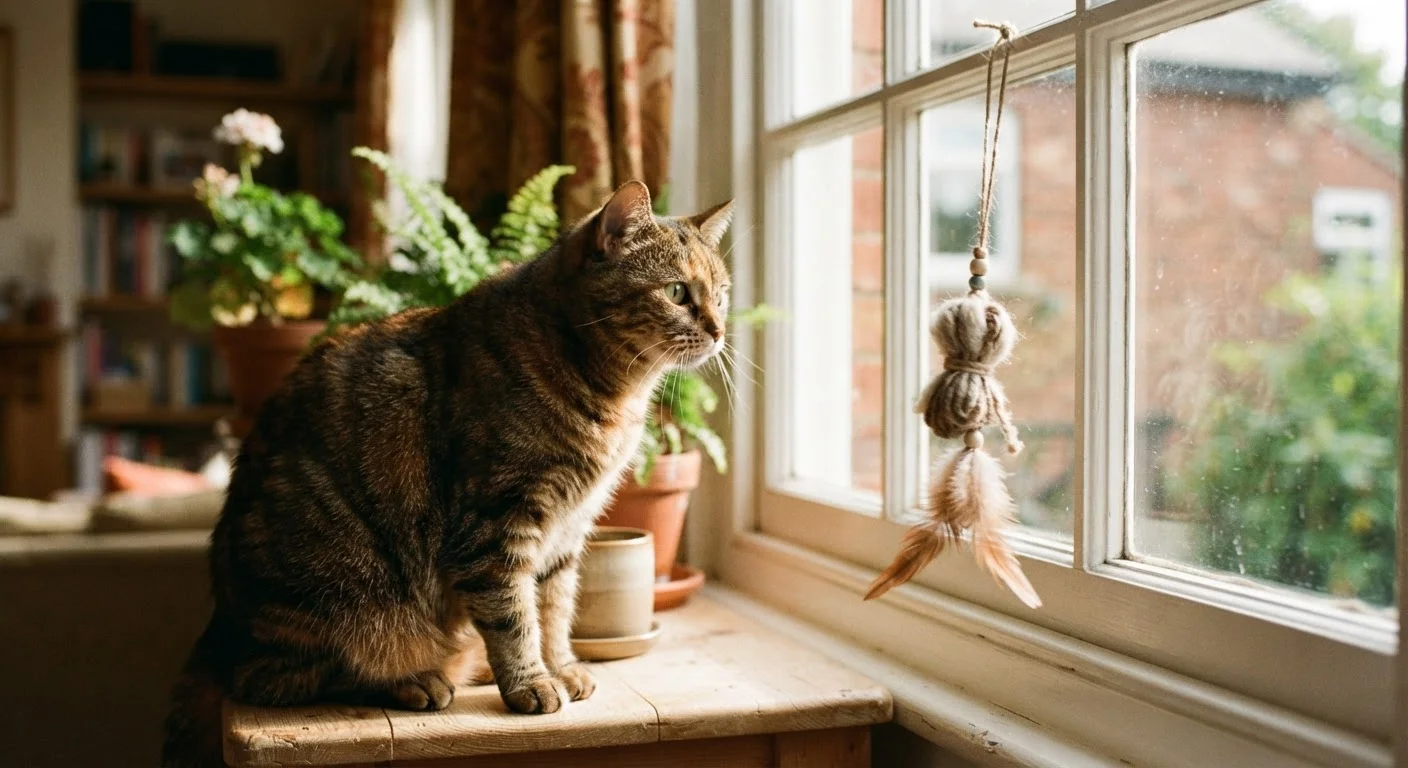
A perch near a window provides hours of passive stimulation through movement, light changes, and wildlife activity. Positioning a bird feeder just outside a cat-accessible window is a low-effort, high-reward setup. Cats will spend considerable time tracking birds, squirrels, and insects - essentially watching their own live nature channel. This form of visual enrichment is particularly valuable for cats who are home alone during the day.
A window perch with an outdoor view can occupy an indoor cat for hours each day.
Introduce scent enrichment and novel textures
Cats navigate the world heavily through smell, yet scent enrichment is often overlooked. Rotating different textures and safe scents - such as dried catnip, valerian root, or silver vine (a natural alternative to catnip that some cats respond to more strongly) - provides sensory novelty at minimal cost. Even bringing in a leaf or pinecone from outside can pique a cat's curiosity. Always introduce new scents gradually and observe your cat's reaction to ensure they're comfortable rather than stressed.
Scent novelty engages a cat's most dominant sense in ways that visual toys alone cannot.
Teach simple tricks using positive reinforcement
Training isn't just for dogs. Cats are capable of learning cues like sit, high-five, and targeting (touching a specific object with their paw or nose) through reward-based methods. Short training sessions of two to five minutes tap into a cat's problem-solving ability and create a structured form of engagement between owner and pet. Use small, soft treats or a portion of the cat's regular meal as a reward. Beyond the mental workout, consistent training sessions strengthen the human-animal bond in measurable ways.
Teaching cats simple tricks provides cognitive challenge and deepens the human-animal bond.
Building a Richer Routine for Your Cat
Enrichment works best as a daily habit rather than an occasional novelty. Even spending ten focused minutes on interactive play each morning and evening can measurably reduce boredom-related behaviors. The key is consistency and variety - cycle through different activities across the week so your cat always encounters something slightly new. Cats have individual preferences, so pay attention to which activities generate the most enthusiasm and lean into those.
Track What Your Cat Actually Enjoys
Not every cat responds to every enrichment type - some are highly food-motivated while others go wild for movement-based play. Spend a few days noting which activities generate the most engagement, and build your routine around those. An enrichment strategy tailored to your individual cat will always outperform a generic one.
If you have other pets at home, enrichment strategies can look quite different across species. For perspective on how environmental needs differ, see how experts approach enrichment for caged birds - the contrast highlights just how tailored feline enrichment needs to be. For those also managing dogs in the household, indoor and outdoor exercise strategies for dogs rounds out a multi-pet approach.
This article is for general informational purposes only. Consult a veterinarian if your cat shows sudden behavioral changes, as these can sometimes indicate underlying health concerns.