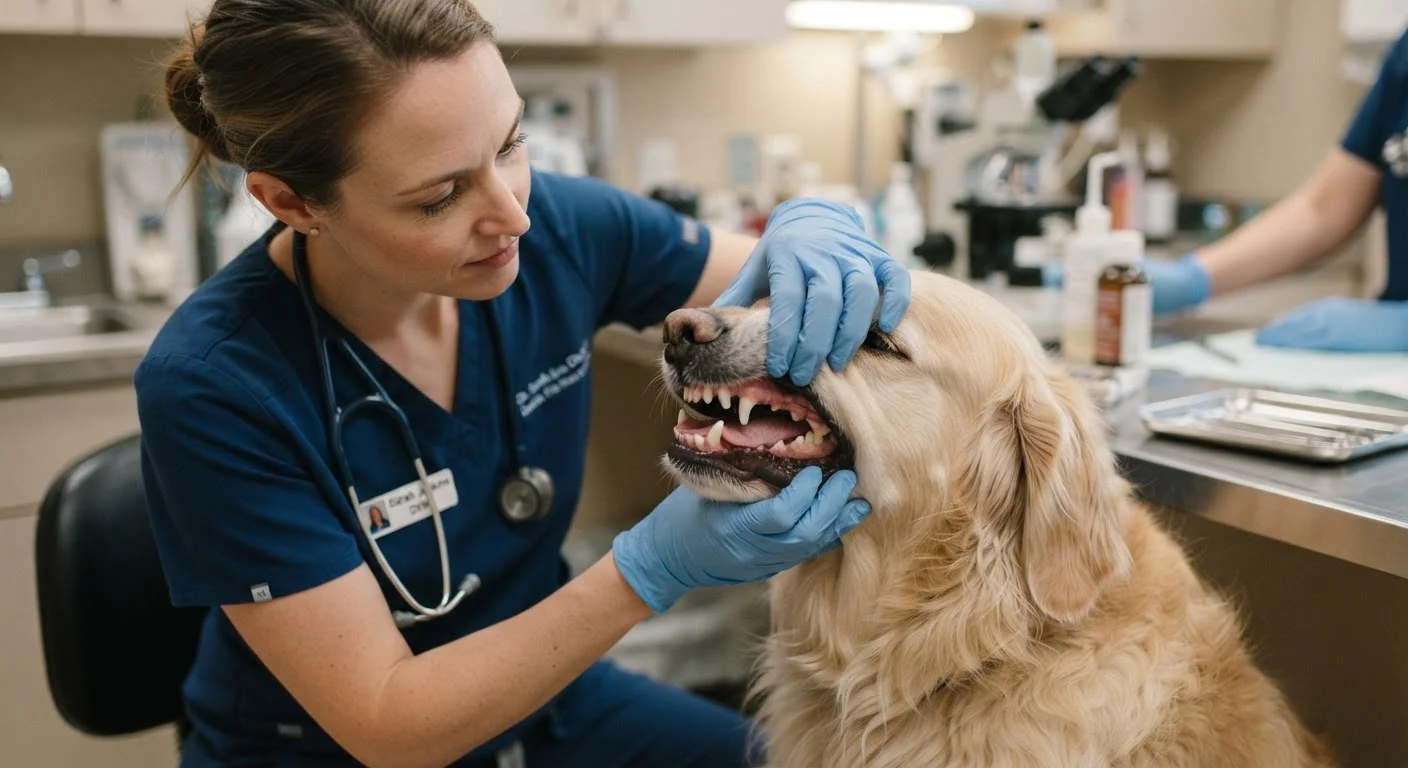
Why Dental Health Gets Overlooked - And Why That's a Problem
Most dog owners know to watch for limping, vomiting, or changes in appetite. Teeth are a different story. Oral health tends to fall off the radar because dogs rarely show obvious signs of dental pain - they keep eating, keep playing, and keep appearing fine. But beneath the surface, disease can be advancing steadily.
Veterinary organizations consistently rank periodontal disease as the most prevalent health condition in adult dogs. The progression is gradual: plaque forms on teeth within hours of eating, mineralizes into hard tartar within days, and - without removal - drives bacterial infection deeper into gum tissue and bone. Dogs that seem healthy may already be living with chronic oral pain. Because dogs instinctively mask discomfort, the behavioral cues of pain are often subtle and easy to dismiss.
80%+
Dogs with dental disease by age three
Veterinary dental health organizations estimate that the majority of dogs show signs of periodontal disease by their third year of life.
#1
Most common diagnosed condition in adult dogs
Periodontal disease consistently ranks as the most frequently diagnosed health condition during veterinary examinations of adult dogs.
3-5×
Higher periodontal risk in small breeds
Toy and small-breed dogs are disproportionately affected due to dental crowding relative to jaw size, accelerating tartar and plaque accumulation.
The Systemic Consequences of Untreated Oral Disease
The mouth is not isolated from the rest of the body. When periodontal infection is advanced, bacteria from the gum pockets can enter the bloodstream - a process called bacteremia. Veterinary research has linked this pathway to changes in the heart valves, kidneys, and liver. While the degree of causation versus association continues to be investigated, the connection is well-established enough that dental disease is now recognized as a whole-body health concern, not merely a tooth-and-gum issue.
Tooth loss is another direct consequence. As infection destroys the bone and ligament structure supporting the teeth, extraction becomes necessary. In severe cases, jaw bone weakening (osteomyelitis) can result. Small-breed dogs - including Chihuahuas, Dachshunds, and Yorkshire Terriers - face elevated risk because their teeth are crowded relative to jaw size, accelerating plaque accumulation. Owners of aging dogs should be particularly vigilant; senior dogs face compounding health challenges that make dental disease harder to manage the longer it's ignored.
“Dental disease is not just a mouth problem. When bacteria from infected gums enter the bloodstream, they can affect the heart, kidneys, and liver. Treating it as a cosmetic issue is one of the most common and consequential mistakes dog owners make.”
— Veterinary Oral Health Council, Organization dedicated to veterinary dental health standards and owner education
What Vet-Aligned Dental Care Actually Looks Like
Effective dental care combines professional veterinary treatment with consistent at-home maintenance. Neither alone is sufficient.
Professional Cleanings
A proper veterinary dental cleaning is performed under general anesthesia. This allows the veterinarian or veterinary technician to scale above and below the gumline, probe periodontal pockets, take dental X-rays to assess root and bone health, and extract teeth that are beyond saving. Anesthesia-free dental cleanings - sometimes offered at pet stores or grooming facilities - only address visible surface tartar and do not treat the subgingival (below-gumline) disease where infection originates. Most veterinarians recommend professional cleanings at least annually, though frequency varies by individual dog, breed, age, and disease stage.
At-Home Brushing
Daily tooth brushing with a dog-formulated toothpaste is the most effective at-home method to slow plaque accumulation. Human toothpaste contains xylitol and fluoride, both toxic to dogs - never substitute it. Introduce brushing gradually using a finger brush or soft-bristled toothbrush, building tolerance over several weeks. Dogs that resist brushing may benefit from veterinarian-approved dental chews or water additives as supplementary tools, though these do not replace brushing.
Recognizing Warning Signs Early
Catching dental disease before it becomes advanced gives owners the best chance of avoiding serious consequences. Key warning signs include:
- Persistent bad breath - not just "dog breath," but a noticeably foul or fetid odor
- Yellow or brown deposits on teeth, particularly near the gumline
- Red, swollen, or bleeding gums
- Pawing at the face or rubbing the mouth on surfaces
- Dropping food, chewing on one side, or reluctance to eat hard kibble
- Loose or missing teeth
These signs warrant a veterinary appointment. Diet can also play a role in oral health trajectory - certain feeding habits quietly affect a dog's overall health, and wet-food-only diets may contribute to faster plaque accumulation in some dogs.
This article is for general informational purposes only and does not constitute veterinary medical advice. Always consult a licensed veterinarian for guidance specific to your dog's health needs.