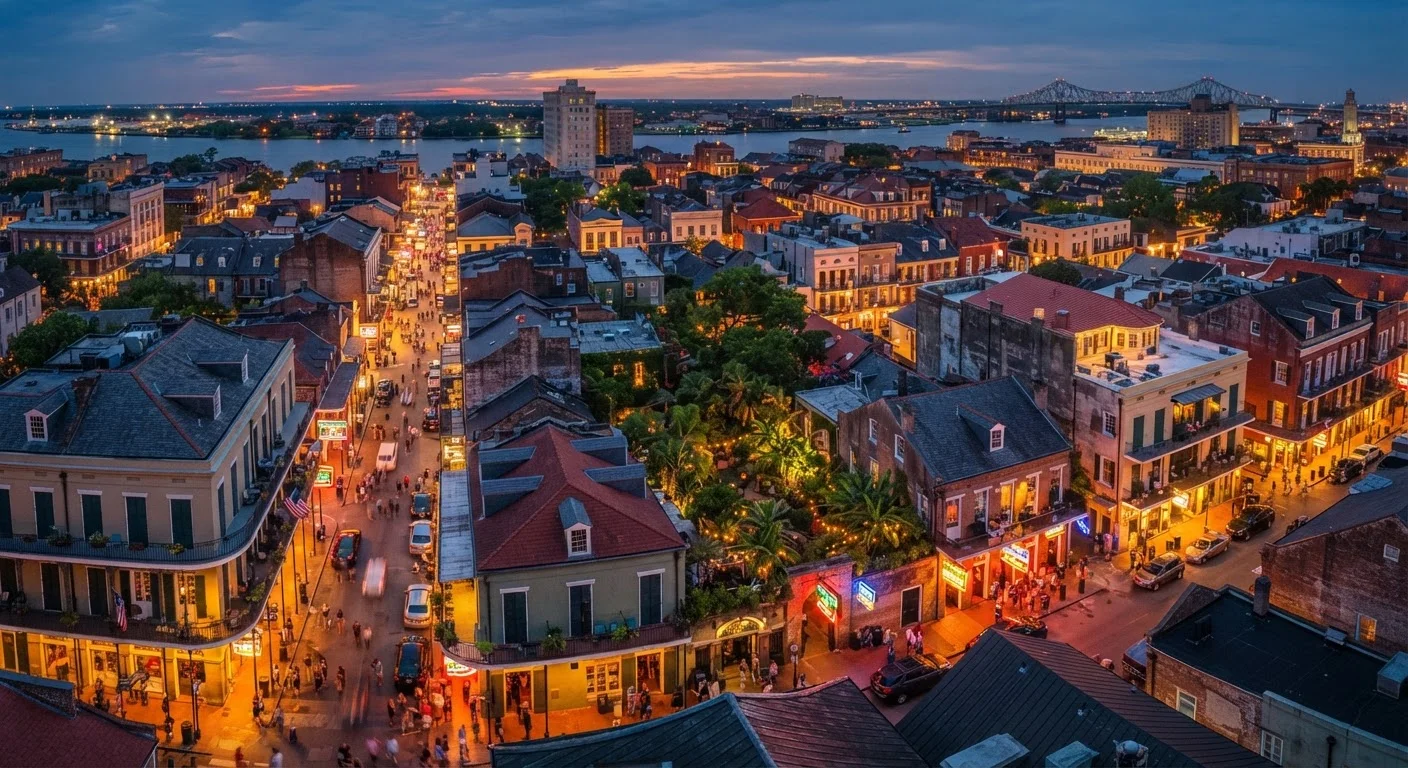
The City Beyond the Tourist Strip
Most first-time visitors arrive expecting Bourbon Street and leave surprised by everything else. New Orleans is a genuinely complex city - layered with history, local pride, and a culture that didn't develop for tourism, even if tourism has become central to its economy.
The French Quarter is real, it's historically significant, and it's worth exploring. But it represents a small slice of what the city actually is. Bourbon Street itself is essentially an entertainment corridor, loud and unapologetically commercial after dark. It tells you almost nothing about how New Orleanians actually live.
What makes New Orleans unusual among American cities is how strongly its local identity has persisted despite generations of visitors. The food traditions, the musical culture, the speech patterns, the seasonal rhythms tied to Mardi Gras and Jazz Fest - these didn't emerge to attract outsiders. They grew from the city's specific history as a port city at the intersection of French, Spanish, African, Caribbean, and American influences.
Walk One Block Off Bourbon Street
If Bourbon Street feels overwhelming or touristy, walk one block in either direction - Royal Street and Frenchmen Street offer a noticeably different experience. Royal Street is quieter, lined with galleries and antique shops, while Frenchmen is where locals go for live music without the neon-lit chaos.
Just as Nashville's character shifts dramatically from block to block, New Orleans reveals itself in layers - and the most interesting ones require some deliberate exploration.
Neighborhoods Worth Knowing
The French Quarter and the Garden District are the most visited areas, and both deserve time. The Garden District's wide, tree-shaded streets and grand 19th-century homes offer a striking contrast to the Quarter's dense, balcony-lined blocks. The St. Charles streetcar line connects these two areas along one of the most scenic urban routes in the South.
Every Neighborhood Has Its Own Pace
New Orleans is not a city with one uniform character. The Bywater feels like a quiet art enclave; Mid-City has a residential, neighborhood-grocery feel; Tremé is the historically significant African American cultural heart of the city. Understanding this variety helps you plan a trip that goes beyond the obvious.
The Marigny and Bywater neighborhoods, just downriver from the French Quarter, have developed into centers for arts, local restaurants, and live music venues that cater more to residents than visitors. Frenchmen Street in the Marigny is where you're most likely to hear jazz played by working musicians in front of mixed crowds of locals and travelers.
Tremé, just north of the French Quarter, is considered the oldest African American neighborhood in the country and the birthplace of much of New Orleans' jazz and brass band tradition. It's a residential area with deep cultural significance - worth learning about before you visit rather than wandering through uninformed.
Mid-City and Uptown are largely residential and give you a sense of ordinary New Orleans life: corner bars, neighborhood po'boy shops, and oak-lined streets that feel far removed from the tourist economy.
Food, Music, and Local Rhythm
New Orleans food is not a theme - it's a living tradition. Red beans and rice on Mondays is a longstanding local custom with roots in the days when laundry was done on that day and beans could simmer unattended. Gumbo recipes vary by family and neighborhood. Beignets are an everyday breakfast item, not a novelty. Understanding this context changes how you experience eating in the city.
The most memorable meals in New Orleans are often not at famous or expensive restaurants. Corner spots, neighborhood lunch counters, and family-run Creole kitchens frequently offer food that is more authentic and far less crowded than the places with lines around the block.
Music operates the same way. Live music in New Orleans is not confined to clubs or scheduled shows. You'll hear brass bands on street corners, jazz in grocery store parking lots during neighborhood events, and second line parades moving through residential streets on Sunday afternoons. The city's musical culture is communal and participatory - you're invited to join the second line, not just watch it pass.
The city also moves at its own pace. New Orleans is not a city that rewards rushing. Meals are long, conversations drift, and locals tend to treat time as flexible. Visitors who try to optimize every hour often miss what makes the city worth visiting in the first place.
Practical Realities Before You Go
New Orleans is hot and humid for much of the year. From late May through September, temperatures regularly exceed 90°F with high humidity that makes outdoor time physically demanding. Budget extra time for rest, stay hydrated, and plan outdoor activities for mornings.
Weather Can Change Your Plans Quickly
New Orleans sits below sea level in parts, and heavy rain can cause rapid street flooding even during short summer storms. Always check the forecast before heading out, carry an umbrella, and be aware that some areas flood faster than others. Humidity levels are intense from May through September and can catch visitors off guard.
Getting around the tourist core is manageable on foot and by the St. Charles streetcar. For neighborhoods like Mid-City or Bywater, rideshare services are the most practical option. Parking in the French Quarter is limited and expensive; most visitors find it easier to leave a car behind if their hotel is in a central location.
Accommodation prices and availability fluctuate significantly around Mardi Gras, Jazz Fest, Essence Festival, and Sugar Bowl weekend. If you're visiting during any of these events, book well in advance and expect higher prices throughout the city. Visiting outside peak events means more availability, lower costs, and a more local-feeling experience.
Always verify entry requirements, health advisories, and any local regulations with official government and city sources before traveling, as conditions can change. The city's official tourism resources and the U.S. government's travel information portal are the most reliable starting points.
New Orleans & Company (Official Tourism Site)
The official destination resource for New Orleans, covering events, neighborhoods, and seasonal planning information directly from the city's tourism body.
U.S. Department of State Travel Information
For entry requirements, safety considerations, and travel advisories relevant to domestic and international travelers visiting U.S. destinations including New Orleans.
French Quarter
The oldest neighborhood in New Orleans, known for its 18th-century Creole architecture, wrought-iron balconies, and dense concentration of bars, restaurants, and tourist activity.
Creole cuisine
A style of cooking that blends French, Spanish, African, and Caribbean culinary traditions, historically developed in New Orleans by its mixed-heritage population.
Second line
A New Orleans tradition where a jazz brass band leads a parade through the streets, with community members joining in behind - common at celebrations, funerals, and neighborhood events.
Mardi Gras
A city-wide festival season culminating on Fat Tuesday (the day before Ash Wednesday), marked by parades, elaborate floats, beads, costumes, and public celebrations.
Neutral ground
The local New Orleans term for the median strip in the middle of a road - used in everyday conversation and a cultural marker of local dialect.