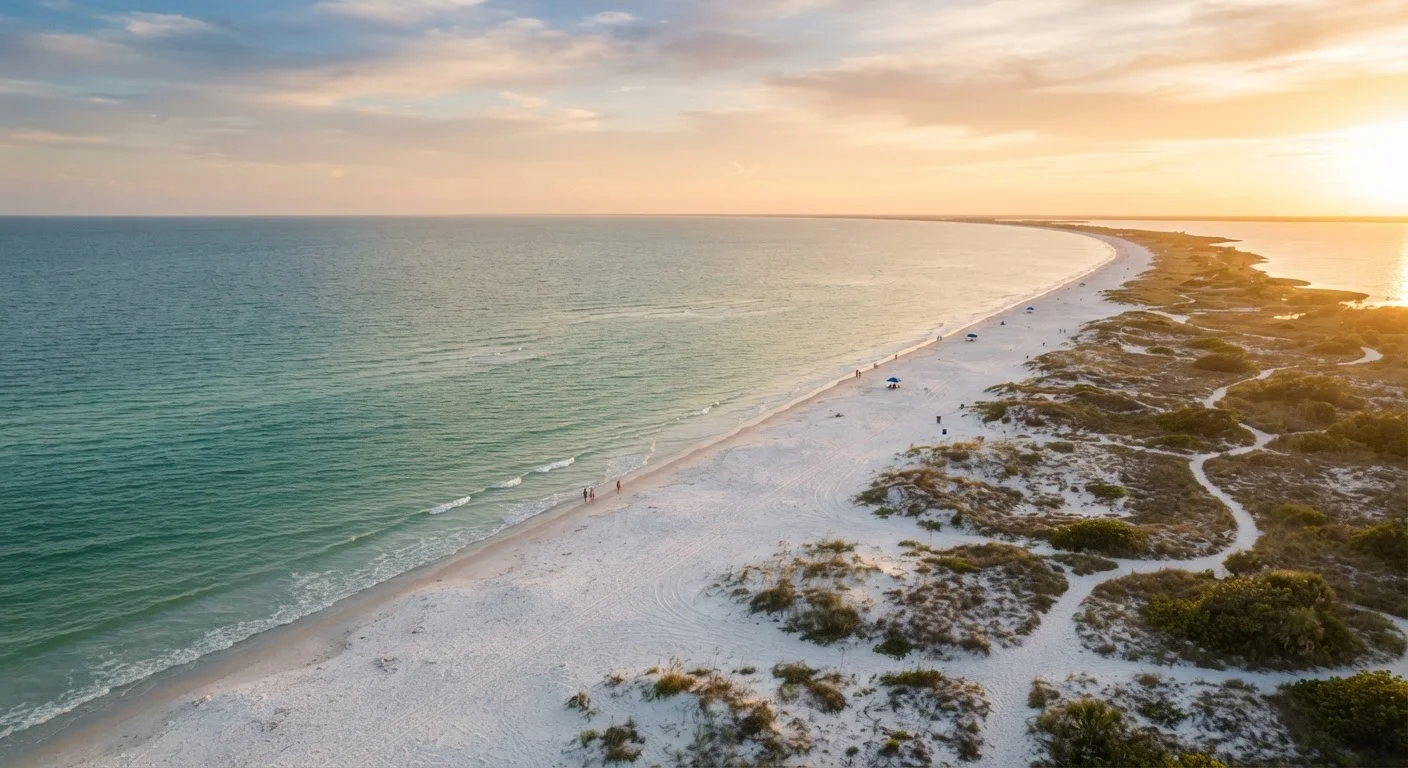
What the Gulf Coast Actually Covers
Many travelers mentally shrink the Gulf Coast down to Destin or Panama City Beach. In reality, the region spans roughly 1,700 miles of coastline across Texas, Louisiana, Mississippi, Alabama, and Florida. Each state brings something meaningfully different to the table.
Texas offers Padre Island National Seashore - one of the longest undeveloped barrier islands in the world - alongside the funky coastal city of Corpus Christi. Louisiana contributes the Mississippi Delta, fishing communities, and a cultural identity unlike anywhere else in the US. Mississippi and Alabama are often skipped entirely, yet they hold quiet gems like the Pascagoula River Audubon Center and Dauphin Island. Florida's Gulf side, particularly around the Tampa Bay area and down through Naples, is distinct in character from its panhandle resorts.
For travelers considering a multi-stop journey through the region, see our guide to pacing a multi-city US trip to avoid the common mistake of trying to cover too much ground too quickly.
The Advantages Worth Knowing
The Gulf Coast earns its reputation for a reason. Here's what genuinely sets it apart from other US coastal destinations.
Warmer, calmer water than the Atlantic coast
Gulf water temperatures routinely reach the low-to-mid 80s°F in summer, and the absence of strong surf makes it particularly accessible for families with young children or inexperienced swimmers.
Significantly less crowded than comparable Atlantic beaches
Much of the Gulf Coast - particularly Mississippi, Alabama, and the Texas coast - sees a fraction of the visitor volume that destinations like the Outer Banks or Miami Beach absorb, giving travelers more breathing room.
Exceptional food culture rooted in local seafood and Cajun-Creole tradition
Gulf shrimp, blue crab, oysters, and redfish are staples here, prepared through cooking traditions - gumbo, étouffée, fish tacos - that have developed over generations in coastal communities.
More affordable lodging and dining than comparable coastal regions
Coastal towns in Alabama and Mississippi in particular tend to carry lower price points than comparable destinations in Florida, and off-peak Gulf travel can be considerably lighter on the budget.
Significant wildlife and natural diversity
The region supports sea turtle nesting on barrier islands, migratory bird corridors, productive fishing ecosystems, and protected areas like Gulf Islands National Seashore, which spans Florida and Mississippi.
1,700 mi
Total US Gulf Coast shoreline length
According to NOAA's coastal geography data, the Gulf Coast shoreline spans approximately 1,700 miles across five US states.
84°F
Average Gulf water temperature in summer
NOAA sea surface temperature data shows Gulf of Mexico nearshore waters averaging in the low-to-mid 80s°F between June and September across most of the coast.
Culturally, few American coastal regions are this layered. New Orleans sits just an hour from the Gulf and is effectively the region's cultural capital - but smaller towns like Biloxi, Mississippi, and Port Aransas, Texas, carry their own distinct histories rooted in fishing, Creole heritage, and Gulf-town resilience.
The Limitations Travelers Should Weigh
No destination is without trade-offs, and honest trip planning means confronting them before you book.
Hurricane season creates real travel risk
The Atlantic hurricane season runs June through November, and the Gulf of Mexico is especially susceptible to rapid storm intensification. Travel plans - and any non-refundable bookings - can be disrupted with relatively little warning.
Uneven tourism infrastructure between states
While Florida's Gulf coast is highly developed, stretches of the Mississippi and Alabama Gulf coasts have limited hotel stock, restaurant variety, and visitor services - which can be a surprise to travelers expecting resort-level amenities.
Summer heat and humidity can be oppressive
July and August bring heat indices that frequently exceed 100°F along much of the coast, combined with high humidity that makes outdoor exploration physically demanding for extended periods.
Water clarity varies significantly by location
Unlike the Caribbean or even parts of the Atlantic coast, Gulf waters can turn murky - particularly after storms or near river outlets - which can disappoint travelers expecting consistently clear, blue water.
Limited public transportation between destinations
The Gulf Coast is almost entirely car-dependent outside of New Orleans. Travelers without a vehicle will find connectivity between towns and coastal attractions very restricted.
On Water Quality After Storms
Heavy rainfall and runoff events can temporarily affect Gulf water quality, particularly near river mouths and developed shorelines. Before swimming or engaging in water activities, it's worth checking advisories from local health departments or the EPA's Beach Advisory and Closing Online Notification (BEACON) system. Conditions typically improve within a few days of a storm passing, but verification before arrival is a sound habit.
It's also worth comparing the Gulf experience to other US coastal alternatives. The Florida Keys offer a very different vibe - more developed, more tourism-centric, and organized around a single iconic drive rather than a sprawling multi-state stretch.
Planning Your Gulf Coast Visit Wisely
The Gulf Coast rewards deliberate planning. Late February through early May and October through mid-November are widely considered the most comfortable windows - avoiding both peak summer heat and hurricane season risk. Always verify current conditions and any active weather advisories through official sources such as the National Weather Service before finalizing travel.
Because the region's highlights are spread across hundreds of miles, a road trip format tends to suit it best. Our guide to structuring a road trip covers how to build a logical route with the right rest and buffer time built in. Solo travelers can also find practical guidance for first-time solo Gulf Coast travel in a format focused on reducing logistical stress.
Wherever you land on the Gulf Coast, it pays to treat the region as what it actually is - a diverse, sprawling stretch of American coastline with genuine variety - rather than a monolithic beach destination.