What to Expect on the Overseas Highway
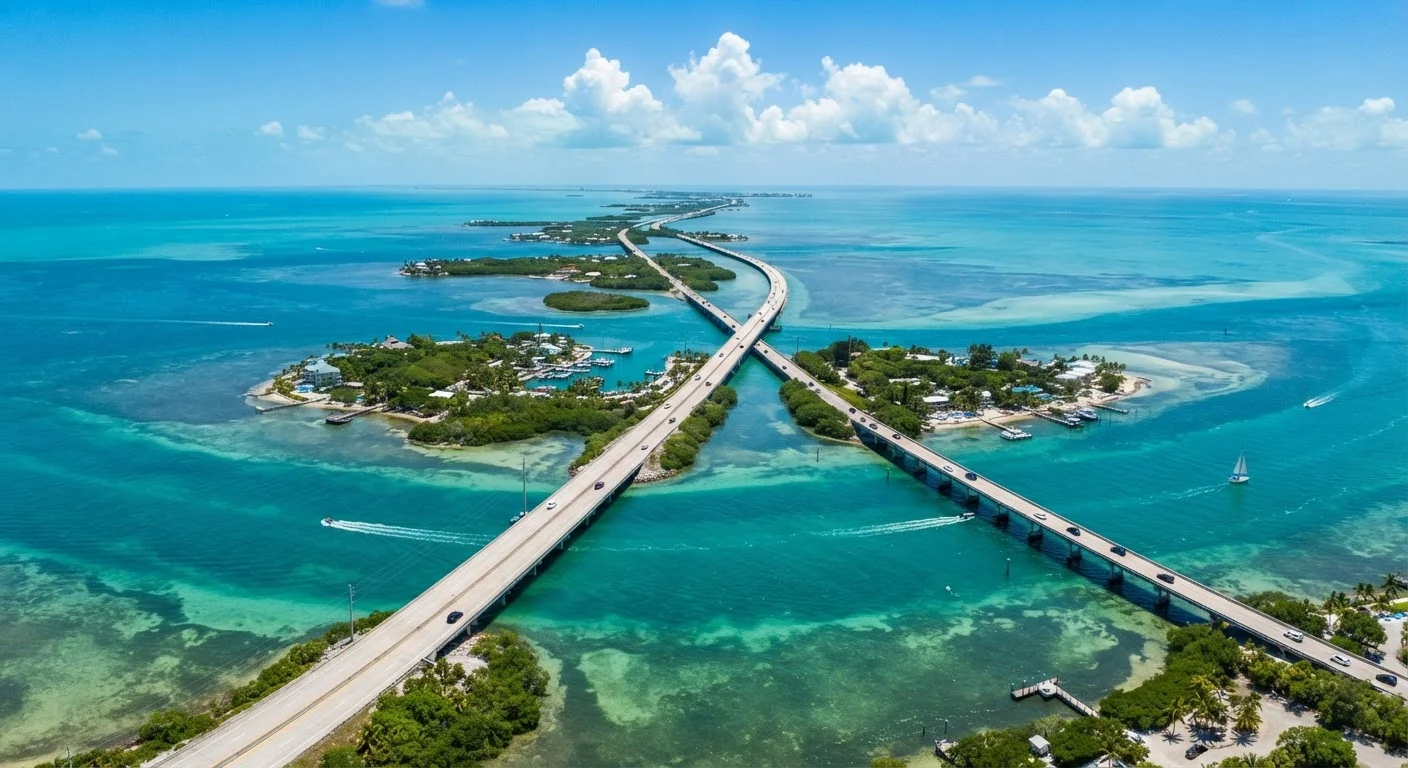
The Florida Keys are a 125-mile arc of coral islands off the southern tip of Florida, linked by US Highway 1 - commonly called the Overseas Highway. Driving it is often described as one of the most unusual road experiences in the United States: a two-lane road that seems to float over open ocean, punctuated by 42 bridges and mile markers that count down from 126 at the mainland to zero in Key West.
The journey is scenic but not always fast. Traffic can be significant during peak season (roughly November through April), and there are few alternate routes when congestion builds. Understanding the road's character before you leave helps set realistic expectations. See our guide to road trip planning for strategies that apply directly to a Keys drive.
42
Bridges spanning the Overseas Highway
US Highway 1 through the Florida Keys crosses 42 bridges between the mainland and Key West.
113 miles
Length of the Keys driving route
The Overseas Highway covers approximately 113 miles of water crossings and island road from Key Largo to Key West.
~6,000
Acres protected in John Pennekamp State Park
John Pennekamp Coral Reef State Park in Key Largo encompasses about 70 nautical square miles of reef, seagrass, and mangrove habitat.
Travelers typically split the Keys into three zones: the Upper Keys (Key Largo to Islamorada), the Middle Keys (Marathon area), and the Lower Keys leading into Key West. Each zone has a different pace, different draws, and a different kind of traveler it tends to attract.
Key Largo: The Diving Capital of the World
Key Largo is the first and largest island in the chain, beginning around Mile Marker 106. It bills itself as the diving capital of the world - a claim backed by the Florida Keys National Marine Sanctuary, which protects one of North America's only living coral barrier reef systems. John Pennekamp Coral Reef State Park, located here, was the first undersea park established in the United States.
Snorkeling and scuba diving are the primary activities, and operators offering reef trips are numerous. Even non-divers can take glass-bottom boat tours to see the reef system without getting wet. The island also has kayaking through mangrove tunnels, which gives a quieter, more intimate look at the ecosystem.
Plan your reef excursion for the first morning of your Key Largo stay - afternoon winds frequently chop the water and reduce visibility on reef trips.
Water conditions in the Keys are most stable in the morning hours; afternoon trade winds can significantly impact snorkeling and dive quality at shallow reef sites.
Use the mile marker system actively - locals and businesses reference MM numbers rather than street addresses, and it makes navigation far simpler.
The Keys' mile marker system runs the full length of US-1, and nearly every lodging, park, and restaurant listing will cite an MM number rather than a traditional address.
Key Largo has a more suburban feel than Key West - it's closer to Miami and more developed in parts, with strip malls alongside waterfront restaurants. Visitors looking for rustic Florida charm will find it more in isolated waterfront spots than along the main highway corridor.
Islamorada and the Middle Keys: Fishing and Quiet Beauty
Islamorada (spanning roughly Mile Markers 90 to 73) is a village of islands with a strong identity built around sport fishing. It calls itself the "Sport Fishing Capital of the World," and the flats fishing here - targeting bonefish, tarpon, and permit in shallow backcountry waters - draws serious anglers from across the country.
Beyond fishing, Islamorada offers a more relaxed atmosphere than either Key Largo or Key West. The stretch has art galleries, waterfront dining with genuine sunset views, and Indian Key Historic State Park, accessible only by boat, where the remnants of a 19th-century settlement remain. This area rewards travelers who slow down.
The Middle Keys, centered around Marathon (Mile Marker 50), are frequently underestimated. The Turtle Hospital here rehabilitates sea turtles and offers educational tours - a genuinely worthwhile stop for families. The area also has beaches, which are rarer in the Keys than visitors often expect.
Marathon and the Seven Mile Bridge
Marathon serves as the practical hub of the Middle Keys - it has a regional airport, a full range of lodging, and grocery options that thin out considerably farther south. If you're driving the full length of the Keys over multiple days, Marathon makes a logical overnight stop.
The Seven Mile Bridge, which begins just south of Marathon at Mile Marker 47, is the most photographed section of the entire highway. The current bridge (opened in 1982) runs alongside the pilings of the original 1912 railroad bridge, now converted to a fishing pier. Crossing it at sunrise or sunset offers views that are genuinely difficult to describe to someone who hasn't done it.
For travelers who want to build a sequenced itinerary rather than drive straight through, splitting days between Islamorada and Marathon gives a more complete picture of the Keys than rushing directly to Key West.
Key West: The End of the Road
Key West sits at Mile Marker 0 and feels like it earns that position - it's the most densely packed, culturally layered, and loudly alive destination in the entire chain. The Old Town historic district contains some of the most photographed Victorian architecture in Florida, along with the Southernmost Point buoy (a popular landmark rather than the literal geographical endpoint), the Hemingway Home and Museum, and the Key West Butterfly and Nature Conservatory.
Duval Street is the nightlife spine - crowded, energetic, and not particularly quiet at any hour after dark. Travelers seeking that atmosphere will find it in full force. Those who want to experience Key West's quieter side should explore the residential streets north and east of Duval, where historic homes and local cafes offer a different version of the island.
It's worth knowing that Key West is expensive, and lodging options fill quickly during Fantasy Fest (late October), New Year's, and spring break periods. Prices for accommodation and dining reflect the island's remote, destination status. It's also worth comparing what the Keys offer against other regional alternatives - our overview of the US Gulf Coast lays out a useful contrast for travelers still deciding between Florida's two coasts.
Practical Planning Notes for the Drive
A few realities the Florida Keys don't always advertise: the Keys have limited freshwater, and almost everything is imported from the mainland - including prices. Dining and lodging both run significantly higher than Florida mainland averages. Budget travelers can find value, but it takes deliberate planning.
Beaches are generally modest compared to what visitors expect. The Keys sit on coral, not sand-bottom ocean floor, and most beaches are small and calm rather than broad and wave-swept. This is ideal for snorkeling and water activities but can disappoint visitors expecting classic Florida beach scenery.
Hurricane Season and Weather Risks
The Florida Keys are narrow and low-lying, making them particularly vulnerable during tropical storms and hurricanes. If you are traveling between June and November, monitor National Hurricane Center forecasts closely and verify that your lodging has a clear cancellation or rebooking policy. Mandatory evacuation orders require all visitors to leave, with limited time to do so given that US-1 is the only road out.
Hurricane season runs June through November, and the Keys are particularly exposed given their geography. Always check current conditions, entry requirements, and any active travel advisories through official sources such as the Florida Division of Emergency Management or the National Hurricane Center before traveling in those months. Travel insurance with trip interruption coverage is worth understanding before you go.
The Trip Planning hub has additional resources on sequencing stops, estimating drive time, and preparing for longer road journeys - all of which apply directly to a Keys trip of any length.