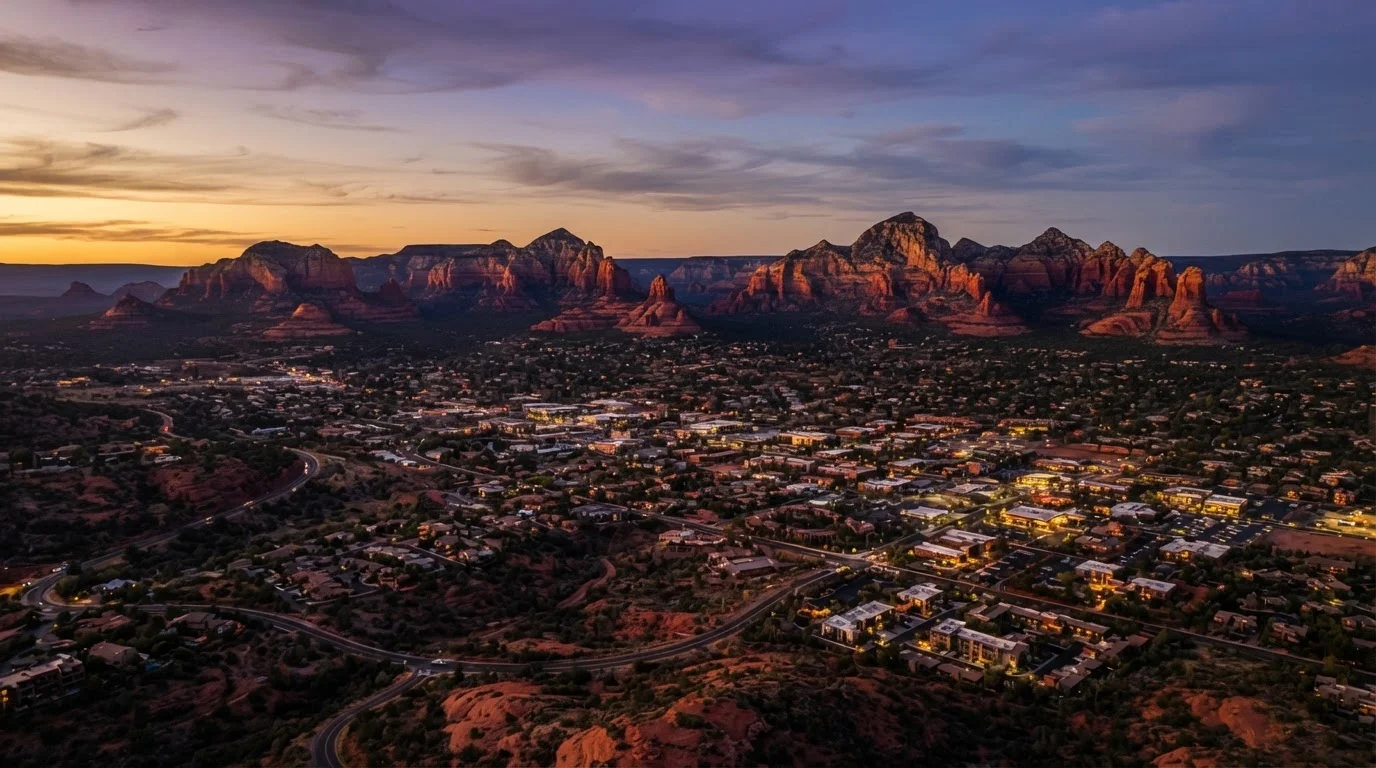
Three Cities, One Desert - Very Different Weeks
The American Southwest contains multitudes. Las Vegas, Tucson, and Santa Fe all sit in arid high-desert or low-desert terrain, share blazing summer temperatures, and draw millions of visitors - yet spending a week in any one of them feels almost nothing like the others. Understanding those differences before you book can save you from arriving in the wrong city for what you actually want.
If you're curious about what the wider Southwest region holds beyond these three cities, our guide to the American Southwest beyond the Grand Canyon covers the quieter wonders worth adding to your itinerary.
| Las Vegas | Tucson | Santa Fe | |
|---|---|---|---|
| Desert type / Elevation | Mojave / ~2,000 ft | Sonoran / ~2,400 ft | High desert / ~7,000 ft |
| Best season to visit | Spring or Fall | Winter or Spring | Summer or Fall |
| Summer heat risk | Extreme (110°F+) | Severe (100°F+) | Moderate (80s°F) |
| Cultural character | Entertainment and spectacle | University and heritage | Arts, history, Indigenous culture |
| Nature access | Red Rock Canyon nearby | Saguaro National Park on both sides | Sangre de Cristo mountains, trails close |
| Relative cost for visitors | Variable (Strip vs. off-Strip) | Generally affordable | Skews upscale |
| City size / walkability | Large; walkable Strip core | Mid-size; car recommended | Small; very walkable downtown |
Climate and When to Visit
Las Vegas sits in the Mojave Desert at roughly 2,000 feet elevation. Summers routinely top 110°F, making outdoor activity genuinely risky in June through August. Spring (March-May) and fall (September-November) offer the most comfortable conditions, with mild days and cool nights.
Tucson lies in the Sonoran Desert at about 2,400 feet. It shares scorching summers but benefits from a dramatic summer monsoon season (roughly July through September) that brings afternoon thunderstorms and a surprising burst of green. Winter daytime temperatures are mild - often in the 60s°F - making it one of the Southwest's best cold-weather escapes.
Santa Fe sits at 7,000 feet in the Sangre de Cristo Mountains, giving it a dramatically different climate profile. Summers are warm but rarely oppressive (highs in the 80s°F), and the city receives real winter snowfall. Fall is widely considered the finest season, when aspen trees turn gold in the surrounding mountains.
Plan Around Elevation Shifts
If you're visiting in summer and heat is a concern, Santa Fe's 7,000-foot elevation makes it the most comfortable of the three by a wide margin. Tucson's monsoon season (July-September) adds humidity and afternoon storm drama that some visitors find surprisingly enjoyable. Las Vegas summers are best experienced almost entirely indoors or on very early morning outings.
Culture, Character, and What Fills Your Days
Las Vegas is engineered for entertainment. The Strip and downtown Fremont Street deliver a self-contained world of shows, dining, pools, and casinos. But the city has grown a legitimate arts district, a strong dining scene beyond the resort corridor, and easy access to Red Rock Canyon and Valley of Fire State Park for day hikes. A week is enough to experience both sides.
Tucson has a genuine city personality shaped by the University of Arizona, a deep Mexican-American cultural heritage, and its location in the Sonoran Desert's biological heart. The Arizona-Sonora Desert Museum - part zoo, part botanical garden, part natural history museum - is one of the most thoughtfully designed institutions in the country. The Fourth Avenue and downtown food scene is serious and locally rooted. Saguaro National Park flanks the city on two sides.
Santa Fe is a small city (under 90,000 people) with a cultural footprint that punches well above its size. The Palace of the Governors on the historic plaza is the oldest continuously occupied public building in the United States. Canyon Road concentrates more than 80 galleries in a walkable stretch. The New Mexico History Museum, Museum of Indian Arts and Culture, and Georgia O'Keeffe Museum are all within easy reach. The city moves slowly by design.
Cost and Practical Realities
A week's budget varies significantly across these three cities. Las Vegas operates on a two-tier pricing system: resort fees, show tickets, and dining on the Strip can drain budgets quickly, but downtown and off-Strip options offer genuine value. Flights into Harry Reid International Airport are among the most competitive in the country.
Tucson is generally the most affordable of the three for accommodations and dining. The city has limited direct flights from many markets, which can offset savings, but ground costs - food, activities, lodging - remain relatively modest.
Santa Fe skews upscale. The concentration of galleries, boutique hotels, and fine-dining restaurants reflects a wealthy second-home and arts-collector clientele. Travelers on tighter budgets can find mid-range lodging in surrounding areas like Albuquerque (about 60 miles south) and make day trips into the city, though that sacrifices the walkable evening experience that makes Santa Fe distinctive.
Note: Prices, flight availability, and local conditions change. Always verify current costs and travel advisories with official and provider sources before booking.