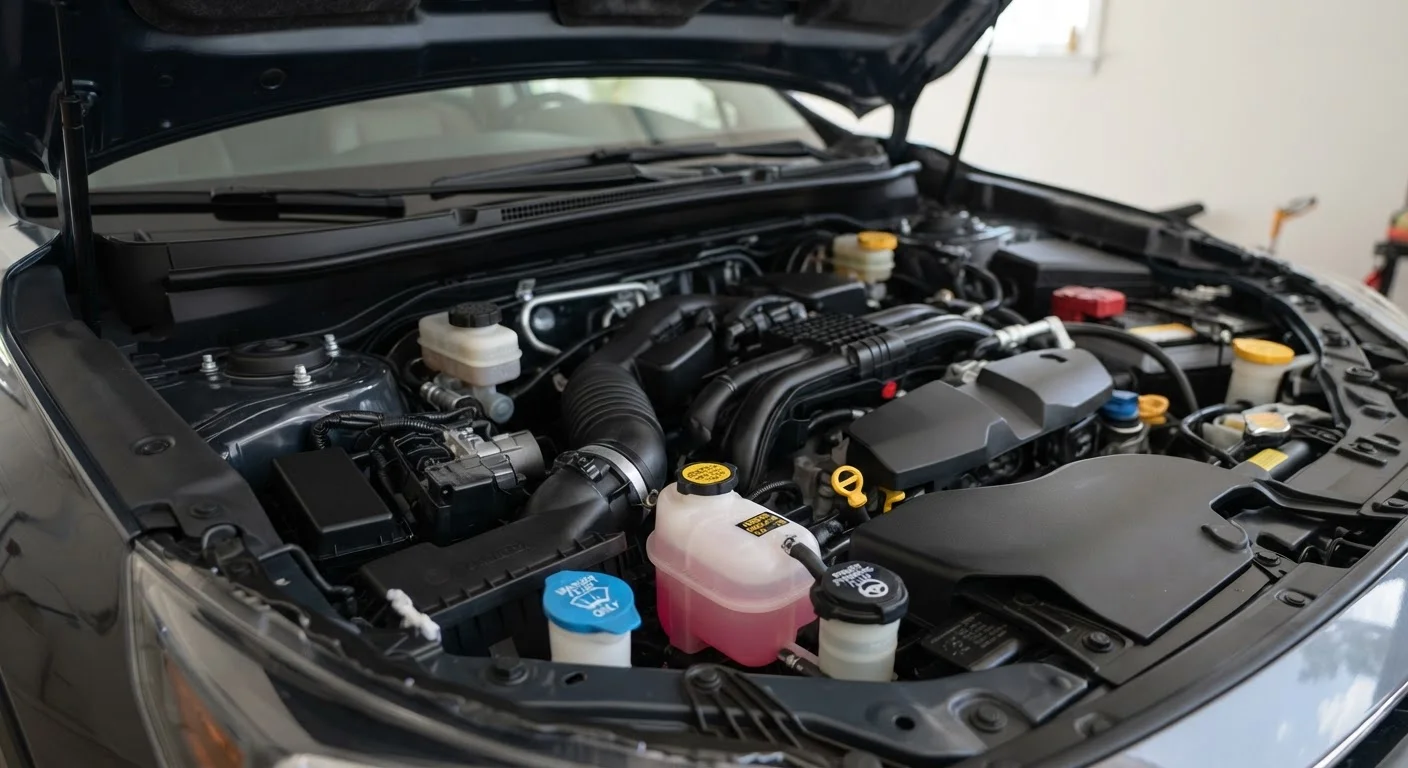
Why Fluids Matter More Than Most Drivers Realize
Your car is essentially a collection of metal parts moving at high speed under extreme heat and pressure. Fluids are what keep all of that from grinding itself apart. They lubricate, cool, transmit force, clean, and protect - and when any one of them runs low or goes bad, the consequences escalate quickly.
The good news: most fluid checks are genuinely simple. You don't need tools, a shop, or mechanical training to open a hood and look. What you do need is knowing what you're looking at. That's what this guide covers. For a broader picture of how fluid checks fit into your vehicle's overall upkeep, see our year-round maintenance schedule.
The Six Fluids You Need to Know
Part of the Understanding Your Car knowledge base, this section breaks down each fluid by function, appearance, and what a problem looks like.
Master cylinder
The component in your braking system that converts pedal pressure into hydraulic pressure, pushing brake fluid through the lines to your wheels.
Dipstick
A long, thin metal rod inserted into the engine that lets you measure the current oil level by pulling it out and reading the markings.
Hydraulic fluid
Any fluid used to transmit mechanical force through pressure - in cars, brake fluid and power steering fluid both serve this role in their respective systems.
Brake fade
A reduction in braking effectiveness that occurs when brake fluid overheats or has absorbed too much moisture, lowering its boiling point.
Firewall
The barrier separating the engine compartment from the passenger cabin - several important fluid reservoirs are mounted near it.
Coolant flush
A service procedure in which old coolant is drained out and replaced with fresh fluid, removing built-up rust, scale, and degraded additives.
1. Engine Oil
What it does: Lubricates moving engine parts and helps dissipate heat. Without it, metal contacts metal and the engine seizes. Where to find it: Dipstick, usually marked with an oil can icon. Healthy appearance: Amber to light brown, smooth on the dipstick. Dark brown or black oil is overdue for a change; milky or foamy oil signals coolant contamination - stop driving and see a mechanic immediately.
2. Coolant (Antifreeze)
What it does: Regulates engine temperature, preventing both overheating and freezing. Where to find it: A translucent plastic reservoir near the radiator, typically marked with a thermometer symbol. Healthy appearance: Bright green, orange, pink, or blue depending on type - always check your owner's manual. Murky, oily, or rust-colored coolant needs flushing. Learn more about how this system works in our guide on how your car's cooling system functions.
3. Brake Fluid
What it does: Transmits the force from your brake pedal to the calipers that clamp the wheels to a stop. Where to find it: A small reservoir on top of the master cylinder near the firewall, usually marked with a circle and exclamation point. Healthy appearance: Clear to pale yellow. Dark brown fluid has absorbed moisture and should be replaced. For a full breakdown of how braking works, see what happens inside your braking system.
4. Transmission Fluid
What it does: Lubricates the transmission gears and, in automatic vehicles, acts as hydraulic fluid. Where to find it: Some vehicles have a dipstick (often red-handled); others are sealed and require professional service. Healthy appearance: Bright red and slightly sweet-smelling. Dark, burnt-smelling fluid means it needs changing.
5. Power Steering Fluid
What it does: Enables the hydraulic assist that makes steering manageable. Many newer vehicles use electric power steering and have no fluid. Where to find it: A small reservoir with a steering wheel icon, if your vehicle has hydraulic steering. Healthy appearance: Clear to light amber. Low fluid often causes a whining noise when turning.
6. Windshield Washer Fluid
What it does: Cleans road grime, insects, and salt spray from your windshield. Where to find it: A blue-capped reservoir - the easiest to find and fill. Note: Never substitute plain water in freezing climates; it will crack the reservoir and lines.
Check Fluids on a Level Surface
Always park on flat ground before checking any fluid level. A sloped driveway can throw off dipstick readings by enough to mislead you. Engine oil checks are especially sensitive to this - a slight incline can make a low level look adequate.
How to Spot a Fluid Leak Before It Becomes a Crisis
Leaks announce themselves if you know what to look for. After parking, glance at the ground beneath your car - a spot on the driveway is an early warning sign.
- Clear water: Normal A/C condensation or exhaust moisture - no concern.
- Oily black or brown puddle under the engine: Likely engine oil. Check your dipstick.
- Bright green, orange, or pink puddle: Coolant. Sweet smell confirms it. Address promptly - coolant is toxic to animals.
- Red or pink puddle near the center or front of the car: Transmission or power steering fluid.
- Clear to light yellow near a wheel: Possibly brake fluid. This is serious - have it inspected before driving further.
If you hear unexplained sounds alongside a suspected leak, our article on warning sounds your car makes can help you cross-reference the symptoms.
Coolant Is Hazardous to Pets
Traditional ethylene glycol coolant has a sweet smell that attracts dogs and cats, and even small amounts can be fatal if ingested. Clean up any coolant spills from your driveway promptly and thoroughly. Some manufacturers now offer propylene glycol-based coolants that are less toxic, but any coolant spill should still be treated as a hazard.
When to Check Yourself vs. When to Call a Mechanic
Not every fluid task requires a professional, but some do. Here's a practical breakdown:
| Task | DIY-Friendly? |
|---|---|
| Check engine oil level | Yes - dipstick, two minutes |
| Top off windshield washer fluid | Yes - open cap, pour in |
| Check coolant level (cold engine only) | Yes - read the reservoir markings |
| Change engine oil | Yes, if comfortable; otherwise a mechanic is fine |
| Flush and replace brake fluid | Mechanic recommended |
| Transmission fluid service (sealed systems) | Mechanic required |
| Diagnose milky oil or persistent leak | Mechanic required |
One firm rule: Never open a coolant reservoir cap on a hot engine. Pressurized steam can cause serious burns. Always wait until the engine is fully cool. For anything involving brake or fuel systems, work that requires system bleeding, or any situation where you're unsure - bring it to a qualified mechanic. The cost of a professional inspection is almost always less than the repair bill that follows ignoring a problem.
This article provides general vehicle maintenance information for educational purposes only. Always consult your vehicle's owner's manual and a qualified mechanic for guidance specific to your car.