The Core Problem: Engines Generate Enormous Heat
Internal combustion engines burn fuel to produce power, and that process creates tremendous heat as a byproduct. Left unmanaged, that heat would destroy an engine in minutes - warping aluminum cylinder heads, melting gaskets, and seizing moving parts that depend on precise tolerances to function.
The cooling system exists specifically to prevent that. It doesn't eliminate heat so much as manage it - drawing thermal energy away from critical components and dispersing it safely into the air. Understanding each part's role makes it far easier to spot trouble early.
Coolant: The Heat-Transfer Fluid
Coolant - commonly called antifreeze - is a mixture of ethylene glycol (or propylene glycol) and water, typically in a 50/50 ratio. This blend has a higher boiling point and lower freezing point than plain water, making it effective across a wide range of temperatures.
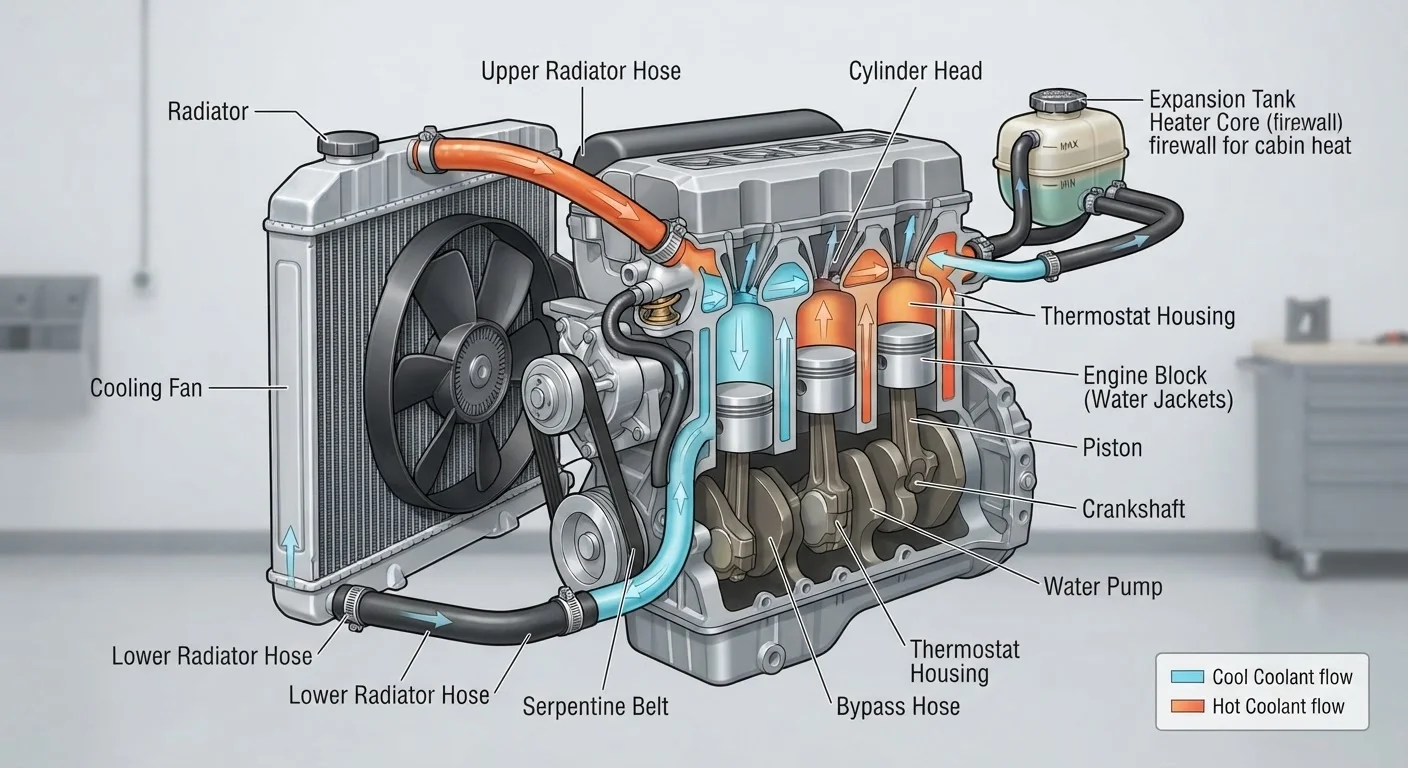
As coolant circulates through passages built into the engine block and cylinder head, it absorbs heat from the metal. It then carries that heat out of the engine and into the radiator, where it's released. Coolant also contains corrosion inhibitors that protect metal and rubber components inside the system.
For a broader look at all the fluids your car depends on, see Vehicle Fluids Every Driver Should Know About.
4,500°F+
Peak combustion temperature inside a cylinder
Combustion temperatures vary by engine type, but peak cylinder temps can exceed 4,500°F - illustrating why heat management is critical.
195-220°F
Normal engine operating temperature range
Most passenger car engines are designed to run efficiently within this coolant temperature range under typical driving conditions.
50/50
Recommended antifreeze-to-water ratio
A 50/50 mix of antifreeze and distilled water is the standard recommendation for year-round protection in most U.S. climates.
The Key Components and What They Do
Radiator
The radiator is a large heat exchanger mounted at the front of the vehicle. Hot coolant flows through a series of thin tubes surrounded by metal fins. Air passing through the fins - either from the vehicle's motion or from an electric cooling fan - strips the heat from the coolant before it cycles back into the engine.
Water Pump
The water pump keeps coolant moving through the entire system. Driven by a belt connected to the engine, it generates the pressure needed to circulate fluid continuously. A failing water pump is a serious problem - coolant sits still, heat builds quickly, and overheating can follow within minutes.
Thermostat
The thermostat acts as a gatekeeper. When the engine is cold, the thermostat stays closed, keeping coolant inside the engine so it warms up to operating temperature faster. Once it reaches the target temperature range, the thermostat opens and allows hot coolant to flow to the radiator. A stuck thermostat - either open or closed - will cause the engine to run too cold or overheat.
Pressure Cap and Overflow Reservoir
The radiator cap maintains system pressure, which raises the coolant's boiling point. As coolant expands when heated, excess fluid moves into the overflow reservoir and returns to the radiator as the system cools.
Check Coolant Level When the Engine Is Cold
Never open the radiator cap or coolant reservoir cap when the engine is hot - pressurized, scalding coolant can spray out and cause serious burns. Wait at least an hour after driving before checking levels. The translucent overflow reservoir usually has MIN and MAX markings you can read without removing any cap at all.
Warning Signs That Something Is Wrong
The cooling system usually gives clear signals before a minor issue becomes a major repair. Watch for these:
- Temperature gauge climbing higher than normal - act immediately, don't wait.
- Sweet smell inside or outside the car - coolant has a distinctive sweet odor; a leak often announces itself this way.
- White smoke or steam from under the hood - coolant burning off is a serious sign.
- Low coolant level - a drop in the reservoir between checks suggests a leak or internal consumption.
If you're uncertain what you're looking at under the hood, Car Fluids Every Driver Should Be Able to Identify offers a clear breakdown of what each fluid looks and smells like.
Routine maintenance - including coolant flushes at manufacturer-recommended intervals - is one of the most effective ways to keep the system functioning reliably. For a broader maintenance framework, the Car Maintenance hub covers the essential upkeep tasks every driver should know.