Step One: Pedal Force and the Brake Booster
The moment your foot presses the brake pedal, the system begins converting mechanical input into hydraulic pressure. The first component in that chain is the brake booster, mounted directly behind the pedal on the firewall. Most boosters use engine vacuum to amplify the force your leg applies - typically multiplying it by a factor of two to four. Electric brake boosters, increasingly common in hybrid and electric vehicles, do the same job using an electric motor instead of vacuum.
Without a booster, stopping a modern vehicle would require significantly more pedal effort than most drivers could comfortably sustain in an emergency. The booster is why light pedal pressure produces firm, confident braking.
Step Two: The Master Cylinder Builds Hydraulic Pressure
Amplified pedal force flows into the master cylinder, a pump that converts mechanical pressure into hydraulic pressure within the brake fluid. Nearly all modern vehicles use a tandem (dual-circuit) master cylinder, which feeds two independent hydraulic circuits - typically one serving the front brakes and one the rear. If one circuit develops a leak, the other can still stop the vehicle, a critical redundancy for safety.
The master cylinder reservoir sits on top, holding the brake fluid supply. As brake pads wear down over time, fluid levels in the reservoir gradually drop because more fluid is needed to fill the space in the calipers - this is normal. A sudden drop in fluid level, however, often signals a leak. Learn more about how brake fluid fits into your vehicle's overall fluid maintenance in our guide to vehicle fluids every driver should know about.
~75%
Braking force handled by front axle
Weight transfers forward under braking, so front brakes typically handle the majority of stopping work - a key reason front pads wear faster than rear pads.
2-3 years
Typical brake fluid replacement interval
Brake fluid is hygroscopic, absorbing moisture from the air over time, which lowers its boiling point and can reduce braking performance under hard use.
100+ psi
Hydraulic pressure during normal stop
Even routine braking generates substantial fluid pressure inside the lines; emergency stops can produce significantly higher pressures within the system.
Step Three: Brake Lines Carry Pressure to Each Wheel
From the master cylinder, pressurized brake fluid travels through a network of steel brake lines and flexible rubber hoses to each wheel. Steel lines handle the long, rigid runs along the vehicle's chassis. Flexible hoses bridge the gap between the fixed body and the moving suspension components at each wheel - they need to flex as the suspension travels and the steering turns.
These hoses age and degrade. Cracks in the outer rubber, bulging, or interior deterioration can cause pressure loss or even sudden failure. Inspecting them during routine brake service is a straightforward precaution a mechanic can perform.
Inspect Flexible Brake Hoses Regularly
Ask your mechanic to visually inspect the rubber brake hoses whenever brake work is performed or at least once a year. Look for cracking, bulging, or any signs of weeping fluid. A hose that fails while driving can cause sudden, severe brake loss at that wheel.
Step Four: Calipers and Pads Clamp the Rotor
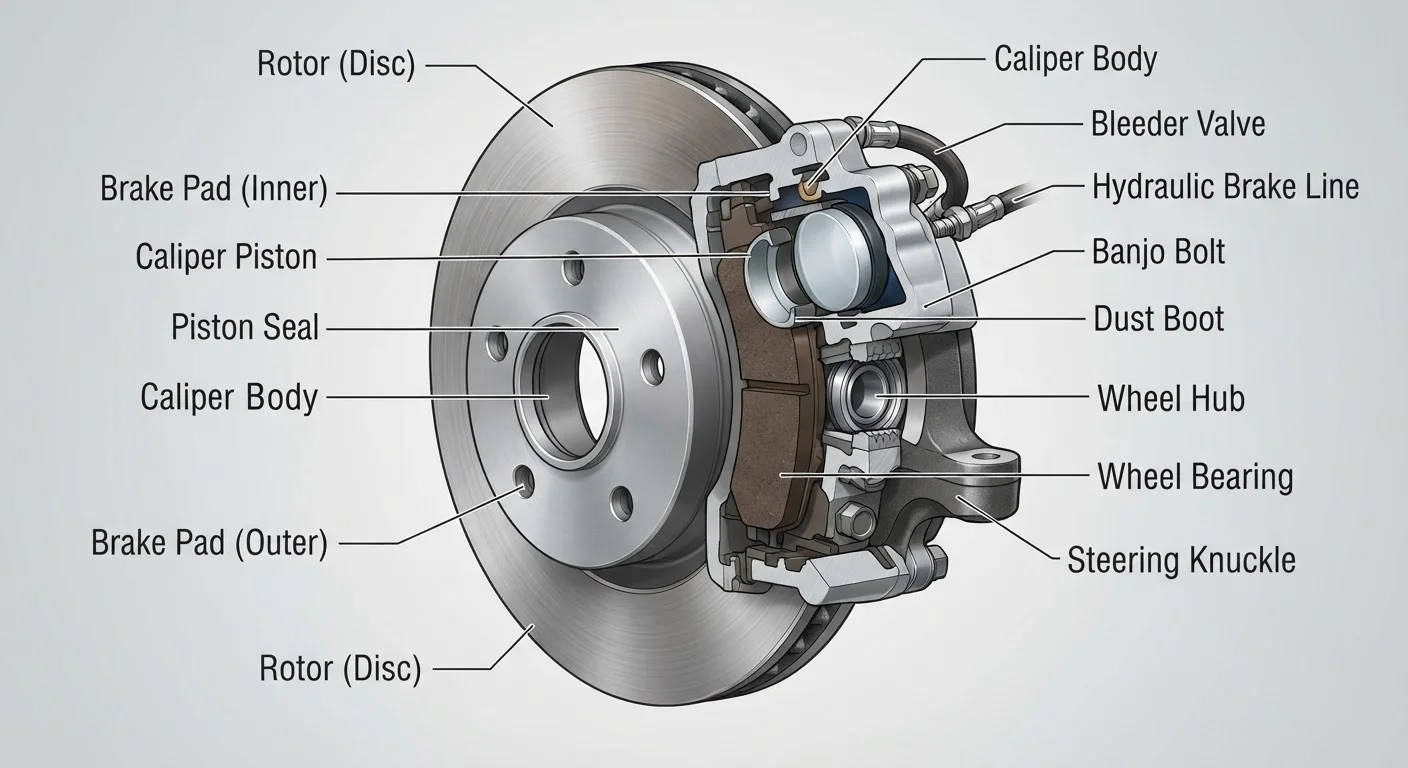
At each front wheel - and typically the rear wheels on most modern passenger cars - pressurized fluid enters a brake caliper. Inside the caliper, one or more pistons are pushed outward by that fluid pressure. The pistons force brake pads against both sides of a spinning metal rotor (also called a disc) attached to the wheel hub. The friction between pad material and rotor surface converts kinetic energy into heat, slowing the wheel.
Rotors are engineered to dissipate that heat quickly. Vented rotors - which have internal fins between two disc faces - move air through the rotor to cool it. Brake fade, where braking effectiveness drops after repeated hard stops, is largely a heat management problem: when rotors and pads overheat, friction decreases.
The Role of ABS in Modern Braking
Anti-lock braking system (ABS) adds an electronic layer to the hydraulic system. Wheel speed sensors monitor each wheel's rotation several times per second. If the system detects that a wheel is decelerating far faster than the others - a sign it's about to lock up - the ABS control module rapidly modulates brake pressure at that wheel, pulsing it many times per second. This keeps the wheel rotating, which preserves steering control during hard stops on slippery surfaces.
The pulsing sensation you may feel through the pedal during a hard stop on ice or gravel is ABS working correctly. It is not a sign of a problem - it means the system is actively preventing a skid. Understanding fluid condition matters here too, since degraded brake fluid affects how consistently the hydraulic system responds to ABS pressure modulation. Our article on identifying car fluids covers what healthy brake fluid looks like and when it needs attention.
“The brake system is one of the most precisely engineered safety systems on any vehicle. Small failures - a worn hose, contaminated fluid, a thin pad - compound quickly under real-world stress. Routine inspection is far cheaper than emergency repair.”
— National Highway Traffic Safety Administration, U.S. federal vehicle safety regulator