Why Cruise Control Has a Reputation It Doesn't Fully Deserve
Cruise control earns its place on long interstate hauls where speed stays consistent, traffic is light, and the road is dry and straight. It reduces leg fatigue, helps drivers avoid inadvertent speeding, and can contribute to better fuel efficiency under steady conditions. Used correctly, it's a genuine tool.
The problem is that drivers often extend it into situations where it doesn't belong - not out of recklessness, but because the transition from safe to unsafe conditions can be gradual and easy to miss. Understanding where the tool's limits are is just as important as knowing how to use it.
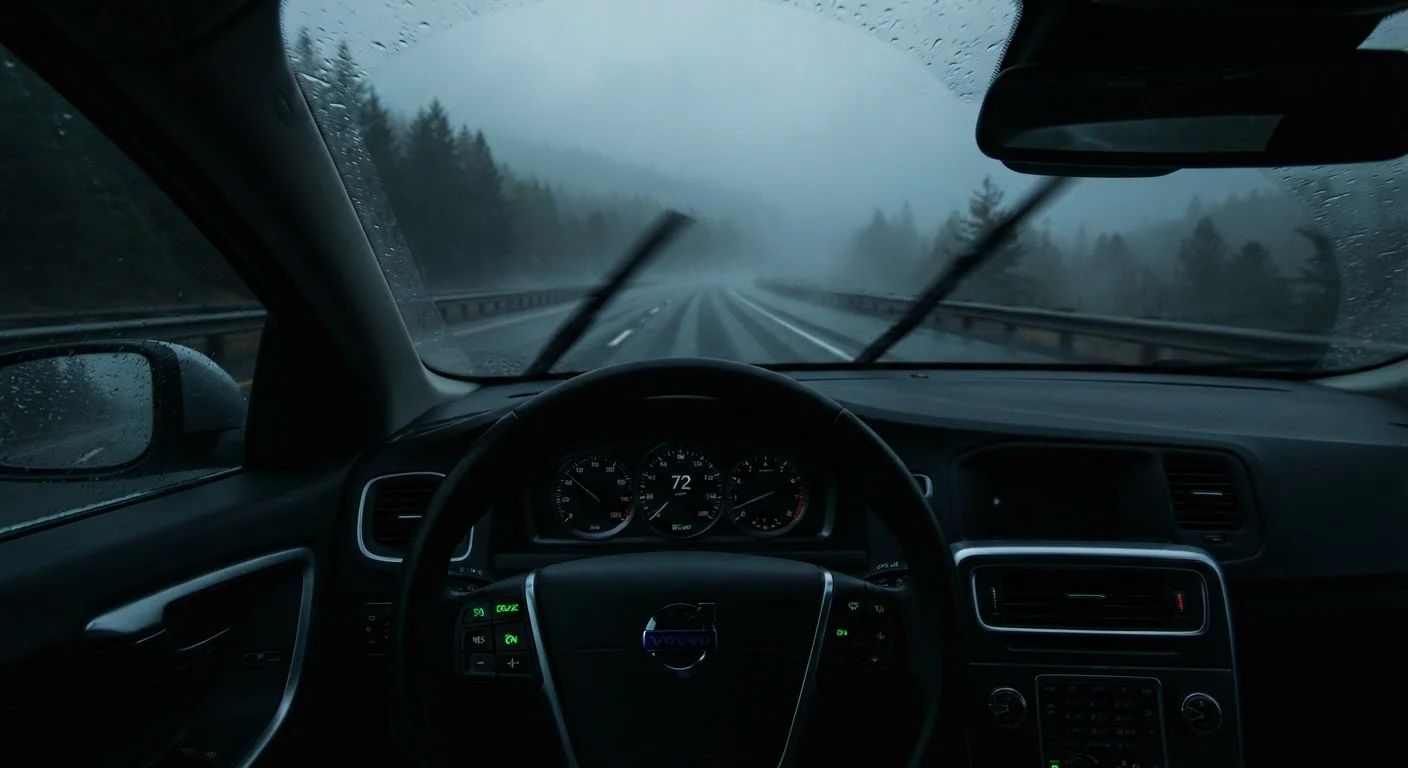
Using cruise control on wet or icy roads.
Why it happens: Drivers often set cruise control before rain starts and leave it engaged as conditions worsen gradually, without reassessing.
Keeping cruise control on in moderate to heavy traffic.
Why it happens: On highways with partial congestion, it can feel like traffic is moving consistently enough to keep the feature active.
Leaving cruise control on through curves and hilly terrain.
Why it happens: Drivers focus on steering through a curve while forgetting that their speed is still being held fixed by the system.
Treating adaptive cruise control as a hands-free driving system.
Why it happens: Adaptive systems that slow down when approaching traffic give drivers a false sense that full automation is handling the road.
Using cruise control in construction zones or areas with variable speed limits.
Why it happens: Drivers set their speed on the open highway and don't disengage when they enter a work zone or transition area.
The Conditions That Change the Equation
Cruise control keeps your vehicle at a fixed speed regardless of what the road beneath you is doing. On a dry highway, that's fine. On a wet or icy surface, it can work directly against you.
When a tire loses traction momentarily on a slick road - something that happens faster than you can perceive it - your natural instinct is to ease off the accelerator. Cruise control removes that instinct from the equation by continuing to apply power. This can cause wheelspin, loss of directional control, or hydroplaning to escalate instead of self-correct. Our guide on driving in heavy rain covers in detail how rain changes stopping distance and vehicle behavior - conditions where cruise control should come off entirely.
Fog creates a different but equally serious problem. When visibility drops, you need the flexibility to slow down without thinking about it. Cruise control anchors you to a speed set when conditions were clearer.
Don't Wait for Skidding to Turn It Off
Many drivers disengage cruise control only after they feel the car start to slide or respond unpredictably. By that point, the situation has already escalated. The safer approach is to turn off cruise control as soon as conditions change - wet roads, light rain, or the first sign of fog - not after you've experienced a loss of control.
Traffic, Terrain, and the False Sense of Control
Even on dry roads, cruise control introduces risk the moment traffic becomes unpredictable. Merging lanes, sudden slowdowns, and variable speeds require constant micro-adjustments - exactly what you give up when you delegate speed to the system. Adaptive cruise control (which adjusts speed based on the vehicle ahead) reduces this risk somewhat, but it does not eliminate it, and it is not a substitute for full attention.
Curved and hilly roads compound the issue further. A speed that's appropriate on flat terrain may be too fast entering a curve. Cruise control doesn't sense the geometry of the road - you have to. Similarly, work zones with lane shifts, reduced speed limits, and unpredictable workers nearby demand hands-on control at all times. Posted speed limits also reflect ideal conditions - as our piece on speed limits vs. safe speeds explains, following the limit while on cruise control doesn't always mean driving safely for the actual conditions.
40%
Increased stopping distance on wet roads
Wet pavement can increase stopping distance by roughly 40% compared to dry conditions, according to general traffic safety guidance from state DOTs.
2-3 sec
Reaction time lag when mentally disengaged
Research on driver inattention consistently shows that cognitively distracted drivers - including those over-relying on automation - can take 2-3 seconds longer to respond to hazards.
Building Better Habits Around the Feature
The goal isn't to avoid cruise control - it's to use it intentionally. Before engaging it, do a quick mental check: Is the road dry? Is traffic sparse and moving consistently? Is visibility clear? Is the road straight and level for the foreseeable stretch ahead? If the answer to any of those is no, leave cruise control off.
More importantly, develop the habit of turning it off proactively - not reactively. If you see rain starting, weather changing, or traffic thickening ahead, disengage before the situation demands it. Reactive disengagement - braking or steering in response to a problem while cruise control is still active - costs you split seconds that matter at highway speeds.
One underappreciated risk is attentional drift. Studies on driver behavior consistently show that automated systems can cause drivers to mentally check out. If your hands are on the wheel but your mind is somewhere else, cruise control becomes a liability no matter how ideal the road is. Stay engaged - the feature supports you; it doesn't replace you.
This article is for general informational purposes. Always follow posted traffic laws and use your own judgment based on current road and weather conditions.