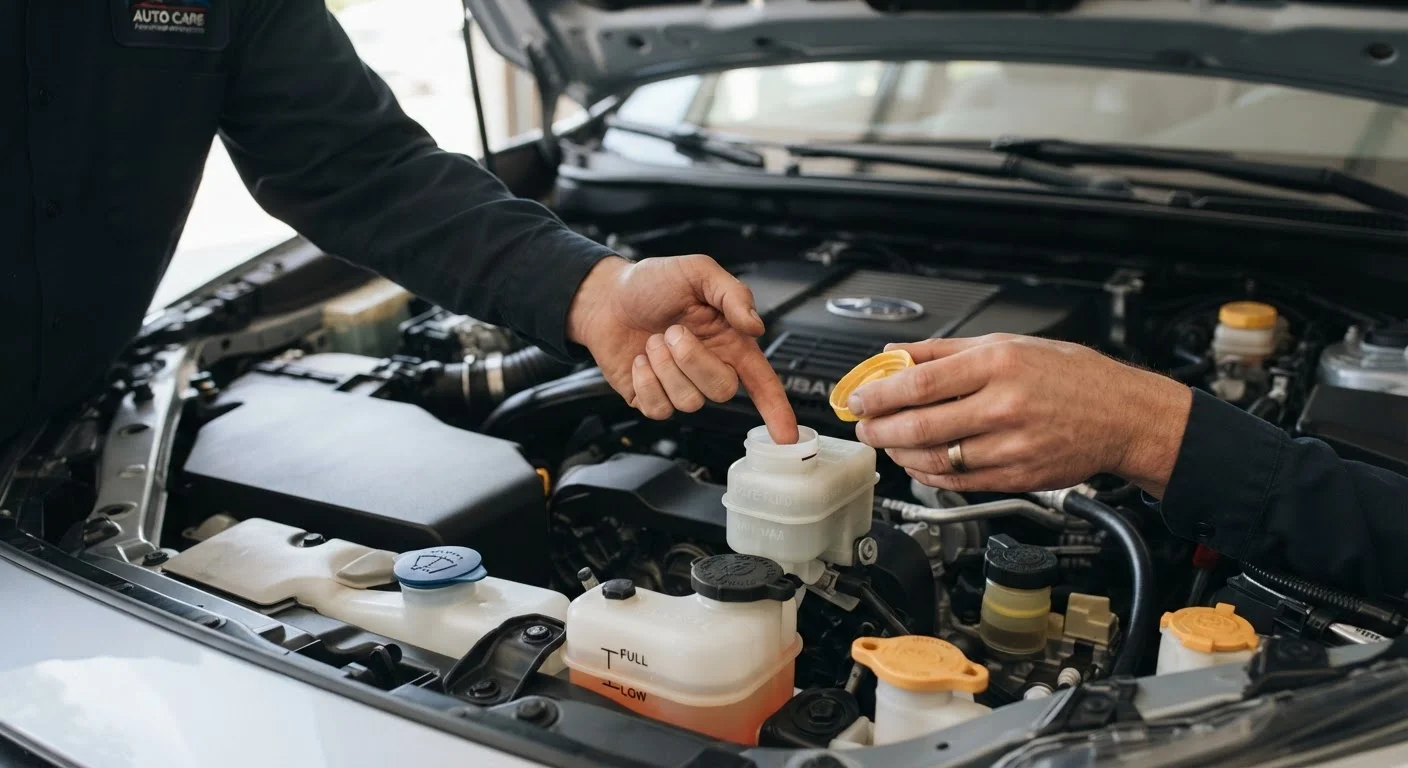
Why Vehicle Fluids Matter
Your car is a collection of moving metal parts generating enormous heat and friction. Fluids are what keep that system from grinding itself apart. Each one serves a specific job, and letting any of them run low or degrade can trigger a chain of damage that's far more expensive to fix than the fluid itself.
This reference covers the six fluids every driver should be able to identify, locate, and monitor. You don't need mechanical expertise - you need to know what to look for and when to act.
| Engine oil check method | Dipstick - check when engine is off and cool |
| Coolant check location | Translucent overflow reservoir, not the radiator cap |
| Brake fluid lifespan | Typically 2-3 years; absorbs moisture over time (General industry guidance; consult owner's manual) |
| Number of primary vehicle fluids | 6 (oil, coolant, brake, transmission, power steering, washer fluid) |
| Transmission fluid check | Varies by vehicle - many require a mechanic or have no dipstick |
| Safe coolant check condition | Engine fully cool; never open a hot radiator cap |
The Six Fluids You Need to Know
Engine Oil
Engine oil lubricates internal components, reduces friction, and carries heat away from the engine. It also holds combustion byproducts in suspension so they can be removed at an oil change. Low or degraded oil is one of the fastest paths to serious engine damage. Check the level with the dipstick when the engine is cold or after it's been off for several minutes. The oil should appear amber to light brown - black, gritty oil is overdue for a change. For a deeper look at how oil recommendations and change intervals actually work, see our breakdown of oil change myths.
Coolant (Antifreeze)
Coolant circulates through the engine and radiator to regulate temperature - keeping the engine from overheating in summer and freezing in winter. It's typically bright green, orange, or pink depending on formulation. Check the level in the translucent overflow reservoir, not the radiator cap directly (opening a hot radiator cap is dangerous). Low coolant or a rusty brown color signals a problem. Learn more about how the full system works in our cooling system explainer.
Brake Fluid
Brake fluid transmits the hydraulic pressure you create when pressing the pedal into actual stopping force at each wheel. It lives in a small reservoir near the firewall on the driver's side. Brake fluid absorbs moisture over time, which lowers its boiling point and can cause spongy pedal feel or brake fade under heavy use. If the level drops noticeably, have the system inspected - it may indicate a leak. For a full picture of how braking works, see what happens when you press the brake pedal.
Transmission Fluid
Transmission fluid lubricates and cools the gearbox - whether automatic, manual, or CVT. It also acts as a hydraulic fluid in automatic transmissions. Running low causes slipping gears, rough shifts, and eventually transmission failure. Fluid type and check procedure vary by transmission design; consult your owner's manual. Different transmission types have different fluid requirements, so matching the right product matters.
Power Steering Fluid
Most older vehicles use hydraulic power steering, which relies on fluid to assist your steering inputs. A whining sound when turning or stiff steering can indicate low fluid or a failing pump. Many newer vehicles use electric power steering and have no fluid reservoir at all - check your owner's manual if you're unsure which system your car has.
Windshield Washer Fluid
The simplest fluid to manage, but easy to ignore. A working washer system is a visibility and safety issue - especially in winter when road spray and road salt coat your windshield quickly. Use a washer fluid formulated for your climate; plain water can freeze in the reservoir and lines.
Hydraulic pressure
Force transmitted through a confined liquid. In braking and power steering systems, fluid pressure converts a small physical input into a much larger mechanical force.
Viscosity
A fluid's resistance to flow. Engine oil viscosity ratings (e.g., 5W-30) indicate how the oil flows at cold starts and operating temperatures.
Boiling point
The temperature at which a fluid vaporizes. For brake fluid, moisture absorption lowers this threshold, which can cause brake fade under sustained heavy braking.
Coolant/Antifreeze
A water-based fluid mixed with ethylene or propylene glycol that regulates engine temperature and prevents freezing or boiling in extreme climates.
Dipstick
A long metal rod inserted into the engine or transmission that shows the current fluid level when withdrawn and inspected.
Checking Fluids: Practical Tips
Most fluids can be checked in under five minutes with the car parked on level ground. Engine oil and transmission fluid (on vehicles with a dipstick) should ideally be checked with a cold or fully warm engine depending on the fluid - your owner's manual specifies which. Coolant should only be checked when the engine is fully cool. Keep a rag handy and always replace caps securely.
If you find any fluid well below the minimum mark, top it off and monitor it over the next week. A fluid that consistently drops is telling you there's a leak somewhere - that's not something to ignore. For more on identifying what's leaking and where, see how to identify car fluids by color and location.
Fluid maintenance is also covered in broader car maintenance guidance - a useful starting point if you're building a regular upkeep routine.