What Octane Ratings Actually Measure
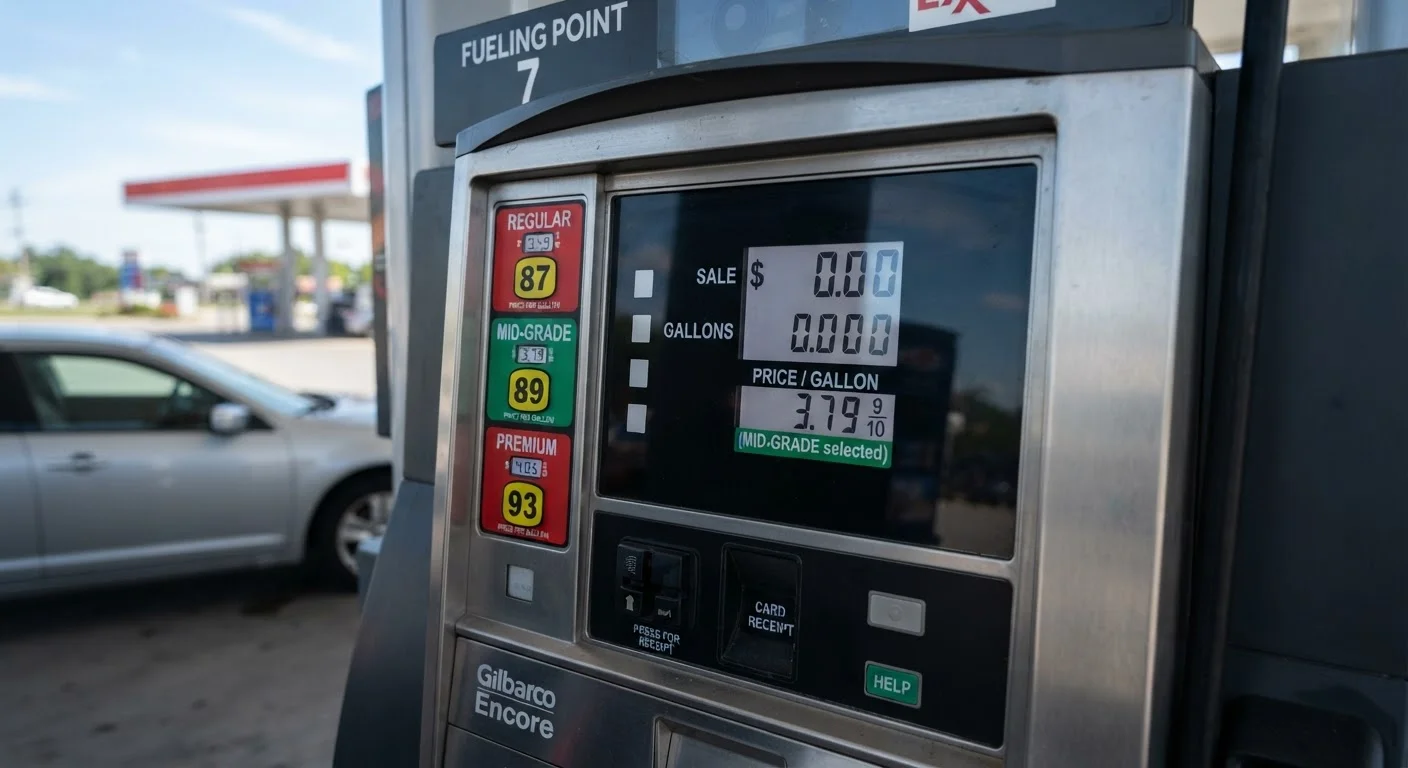
The numbers on the pump - typically 87, 89, and 91 or 93 - represent an octane rating, which is a measure of a fuel's ability to resist engine knock (also called pre-detonation or ping). Knock happens when the air-fuel mixture in a cylinder ignites before the spark plug fires, creating a sharp pressure wave that can stress engine components over time.
Higher-octane fuel does not burn hotter, produce more power on its own, or contain special additives that clean your engine better than regular grade. It simply handles higher compression and ignition timing pressures without igniting prematurely. That characteristic matters a great deal in certain engines - and very little in others.
The rating itself is an average of two laboratory test methods: the Research Octane Number (RON) and the Motor Octane Number (MON). You'll sometimes see this expressed as (R+M)/2 on the pump label in the United States. A pump marked 87 AKI (Anti-Knock Index) is what most Americans know as regular unleaded.
Common Myths - Corrected
Misunderstandings about premium fuel are remarkably widespread, and they cost drivers real money. Here's what the evidence actually shows.
Myth
Premium gas is better for every engine, so using it even when not required gives your car a boost.
Fact
Engines designed for regular-grade fuel gain no measurable benefit from premium in normal operation.
A standard engine with a compression ratio tuned for 87-octane fuel cannot take advantage of premium fuel's knock resistance. The combustion timing and compression pressure simply don't reach the thresholds where higher octane matters. Independent testing by organizations such as AAA has found no significant difference in fuel economy, performance, or engine cleanliness when premium is used in vehicles that specify regular. You're paying more for a property your engine can't use.
Myth
Higher octane fuel contains more energy, so it should deliver better gas mileage.
Fact
Octane rating has no direct relationship to energy content or fuel economy in engines that don't require it.
The energy density of gasoline is tied to its hydrocarbon composition, not its octane rating. A gallon of 93-octane premium and a gallon of 87-octane regular contain roughly comparable amounts of chemical energy. The efficiency difference, if any, appears only in engines engineered to exploit premium's knock resistance through more aggressive ignition timing - and even then, the fuel savings rarely offset the price premium at the pump.
Myth
Premium fuel cleans your engine better because it's a higher-quality product.
Fact
Detergent additive levels in gasoline are regulated by the EPA regardless of octane grade.
The U.S. Environmental Protection Agency sets minimum detergent requirements for all grades of gasoline sold domestically. Some fuel marketers voluntarily exceed those minimums and label their products accordingly - but this distinction is not the same as octane grade. Regular-grade fuel from one supplier can contain more detergent additives than premium-grade fuel from another. If engine deposit control matters to you, look for Top Tier-certified fuel rather than a higher octane number.
Myth
My engine's knock sensor will fully protect it if I use regular in a premium-required engine.
Fact
Knock sensors are a safety fallback, not a substitute for the correct fuel grade.
When a knock sensor detects pre-detonation, the engine control module retards ignition timing to suppress it. This works, but it comes at a cost: retarded timing reduces power output and can lower fuel efficiency. More importantly, knock sensors respond to knock that has already begun - they don't prevent it entirely. In a turbocharged or high-compression engine run on regular fuel over an extended period, cumulative stress on pistons, rings, and bearings is a real concern that the knock sensor cannot fully address.
When Premium Fuel Is Actually Required
Turbocharged engines and high-compression naturally aspirated engines - common in performance vehicles and a growing number of mainstream cars and crossovers - genuinely need higher-octane fuel to operate as designed. The owner's manual will use one of two phrases: "required" or "recommended." These are not interchangeable.
If your manual says premium is required, using regular grade risks knock-related wear and reduced performance. Modern engines use electronic knock sensors to detect pre-detonation and retard ignition timing to compensate, but this is a damage-mitigation fallback, not a free pass. Extended use of the wrong fuel grade in a required-premium engine can reduce efficiency, lower output, and accelerate wear.
If your manual says premium is recommended, the engine is tuned to run acceptably on regular but can take advantage of premium's knock resistance for slightly better performance and efficiency under heavy load. Whether that marginal gain justifies the price difference is a calculation individual drivers can make based on their driving habits.
Don't Confuse 'Recommended' With 'Optional'
Some drivers treat 'premium recommended' as marketing language and ignore it entirely. While a recommended-premium engine will run on regular, consistently doing so under heavy loads - towing, mountain driving, or hard acceleration - puts those knock sensors to work frequently. If you regularly drive in demanding conditions and your manual recommends premium, that guidance is worth following.
Making a Smarter Decision at the Pump
The single most reliable guide to the right fuel grade for your vehicle is the owner's manual - not the pump marketing copy, not a neighbor's advice, and not assumptions based on price. If you don't have your manual handy, most vehicles also display the required or recommended fuel grade on or near the fuel door.
For drivers who already made the switch to premium without a mechanical reason, switching back to regular for an engine designed for it involves no special procedure. The engine's management system will adapt within a short number of drive cycles.
Concerns about fuel economy, oil type, and overall engine longevity often travel together. If you're revisiting maintenance assumptions, the same evidence-based thinking applies to motor oil choices - see our guide on synthetic vs. conventional motor oil for a similar myth-busting breakdown. Likewise, many of the same misconceptions that drive unnecessary premium fuel spending also drive unnecessary oil changes - our look at common oil change myths covers that ground directly.
Bottom line: match your fuel grade to your engine's actual specification. Doing so protects your engine, keeps your wallet intact, and takes the guesswork out of a decision you make every few days.