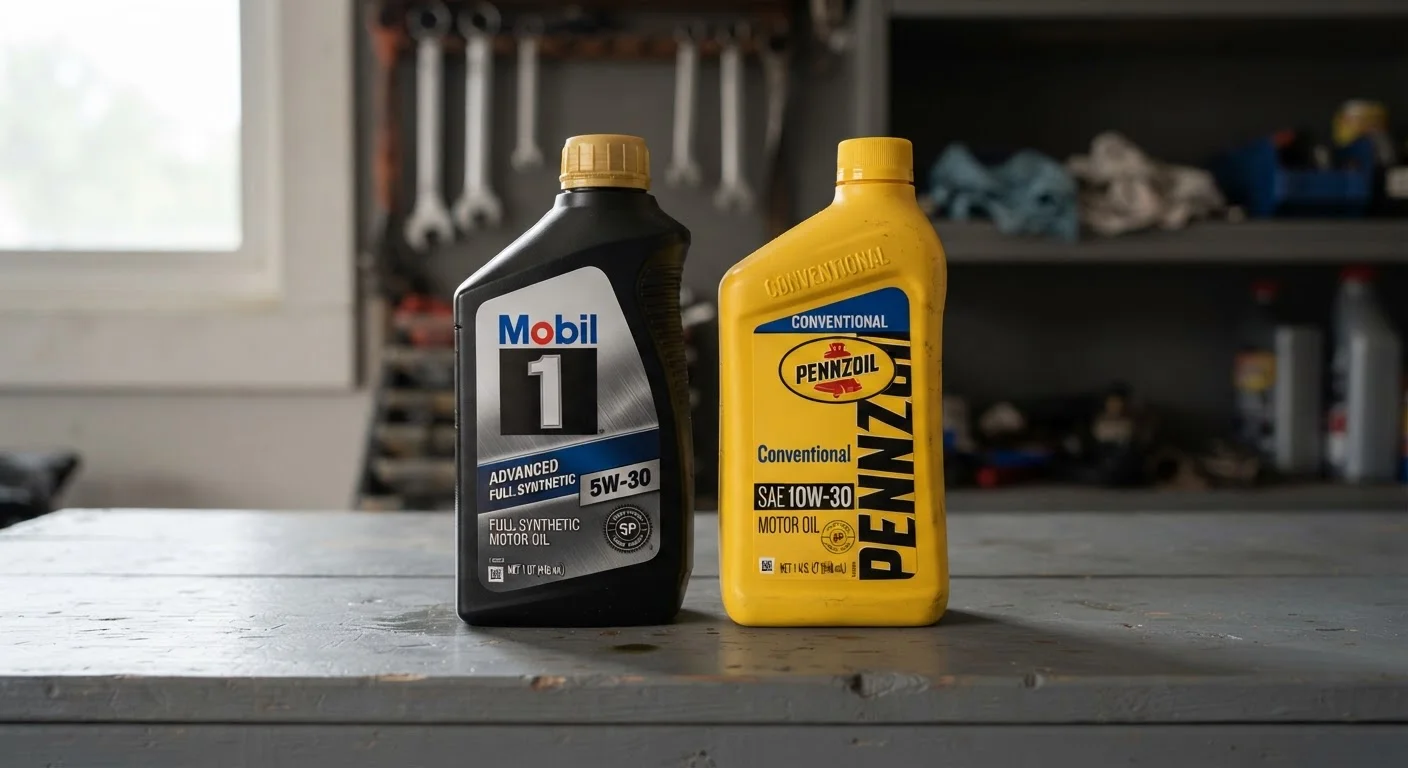
What Makes These Two Oils Actually Different
Motor oil has one core job: reduce friction between metal engine parts so they don't grind each other apart. Both oil types do this, but they arrive at that goal through different chemistry.
Conventional motor oil is refined from crude petroleum. The refining process removes many impurities, but the resulting oil still contains molecules of varying sizes and shapes. That inconsistency affects how the oil behaves when temperatures swing.
Synthetic motor oil is built at the molecular level - either synthesized from chemical compounds or heavily processed from a petroleum base until the molecules are uniform in size and structure. That consistency is the source of its performance edge. It flows more predictably when cold, holds up better at high heat, and resists breakdown longer under stress.
Most of what you'll find on shelves also includes a third category: synthetic blend, which mixes both types to offer a middle-ground option in performance and cost. For this comparison, we're focusing on full synthetic versus conventional.
For a broader look at what fluids your car relies on, see our guide to vehicle fluids.
| Criterion | Synthetic Motor Oil | Conventional Motor Oil |
|---|---|---|
| Base material | Chemically engineered molecules | Refined crude petroleum |
| Typical change interval | 7,500-10,000+ miles | 3,000-5,000 miles |
| Cost per quart | Higher | Lower |
| Cold-weather flow | Faster, more consistent | Slower at low temperatures |
| High-heat stability | Resists breakdown longer | Degrades faster under heat |
| Required for modern engines | Often yes (check manual) | Rarely specified for new vehicles |
| Suited to older engines | Generally compatible | Traditional default choice |
Cost, Change Intervals, and the Long View
Conventional oil is cheaper per quart - typically by a meaningful margin - but that comparison ignores one important factor: how often you need to change it. Conventional oil generally requires changes every 3,000 to 5,000 miles under normal driving conditions. Full synthetic typically extends that interval to 7,500 to 10,000 miles or more, depending on what your vehicle's manufacturer specifies.
7,500-10,000 mi
Typical synthetic oil change interval
Most vehicle manufacturers who specify full synthetic recommend change intervals in this range under normal driving conditions.
3,000-5,000 mi
Typical conventional oil change interval
Conventional oil generally breaks down faster, requiring more frequent changes to maintain adequate engine protection.
~2x
Longer interval with synthetic vs. conventional
On a per-mile basis, the higher upfront cost of synthetic is partially offset by its extended service life compared to conventional oil.
Do the math over a year of driving and the cost difference narrows considerably. In some scenarios - particularly for drivers who put significant miles on their vehicles - synthetic can be economically comparable or even cheaper on a per-mile basis.
That said, interval recommendations vary by vehicle and driving pattern. Short trips, stop-and-go traffic, and towing all stress oil more than highway cruising, and those conditions should factor into your change schedule regardless of oil type. Always defer to your owner's manual over any general rule of thumb. For more on this, common oil change myths examined covers why the old 3,000-mile rule no longer applies to most modern vehicles.
How to Decide What's Right for Your Vehicle
The single most reliable answer to which oil belongs in your engine is the one printed in your owner's manual. If the manufacturer specifies full synthetic - which is now standard for most turbocharged, direct-injection, and high-performance engines - then synthetic is not optional. Running conventional oil in an engine designed for synthetic can accelerate wear and potentially void your powertrain warranty.
If your manual says conventional is acceptable, you have more flexibility. Factors worth weighing include your climate (cold winters or desert summers tip the balance toward synthetic), your driving habits (frequent towing or high-RPM driving benefits from synthetic's heat resistance), and your vehicle's age and condition.
One persistent myth worth addressing: switching from conventional to synthetic will not cause leaks or damage a healthy engine. Seals in modern engines are compatible with synthetic oil. The concern originated with very old engine designs and has little relevance for anything built in the last few decades. Motor oil myths examined covers this and other common misconceptions in detail.
Once you know which oil your vehicle needs, you'll also face the choice of whether to handle the change yourself or take it to a shop - a decision with its own tradeoffs covered in our DIY vs. shop oil change comparison.