What Wheel Alignment Actually Means
The phrase "wheel alignment" gets thrown around at every tire shop visit, but most drivers have only a rough sense of what it involves. At its core, alignment is about geometry: the precise angles at which your tires meet the road surface.
Three measurements define alignment. Toe describes whether the fronts of your tires point slightly inward (toe-in) or outward (toe-out) when viewed from above - like how your feet might point when you stand. Camber describes the vertical tilt of the tire when viewed from the front of the car; a tire leaning inward has negative camber, outward has positive. Caster relates to the angle of the steering axis - it affects steering stability and how the wheel returns to center after a turn.
All three angles interact. Manufacturers engineer specific values for each based on the vehicle's suspension design, weight distribution, and intended handling characteristics. When any angle drifts outside those tolerances, problems begin - gradually and often invisibly. Check out the Car Maintenance hub for related upkeep guidance.
What Knocks Alignment Off - and Why It Happens Quietly
Many drivers assume alignment only becomes an issue after a dramatic event. In reality, it drifts out of spec through ordinary use. The most common causes include:
- Potholes and curb strikes: A single hard impact can shift suspension components enough to change alignment angles measurably.
- Worn suspension or steering parts: Bushings, ball joints, and tie rod ends all have tolerances. As they wear, the geometry they support shifts.
- Minor collisions or off-road driving: Even light contact can affect alignment, particularly on the front axle.
- Time and normal road use: Repeated small impacts - speed bumps, rough pavement - accumulate gradually.
The quiet nature of misalignment is what makes it dangerous. Unlike a flat tire or a loud noise, gradual misalignment rarely announces itself dramatically. That's why alignment checks should be part of regular maintenance, not just a reactive response to a symptom. Poor maintenance habits compound this risk - see how small oversights shorten vehicle lifespan over time.
Alignment vs. Balancing: Not the Same Thing
Wheel balancing and wheel alignment are often confused but address different problems. Balancing corrects weight imbalances in the tire-and-wheel assembly - typically causing vibration at highway speeds. Alignment corrects the geometric angles of the wheels. A vehicle can have perfectly balanced tires and still be out of alignment, and vice versa. Both matter, but for different reasons.
The Real Costs of Ignoring Alignment
Misaligned wheels impose three categories of cost on drivers: tire wear, fuel economy, and mechanical damage.
Tire wear is the most immediate consequence. When a tire runs at an incorrect angle, the contact patch meets the road unevenly. One edge carries more load than it should, wearing down faster. Tires that should last 50,000 miles can wear out in 20,000 or less under persistent misalignment. Since tires are one of a vehicle's largest recurring maintenance costs, this adds up quickly. For more on monitoring tire health, the guide to tire pressure and tread depth covers what to watch for.
Fuel efficiency takes a hit because misaligned tires increase rolling resistance - the engine must exert more energy to move the vehicle forward at the same speed.
Suspension and steering components also suffer. Tie rods, ball joints, and wheel bearings are designed to operate within specific load parameters. Persistent misalignment shifts those loads, accelerating wear on parts that are expensive to replace.
~25%
Potential reduction in tire life from misalignment
Automotive maintenance sources commonly estimate that sustained misalignment can reduce tire lifespan by 25% or more, depending on severity.
Up to 10%
Increase in rolling resistance from poor alignment
Engineers and tire industry sources note that significant toe misalignment can increase rolling resistance, contributing to measurable fuel economy losses.
When to Get an Alignment Check - and What to Expect
As a general guideline, alignment is worth checking every 12,000 to 15,000 miles, whenever you install new tires, and after any impact significant enough to jolt the suspension. If your car pulls to one side on a flat road, or if your steering wheel sits visibly off-center when driving straight, those are practical signals to schedule a check sooner.
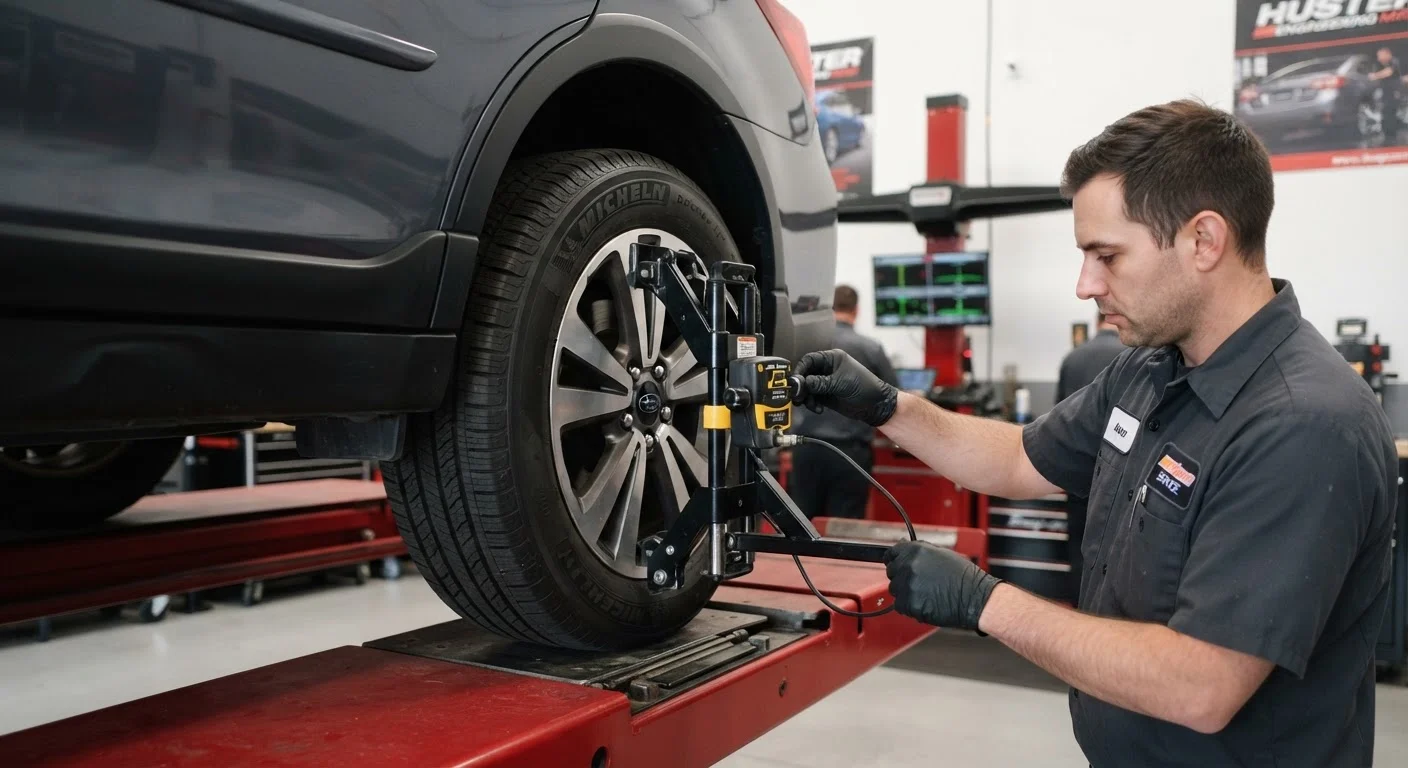
An alignment inspection involves placing the vehicle on a specialized rack where sensors measure the current angles of each wheel. The technician compares these readings to the manufacturer's specifications and makes adjustments using threaded adjustment points on the suspension. Most alignment services take under an hour.
New tires are a smart time to align because you're starting fresh - uneven wear from a previous alignment problem won't already be built into the tire. The guide to seasonal tire swapping explains how tire changes and storage work together with maintenance timing.
If a technician recommends alignment but also flags worn suspension components, address those parts first. Aligning the wheels while the underlying hardware is faulty means the alignment won't hold - the root problem needs to be fixed before the geometry adjustment will stick. Always work with a qualified mechanic for suspension repairs, as this is not a DIY task.