Why Seasonal Tire Swapping Matters
Tires are the only part of your vehicle that actually touches the road, which makes them one of the most consequential maintenance decisions you make. Yet many drivers treat tires as a set-and-forget item - running one set year-round regardless of conditions.
The problem is that tire rubber compounds are engineered with specific temperature ranges in mind. A summer or all-season tire stiffens noticeably as temperatures fall, reducing its ability to conform to the road surface and grip effectively. A winter tire, by contrast, uses a softer compound that stays pliable in cold weather and features tread patterns optimized to channel away slush and bite into packed snow.
Running the wrong tire in the wrong season isn't just a performance issue - it's a safety issue. Stopping distances on cold or wet pavement can increase substantially when a tire compound has hardened beyond its intended range. See our guide to winter road surfaces for a deeper look at how conditions affect traction and braking.
45°F
Temperature threshold for winter tire performance advantage
Tire industry guidance widely cites 45°F (7°C) as the point where winter tire compounds outperform all-season rubber.
25-50%
Reduction in snow braking distance with winter tires
Testing by transport research organizations has shown dedicated winter tires can reduce stopping distances on snow by roughly 25-50% compared to all-season tires.
6 years
General maximum service life for stored tires
Many tire manufacturers and automotive safety organizations suggest replacing tires after six to ten years regardless of tread depth, due to rubber compound degradation.
All-Season vs. Dedicated Winter Tires: The Real Difference
The term "all-season" is a bit of a misnomer. These tires are designed to handle a broad range of conditions reasonably well - light snow, rain, dry pavement - but they are not optimized for severe winter conditions. Think of them as a capable all-rounder, not a specialist.
Dedicated winter tires carry a Three-Peak Mountain Snowflake (3PMSF) symbol on the sidewall, indicating they've met specific performance standards in snow traction testing. This is different from the M+S (mud and snow) designation, which is a self-certification with no standardized test requirement.
Key differences between all-season and winter tires include:
- Rubber compound: Winter tires use silica-rich compounds that remain flexible below 45°F (7°C). All-season compounds begin to lose pliability in that range.
- Tread design: Winter tires feature deeper, more aggressive tread blocks and sipes (small slits) that create biting edges for grip on snow and ice.
- Contact patch behavior: Winter tires are engineered to expel slush and water more efficiently, reducing hydroplaning risk on wet winter roads.
It's also worth noting that AWD and 4WD systems help power get to the ground, but they do nothing for lateral grip or stopping distance. Winter tires address that gap in a way that drivetrain alone cannot.
When buying a second set of winter tires, look for a rim size that's one inch smaller in diameter than your summer set - a 'minus-one' fitment. This lets you run a narrower tire, which cuts through snow better and is often less expensive.
Narrower tires exert more pounds-per-square-inch on the road surface, improving penetration through snow and slush to reach pavement.
Mark your off-season tires with a paint pen before storage - indicate which corner of the vehicle each was mounted on. When reinstalling, rotate them appropriately rather than simply putting them back in the same position.
Proper rotation at each seasonal swap extends even tread wear and maximizes the lifespan of both sets.
When to Swap: Timing Your Changeover
A commonly cited guideline among tire engineers and automotive organizations is the 45°F (7°C) rule: once your daily average temperatures consistently drop to or below that threshold, it's time to mount winter tires. For spring changeover, wait until temperatures are reliably staying above 45°F before switching back to all-season or summer tires.
In practical terms, this often means:
- Fall swap: Mid-October to mid-November in most northern U.S. climates
- Spring swap: Late March to early May, depending on your region
Don't wait for the first snowfall to schedule your appointment - tire shops get extremely busy once the season turns, and you may face a wait of several days. Build the swap into your regular vehicle calendar. Our year-round maintenance schedule can help you plan this alongside other seasonal upkeep.
Storing Your Off-Season Tires Correctly
How you store your off-season tires directly affects how long they last. Rubber degrades when exposed to UV light, ozone (produced by electric motors and fluorescent lighting), heat fluctuations, and moisture. Poor storage can shorten tire life by years.
Follow these storage fundamentals:
- Clean before storing: Wash tires with mild soap and water. Remove road grime, brake dust, and any petroleum-based dressings, which can dry out rubber over time.
- Keep them away from UV and ozone sources: Store in a cool, dark space away from direct sunlight, hot water heaters, and electric motors.
- Bag them: Placing each tire in a large, airtight plastic bag (with as much air removed as possible) reduces ozone exposure and moisture.
- Stack or hang correctly: Unmounted tires can be stacked horizontally. Mounted tires (on rims) should be hung or stored vertically - stacking mounted tires deforms the sidewall over time.
- Adjust inflation: Some shops recommend slightly reducing pressure in stored mounted tires, though manufacturer guidance varies. Check your tire documentation.
After reinstalling your tires, it's a good idea to have your wheel alignment checked if the vehicle has been through significant mileage or any curb impacts since the last swap.
Don't Store Tires Near Petroleum Products
Gasoline, solvents, and oil stored in the same space as tires can damage the rubber compound over time, even without direct contact. Fumes alone can accelerate degradation. Choose a dry, well-ventilated storage location away from fuel or chemicals.
What Happens at the Shop During a Swap
Understanding the process helps you ask better questions and catch errors. A typical seasonal tire swap involves several steps:
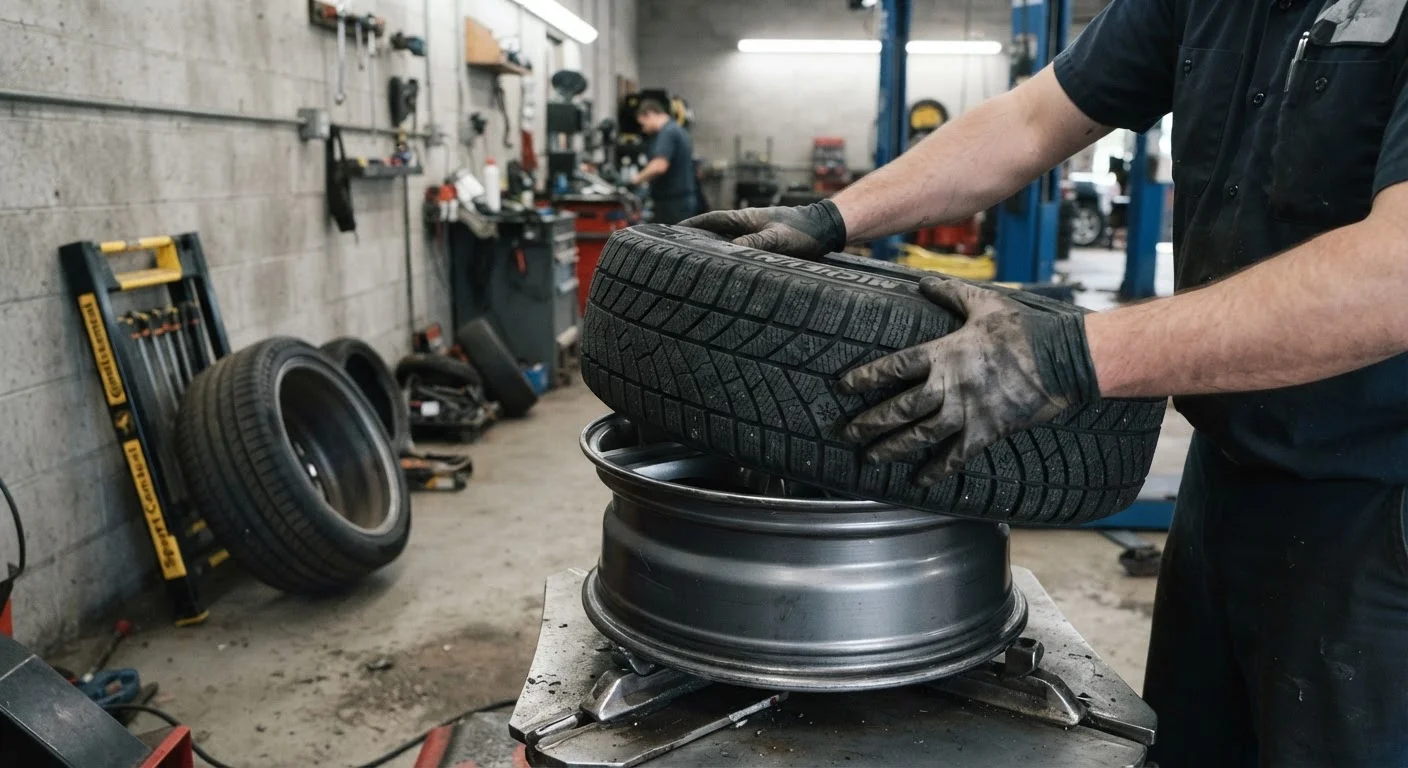
- Dismounting: Old tires are removed from the wheels using a tire machine.
- Inspection: A good shop will check tread depth, look for sidewall cracking or bulging, and inspect for uneven wear patterns before remounting.
- Mounting and balancing: New tires are mounted and then spin-balanced to ensure weight is evenly distributed around the wheel. Skipping balancing leads to vibration and uneven wear.
- Torque and TPMS reset: Lug nuts are tightened to the manufacturer's specified torque. If your vehicle has a Tire Pressure Monitoring System (TPMS), sensors may need to be re-learned or replaced if they're in the tire rather than on the rim.
One cost-saving strategy worth knowing: buying a second set of steel or alloy wheels for your winter tires. With tires already mounted on their own rims, each seasonal swap becomes a simple wheel swap rather than a full mount-and-balance job, which reduces shop time and fees over multiple seasons.
Common Mistakes to Avoid
Even drivers who commit to seasonal swapping sometimes undercut their own investment with avoidable errors:
- Swapping only two tires: Mixing winter and all-season tires on the same vehicle creates unpredictable handling. Winter tires should always go on all four corners.
- Running winter tires in summer: The softer compound wears much faster on hot pavement and compromises high-temperature handling. Swap them off once spring arrives.
- Ignoring tread depth: Tires with less than 4/32" of remaining tread depth provide significantly reduced winter grip. Use a tread depth gauge or the quarter test (insert a quarter into the tread - if you can see the top of Washington's head, tread is getting low).
- Skipping the post-swap check: After driving your newly swapped tires for 50-100 miles, verify that lug nuts have maintained proper torque - they can loosen slightly during initial driving.
Staying ahead of tire condition fits naturally into a broader seasonal maintenance habit. Whether it's tires in fall or fluid checks in spring, the underlying principle is the same: small, timely attention prevents larger, costlier problems.
This article is for general informational purposes. Always follow your vehicle manufacturer's recommendations and consult a qualified tire professional for guidance specific to your vehicle and driving conditions.