What Is Sleep Hygiene?
Sleep hygiene is a term used by sleep researchers and clinicians to describe the set of behaviors, routines, and environmental conditions that influence how well - and how consistently - a person sleeps. It's not about rigid rules or perfection. It's about understanding which daily choices work with your body's natural sleep-wake system, and which ones work against it.
The concept has its roots in behavioral sleep medicine and has become a foundation for treating common sleep difficulties. Unlike medication or supplements, sleep hygiene is about building a sustainable context in which good sleep can reliably happen.
Sleep hygiene
The collection of daily habits, behaviors, and environmental conditions that promote consistent, quality sleep. Good sleep hygiene creates the circumstances in which natural sleep can occur reliably.
Circadian rhythm
Your body's internal 24-hour biological clock that regulates sleep-wake cycles, hormone release, and other functions. It is influenced by light, meal timing, and daily routines.
Melatonin
A hormone produced by the brain's pineal gland that signals to the body that it's time to sleep. Its production is suppressed by light exposure, especially in the evening.
REM sleep
Rapid Eye Movement sleep is a stage of sleep associated with dreaming, memory consolidation, and emotional processing. It is considered an important part of restorative sleep.
Sleep architecture
The pattern and structure of sleep stages - including light sleep, deep sleep, and REM - that cycle throughout the night. Disruptions to this pattern reduce sleep's restorative benefits.
CBT-I
Cognitive Behavioral Therapy for Insomnia is a structured, evidence-based psychological treatment for chronic insomnia. It addresses the thoughts and behaviors that perpetuate sleep difficulties, without relying on medication.
For anyone starting to address their sleep, hygiene habits are the logical first step - and often the most impactful one. Later articles in this series go deeper into specific areas, including building an effective wind-down routine and how your bedroom environment shapes sleep quality.
Why Sleep Is a Pillar of Wellness
Sleep is often the first thing sacrificed when life gets busy - yet it is one of the most fundamental drivers of physical and mental health. During sleep, the body repairs tissue, consolidates memories, regulates hormones, and clears metabolic waste products from the brain. These are not optional processes.
Chronic insufficient sleep is linked, in the research literature, to a higher risk of cardiovascular disease, metabolic dysfunction, impaired immune response, and mental health challenges. Cognitive performance - attention, decision-making, reaction time - declines measurably with even modest sleep restriction.
Despite this, many adults routinely underestimate how sleep-deprived they are, particularly because chronic sleep debt can blunt your own ability to perceive how impaired you've become. Recognizing sleep as a non-negotiable health pillar - alongside nutrition and movement - is the foundational mindset shift that makes hygiene improvements actually stick.
Core Sleep Hygiene Habits
The most well-supported sleep hygiene recommendations center on a handful of behavioral principles:
- Keep a consistent sleep schedule. Going to bed and waking at the same time every day - including weekends - anchors your circadian rhythm, the internal 24-hour clock that governs sleep-wake cycles. Irregular schedules are one of the most common and underappreciated causes of poor sleep.
- Limit caffeine strategically. Caffeine has a half-life of roughly five to six hours in most adults, meaning an afternoon coffee can still be partially active at bedtime. Most sleep health guidelines suggest avoiding caffeine in the six hours before sleep.
- Avoid alcohol close to bedtime. While alcohol may help people fall asleep faster, it fragments sleep architecture - particularly reducing restorative REM sleep - in the second half of the night.
- Exercise regularly, but time it thoughtfully. Regular physical activity is associated with better sleep quality. Vigorous exercise very close to bedtime can be stimulating for some people, though individual responses vary.
- Reserve the bed for sleep. Associating your bed primarily with sleep (and not with work, scrolling, or watching TV) reinforces a mental cue that helps the brain shift into sleep mode more readily.
Start With Your Wake Time, Not Your Bedtime
If you want to reset your sleep schedule, anchor it to a fixed wake time first. Waking at the same time every day - even on weekends, even when you slept poorly - builds up natural sleep pressure that makes it easier to fall asleep at your target bedtime. Trying to force sleep at a set hour without a consistent wake anchor is often why people find schedule-setting frustrating.
Your Sleep Environment Matters More Than You Think
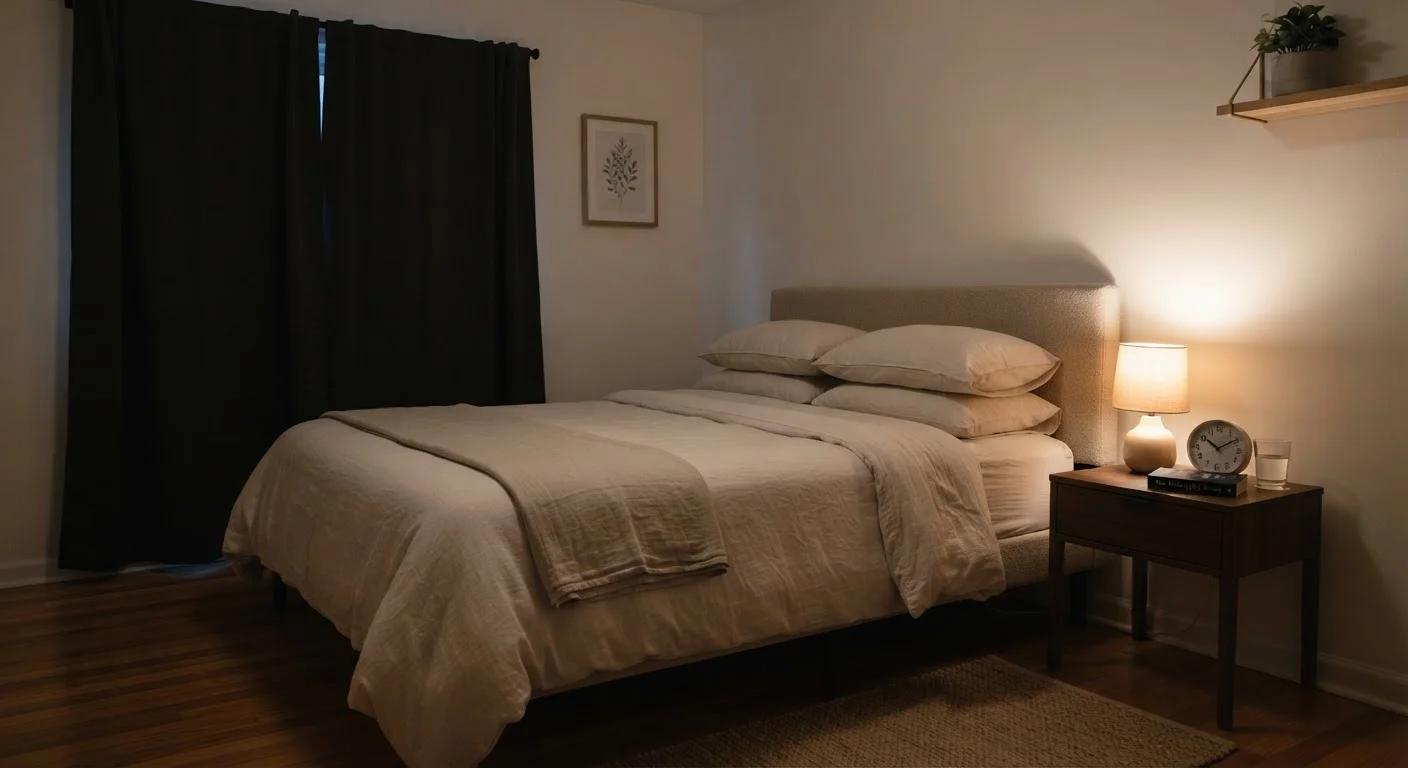
The conditions in your bedroom directly influence how quickly you fall asleep and how deeply you stay asleep. Light, noise, and temperature are the three most evidence-supported environmental factors.
Light: Exposure to light - particularly blue-spectrum light - signals wakefulness to the brain by suppressing melatonin, the hormone that promotes sleep onset. Keeping your bedroom as dark as possible during sleep hours, and reducing bright light exposure in the evening, supports this natural process.
Temperature: Core body temperature drops slightly as part of normal sleep initiation. A cooler bedroom (generally somewhere in the mid-60s Fahrenheit is often cited as a range many people find comfortable, though individual preference matters) can support this process. Very warm rooms tend to fragment sleep.
Noise: Unpredictable noise disrupts sleep more than consistent background sound. If you live in a noisy environment, white noise or earplugs can help mask irregular sounds without introducing new disruptions.
For a deeper look at each of these factors, see why your bedroom environment shapes how well you sleep.
Common Habits That Work Against You
Some of the most common sleep disruptors are behaviors so embedded in daily life that most people don't connect them to their sleep struggles. Habits that quietly undermine sleep explores many of these in detail, but a few deserve mention here:
- Irregular wake times: Sleeping in on weekends disrupts the circadian alignment you built during the week, making Monday mornings harder than they need to be.
- Scrolling in bed: Both the light exposure and the mental stimulation of social media or news feeds activate alertness at exactly the wrong time.
- Late, heavy meals: Eating large meals close to bedtime can interfere with digestion and increase the likelihood of discomfort that fragments sleep.
- Clock-watching: Anxiously checking the time when you can't sleep activates stress arousal and compounds the problem.
Also worth examining: widely shared sleep beliefs that may not hold up to scrutiny. Common sleep myths examined against the research can help you separate evidence-based guidance from popular but misleading ideas.
When to Talk to a Healthcare Provider
Sleep hygiene is an effective foundation for most people - but it is not a clinical treatment for sleep disorders. If you apply these principles consistently for several weeks and continue to experience significant difficulty falling asleep, staying asleep, or feeling rested, that's a meaningful signal worth discussing with a qualified healthcare provider.
Certain symptoms suggest an underlying condition that hygiene habits alone won't address: loud or interrupted snoring, waking frequently to urinate, persistent excessive daytime sleepiness despite adequate time in bed, or restless, uncomfortable sensations in the legs at night. These warrant medical evaluation, not just lifestyle adjustment.
A provider can help differentiate between primary insomnia, circadian rhythm disorders, sleep apnea, and other conditions - and connect you with evidence-based treatments such as Cognitive Behavioral Therapy for Insomnia (CBT-I), which is considered a first-line treatment for chronic insomnia by many clinical guidelines.
For a structured starting point before your next sleep goal, the pre-sleep checklist for a more restful night offers a practical evening framework grounded in the principles covered here.
This article is for general informational and educational purposes only and does not constitute medical advice. If you have concerns about your sleep or health, please consult a qualified healthcare professional.