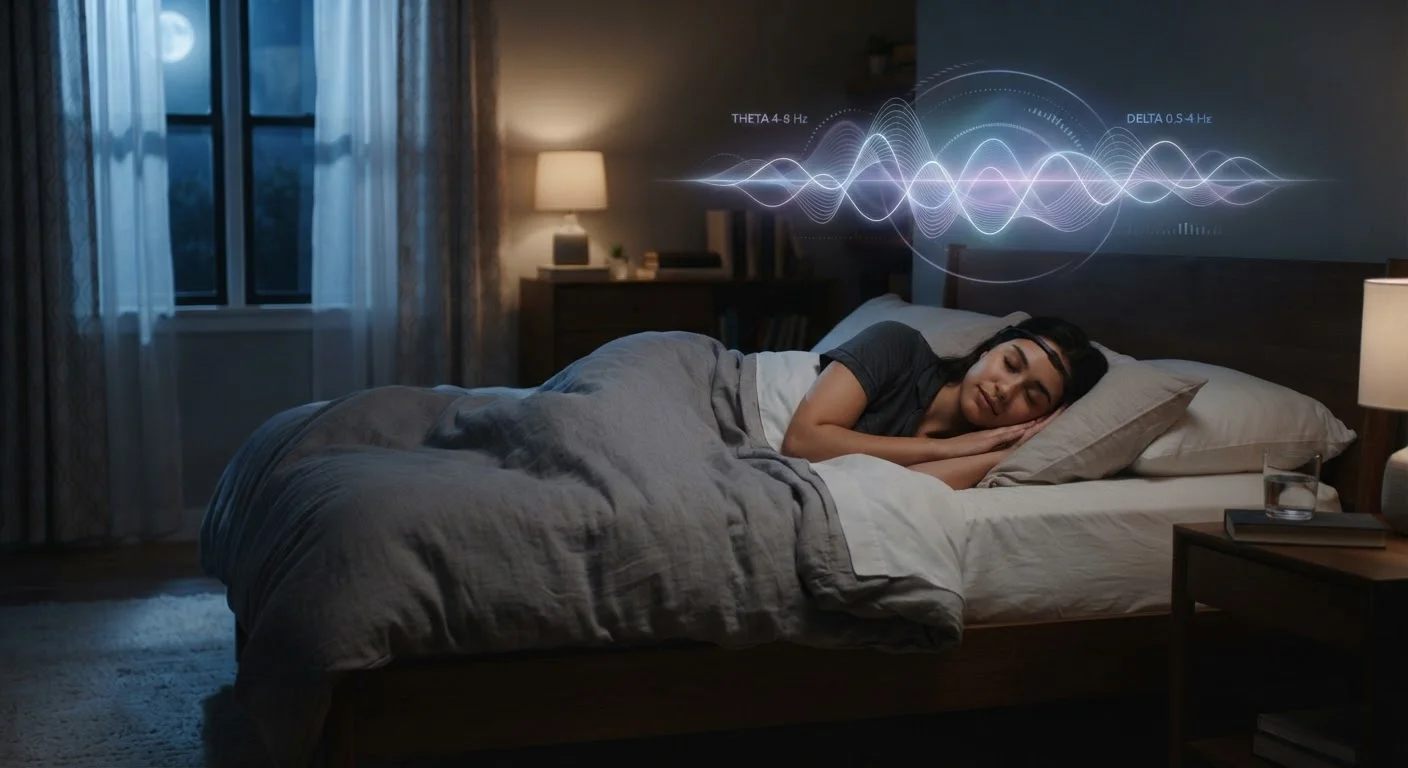
The Four Stages of Sleep at a Glance
Sleep is not a single, uniform state. Each night, your brain cycles through four distinct stages that serve different biological functions. Understanding them helps explain why total hours in bed is only part of the recovery equation - quality and stage distribution matter just as much.
| Number of sleep stages | 4 (N1, N2, N3, and REM) (American Academy of Sleep Medicine) |
| Average cycle length | ~90 minutes (National Sleep Foundation) |
| Cycles per night (typical adult) | 4-6 cycles (National Institutes of Health) |
| Proportion of deep sleep (N3) | ~15-20% of total sleep (American Academy of Sleep Medicine) |
| Proportion of REM sleep | ~20-25% of total sleep (National Sleep Foundation) |
| When REM is most abundant | Final third of the night (NIH sleep research consensus) |
The four stages are grouped into two categories: NREM (Non-Rapid Eye Movement) sleep, which includes stages N1, N2, and N3, and REM (Rapid Eye Movement) sleep. Your brain moves through these stages in repeating cycles, each roughly 90 minutes long. The balance of stages shifts across the night - deep sleep dominates early cycles, while REM lengthens in the cycles closest to morning.
For a deeper look at what your body is actually doing during these stages, see what happens to your body during sleep.
N1 and N2: Light Sleep Explained
N1 (Stage 1) is the transition from wakefulness to sleep. It lasts only a few minutes per cycle and is the stage from which you're easiest to rouse. Muscle activity slows, and you may experience brief hypnic jerks - those sudden twitches that occasionally jolt you awake. N1 accounts for roughly 5% of total sleep time.
N2 (Stage 2) is where most adults spend the largest portion of the night - approximately 45-55% of total sleep. Body temperature drops, heart rate slows, and the brain begins producing sleep spindles and K-complexes (large, sharp brain waves). These features are thought to help stabilize sleep and begin processing new information. N2 is still light enough that noise or light can wake you, but it represents a meaningfully deeper rest than N1.
Sleep cycle
A complete sequence of sleep stages, typically lasting 90 minutes, that repeats several times per night. Most adults complete four to six cycles in a full night's sleep.
REM sleep
Rapid Eye Movement sleep is the stage characterized by vivid dreaming, active brain activity, and temporary muscle paralysis. It plays a critical role in memory consolidation and emotional regulation.
Slow-wave sleep (SWS)
Also called deep sleep or N3, slow-wave sleep is the most physically restorative stage, defined by large, slow brain waves (delta waves) and the deepest level of unconsciousness.
Sleep architecture
The overall structure and pattern of sleep stages across a night, including how long each stage lasts and how the cycles are distributed from lights-out to wake.
NREM sleep
Non-Rapid Eye Movement sleep encompasses stages N1, N2, and N3 - all the sleep stages that occur before REM. Each stage progressively deepens before cycling back.
Sleep spindles
Brief bursts of oscillatory brain activity that occur during N2 sleep. Research suggests they are involved in memory processing and the brain's ability to stay asleep through noise.
N3: The Deep Sleep Your Body Craves
N3 - also called slow-wave sleep or deep sleep - is the most physically restorative stage. Delta brain waves dominate, breathing slows further, and the body becomes notably harder to wake. Growth hormone is primarily released during this stage, supporting tissue repair, immune function, and muscle recovery. This is why athletes and anyone managing a physically demanding lifestyle benefit significantly from protecting their deep sleep.
Deep sleep is most abundant in the first half of the night, which is one reason that cutting sleep short - even by an hour or two - disproportionately reduces N3 time. Alcohol, while it may initially help you fall asleep, is known to suppress deep sleep and fragment its architecture later in the night.
Sleep Stages Can Shift With Age
Sleep architecture changes throughout life. Infants spend far more time in REM than adults, while older adults typically see a reduction in deep (N3) sleep. If you notice significant changes in your sleep patterns - especially daytime sleepiness - it's worth discussing with a healthcare provider rather than assuming it's normal aging.
REM Sleep: Memory, Mood, and the Dreaming Brain
REM sleep is the stage most associated with vivid dreaming. The brain becomes highly active - nearly as active as when you're awake - while the body's major muscle groups are temporarily paralyzed, likely to prevent acting out dreams. Eye movements occur rapidly beneath closed eyelids, giving the stage its name.
REM is critical for memory consolidation, especially for complex, procedural, and emotional memories. It also plays a significant role in emotional regulation; disrupted REM sleep is consistently linked to mood difficulties and increased stress reactivity. Because REM periods lengthen across the night, people who sleep fewer than seven hours may miss a substantial portion of their total REM time.
To understand more about how sleep myths might be affecting your REM and overall rest, see common sleep beliefs examined against research.
Why the Full Cycle Matters for Recovery
Each sleep stage contributes something irreplaceable. Skewing your sleep heavily toward light stages - whether from interruptions, too-early wake times, or sleep disorders - leaves the body without adequate deep sleep for physical repair, and without adequate REM for cognitive and emotional recovery. No single stage can compensate for consistent deficits in another.
The practical implication is straightforward: consistent, uninterrupted sleep that allows four to six complete cycles is the foundation of meaningful recovery. If you want to improve your sleep architecture, sleep hygiene fundamentals is the right starting point. And if you're wondering whether naps can make up for lost cycles, see what the research says about napping.
~90 min
Length of one complete sleep cycle
According to the National Sleep Foundation, each cycle takes roughly 90 minutes to complete from N1 through REM.
~13%
Adults regularly getting insufficient sleep
CDC surveillance data indicate roughly 1 in 3 American adults report regularly sleeping fewer than the recommended hours.
20-25%
Portion of the night spent in REM
The National Sleep Foundation estimates healthy adults spend about one-fifth of their night in REM sleep.
For a practical evening routine built around supporting all sleep stages, explore your pre-sleep checklist.
This article is for general informational and educational purposes only and does not constitute medical advice. If you have concerns about your sleep quality or patterns, consult a qualified healthcare professional.