What the Research Actually Shows About Evening Exercise
The long-standing advice to avoid exercise within several hours of bedtime has a reasonable physiological basis - but the evidence behind the hard "no late workouts" rule is weaker than it's often presented. A widely cited 2019 meta-analysis in Sports Medicine examined 23 studies and found that evening exercise generally did not harm sleep quality, and in many cases improved it. Participants fell asleep at similar times and reached comparable amounts of deep sleep whether they exercised in the evening or not.
Where the picture becomes more nuanced is with vigorous-intensity exercise very close to bedtime. When high-intensity sessions end within 60 minutes of lights-out, some individuals experience delayed sleep onset - likely because core body temperature, heart rate, and circulating adrenaline remain elevated. The key phrase there is some individuals. Responses vary considerably, meaning population-level averages may not predict your personal experience.
This connects to a broader point about common sleep myths - oversimplified rules circulate widely but collapse under individual variation.
Individual Variation Is the Key Variable
Population-level studies reveal trends, but your personal physiology, fitness level, sleep chronotype (whether you're naturally a morning or evening person), and stress levels all influence how your body responds to late-day exercise. If evening workouts work well for you - as they do for many people - there is no evidence-based reason to change them.
How Exercise Influences the Body's Sleep Systems
To understand why timing matters at all, it helps to know what exercise actually does to the systems that govern sleep.
- Core body temperature: Exercise raises it; falling body temperature in the evening signals the brain that sleep is approaching. If a workout delays that drop, sleep onset may shift later.
- Cortisol and adrenaline: Intense activity triggers a stress hormone response that promotes alertness. As covered in our article on how cortisol interferes with sleep and recovery, elevated cortisol can directly suppress melatonin production.
- Adenosine buildup: Physical activity accelerates the accumulation of adenosine, a byproduct of cellular energy use that promotes sleep pressure. This is one reason regular exercisers often report feeling genuinely sleepy at appropriate times.
- Circadian rhythm: Morning light exposure combined with morning exercise may help anchor your internal clock, making it easier to feel alert during the day and sleepy at night on a consistent schedule.
29%
Adults reporting insufficient sleep regularly
According to CDC surveillance data, nearly 1 in 3 U.S. adults report sleeping fewer than 7 hours per night on average.
~1 hr
Buffer time that may reduce evening exercise sleep disruption
Research suggests completing vigorous exercise at least 60 minutes before bedtime is associated with fewer sleep-onset complaints in sensitive individuals.
23 studies
Studies reviewed in key evening exercise meta-analysis
A 2019 meta-analysis in Sports Medicine synthesized 23 studies and found evening exercise generally did not impair sleep quality in healthy adults.
Morning vs. Afternoon vs. Evening: What Timing Tends to Offer
Each exercise window carries distinct trade-offs that go beyond sleep alone.
Morning exercise aligns well with cortisol's natural daily peak, which occurs shortly after waking. Working with that biological rhythm may feel energizing rather than forced. It also front-loads physical activity before the day's competing demands can crowd it out. From a sleep standpoint, morning exercise gives the body the most time to return to a calm physiological state before bedtime.
Subtle habits that undermine sleep often involve poor evening routines - and morning workouts effectively sidestep that risk entirely.
Afternoon exercise (roughly 2-6 p.m.) may actually optimize performance for many people. Muscle strength, reaction time, and cardiovascular efficiency tend to peak in the mid-to-late afternoon, meaning this window may produce better training outcomes while still allowing ample recovery time before sleep.
Evening exercise is the realistic option for a large portion of working adults. The evidence suggests it works well for most people - the practical recommendation is to monitor your own sleep response and adjust intensity or timing if you notice problems.
Practical Guidance: Finding Your Personal Exercise Window
Rather than prescribing a single ideal workout time, the most useful approach is structured self-observation.
- Track your sleep after different workout times using a journal or a basic sleep tracker. Look for patterns in how long it takes you to fall asleep and how rested you feel the next morning.
- Pay attention to intensity, not just timing. A brisk evening walk is fundamentally different from a high-intensity interval session at 9 p.m. If you exercise late, consider whether a moderate-intensity format suits you better than an intense one.
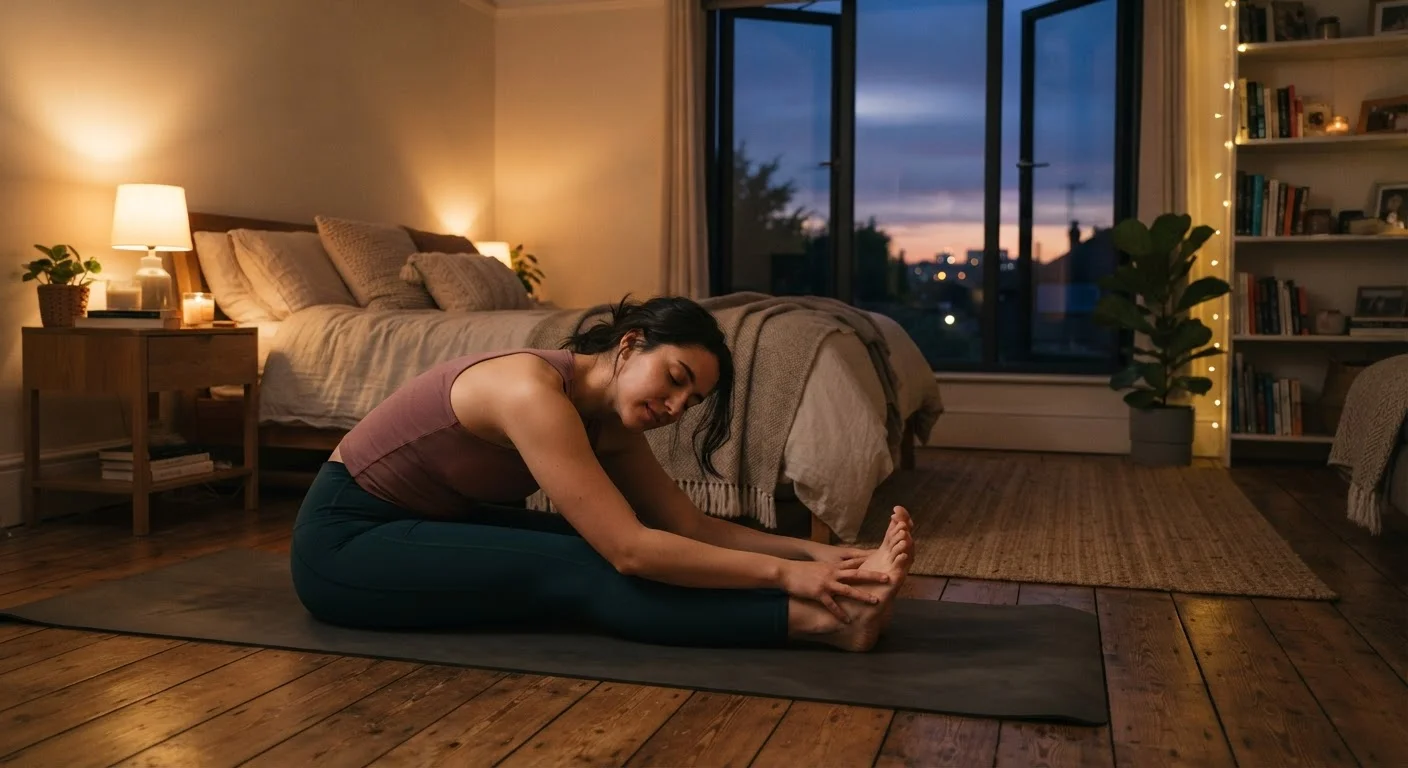
- Build a wind-down buffer. If evening workouts are your only realistic option, a 20-30 minute cool-down period - gentle stretching, a lukewarm shower, dim lighting - helps accelerate the physiological shift toward sleep readiness. Your bedroom environment also plays a meaningful role here; a cooler room temperature supports the body temperature drop that initiates sleep.
- Be consistent. Irregular exercise timing combined with an irregular sleep schedule compounds circadian disruption. Whichever window you choose, regularity matters more than perfection.
This article is for general informational purposes only and does not constitute medical or clinical advice. If you have health conditions affecting your sleep or exercise tolerance, consult a qualified healthcare professional.