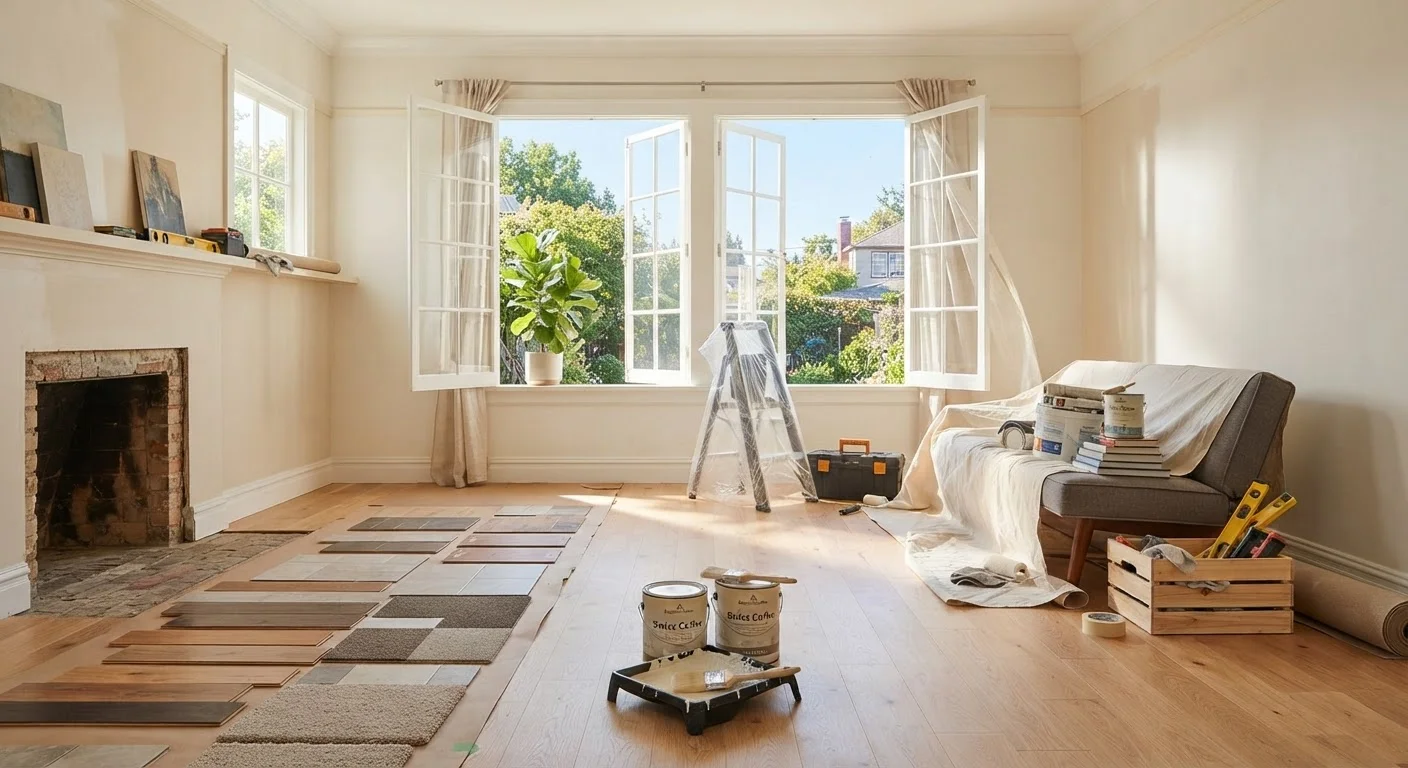
Why Your Improvement Materials Affect the Air You Breathe
Most homeowners focus on appearance and durability when choosing paints, adhesives, or flooring - and those factors absolutely matter. But the materials you bring into your home can also release gases into the air during and after installation, sometimes for days or weeks.
The most commonly discussed category is volatile organic compounds, or VOCs. These are carbon-containing chemicals that evaporate at room temperature. They come from a wide range of products: interior paint, wood stain, floor adhesive, caulk, laminate flooring, and even some carpets. Short-term exposure can cause headaches, eye irritation, or dizziness. In poorly ventilated spaces, concentrations can build up quickly.
Not all VOC-containing products are equally harmful, and brief, well-managed exposure is very different from ongoing exposure in a sealed room. Still, understanding what your materials contain helps you make better choices before you ever open a can. See our pre-work safety and prep checklist for a full rundown of what to assess before starting any indoor project.
Best Practices for Air-Conscious Home Improvement
These practices work together - combining smarter product choices with better habits during installation.
Read product labels for VOC content before purchasing
VOC content is listed on most paint and adhesive labels in grams per liter (g/L). Lower numbers mean fewer airborne compounds. Knowing this before you buy gives you the option to choose a lower-emission alternative without sacrificing too much on cost or performance.
Open windows and doors during application and keep them open for at least 24-48 hours after
Most off-gassing - the release of compounds from a freshly applied material - happens in the first day or two. Sustained ventilation during this window dramatically reduces the concentration of airborne compounds in the room.
Work in phases to limit simultaneous emission sources
Running multiple high-emission tasks at the same time - painting walls while installing adhesive-backed flooring, for instance - compounds the problem. Staggering tasks lets each area off-gas before you add another source.
Store leftover materials properly and promptly
Open or loosely sealed containers continue to off-gas even when not in use. Cans left in an attached garage or basement can raise compound levels throughout the home over time.
Wear appropriate respiratory protection during application
A basic dust mask does not filter chemical vapors. For solvent-based paints, stains, or adhesives, an N95 or a respirator with organic vapor cartridges provides meaningful protection during the highest-exposure moments of a project.
Ventilation: Your Most Reliable Tool
No matter what products you use, ventilation is your primary defense. Opening windows on opposite sides of a room creates cross-ventilation, moving stale, compound-laden air out and fresh air in. A box fan placed in a window facing outward can actively pull air through the space.
Time Your Project Around the Weather
Mild, low-humidity days are ideal for ventilating indoor renovation work. High humidity can slow drying times and prolong off-gassing, while cold days make sustained window ventilation impractical. Checking a three-day weather window before starting a painting or flooring project helps you plan for adequate airflow throughout the most critical off-gassing period.
During colder months when opening windows isn't comfortable, run the project in shorter sessions and use a portable air purifier with a HEPA and activated carbon filter between sessions. Change your HVAC filter more frequently during and after major renovations - our article on furnace filter frequency and air quality explains what to look for when deciding how often to change it.
If anyone in your household has asthma, allergies, or another respiratory condition, consider having them stay elsewhere during the most intensive phases of a project. Children and older adults are also more vulnerable to airborne irritants. This is general guidance - for personal health concerns, consult a qualified healthcare provider.
A Note on Older Homes and Hidden Hazards
Homes built before 1978 may contain lead-based paint, and homes built before the 1980s may contain asbestos in floor tiles, insulation, or other materials. Disturbing these materials during renovation can release hazardous particles. If your home is older and you're planning significant work, have potentially affected materials tested by a qualified professional before proceeding. DIY removal of lead or asbestos is not recommended and may be regulated in your area.
Quick Wins You Can Act On Today
Even if you're mid-project, there are immediate steps that reduce your exposure and improve the air in your home.
For longer-term habits, think about sequencing projects so that high-emission work - like floor adhesive application or spray painting - happens before you move furniture back in. Timing matters too: starting a painting project on a mild day when you can leave windows open for 24-48 hours afterward makes a real difference. For more on avoiding project decisions that create problems later, see shortcuts that come back to haunt you.