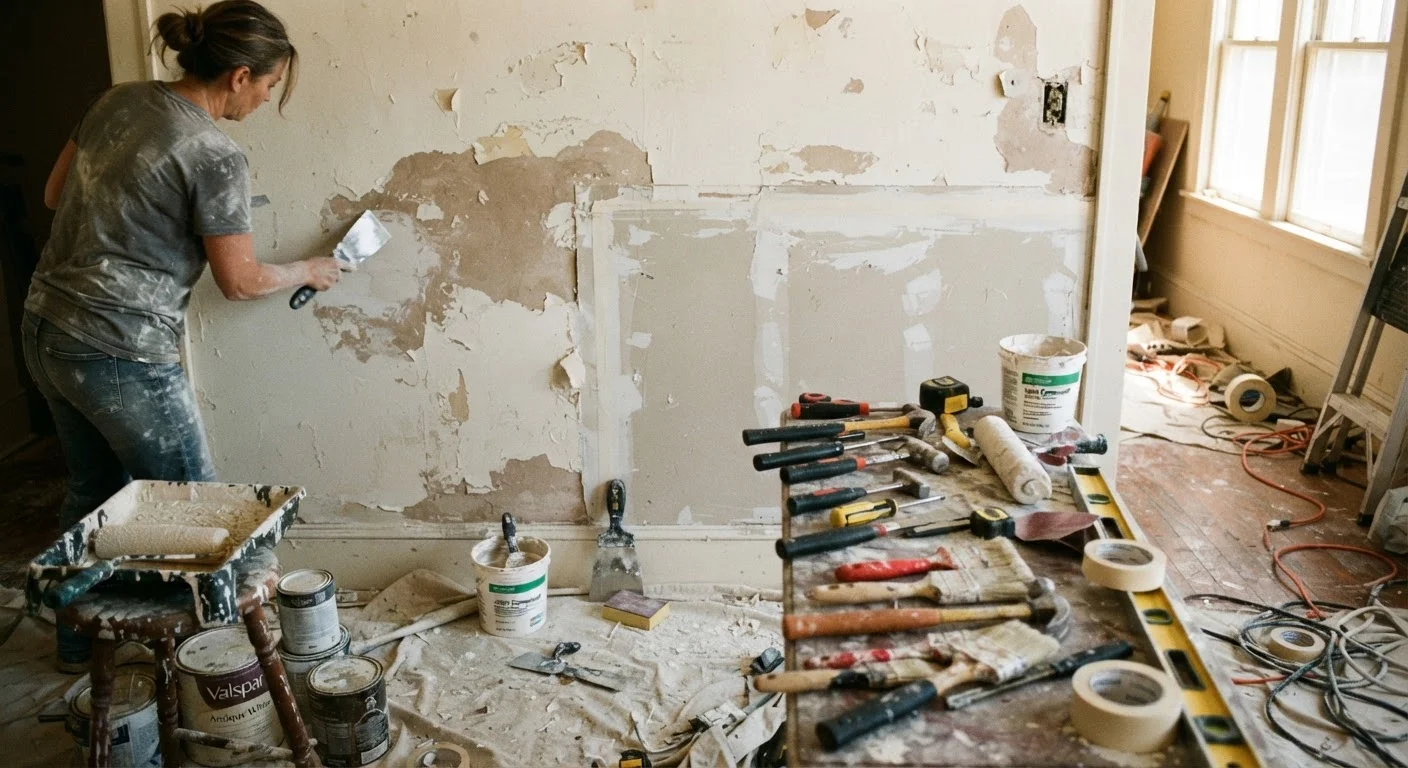
Why Small Shortcuts Create Big Problems
Most DIY project failures don't come from choosing the wrong color or buying the wrong tool. They come from what happens - or doesn't happen - in the first twenty minutes. Skipping prep, rushing dry times, grabbing the wrong fastener: these feel like minor decisions in the moment, but they're exactly the choices that drive repeat trips to the hardware store and weekends lost to redoing work that should have held.
The good news is that most of these mistakes are completely preventable. They're predictable patterns, not freak accidents. Understanding why they happen makes it much easier to stop them before they start. Our pre-work safety and prep checklist is a useful companion before any project gets underway.
~35%
DIY projects requiring a do-over due to prep failures
Industry surveys and contractor estimates consistently suggest a significant share of DIY callbacks stem from inadequate surface preparation rather than product or material failure.
2-3x
Cost increase when deferred small repairs become major fixes
Home maintenance professionals commonly note that small ignored problems - a stripped fastener, a moisture-damaged patch - tend to compound and require substantially more effort to correct later.
The Most Common Shortcuts - and How to Fix Your Habits
The mistakes below appear across virtually every type of indoor improvement project - from painting a room to installing shelving to laying tile. Each one has a clear cause and a straightforward fix.
Skipping surface prep before painting or applying finishes.
Why it happens: Prep work - cleaning, sanding, filling holes, and priming - feels tedious and invisible. It's easy to convince yourself that good paint will cover imperfections.
Over-tightening screws into drywall or soft wood.
Why it happens: Many DIYers assume tighter means more secure. When a screw doesn't feel firm, the instinct is to keep turning - often until the fastener spins freely in a stripped hole.
Ignoring manufacturer dry and cure times between coats or steps.
Why it happens: Impatience is natural, especially on weekend projects. If the first coat looks dry, it's tempting to move on - but surface dryness and full cure are different things.
Measuring once - or not measuring at all - before cutting materials.
Why it happens: Estimating by eye feels fast and confident, particularly for experienced DIYers who've "done this before." Even seasoned renovators make this mistake under time pressure.
Using the wrong fastener or adhesive for the material or load.
Why it happens: Hardware stores offer dozens of fastener types, and many DIYers grab whatever is on hand or looks close enough. A screw is a screw - until it fails.
Skipping proper ventilation when working with paints, adhesives, or solvents.
Why it happens: Opening a window feels like enough, and the smell doesn't always seem that strong at first. Many homeowners underestimate how quickly VOC levels (volatile organic compounds) can build up indoors.
Electrical and Gas Work Requires a Licensed Pro
No DIY shortcut is worth attempting unlicensed electrical or gas work. These systems carry serious risks of fire, injury, or death, and most jurisdictions require permits and licensed contractors for this work. Always verify your local code requirements before starting any project that touches wiring, panels, or gas lines.
It's also worth noting that some of what feels like "common knowledge" in home improvement turns out to be wrong. Our piece on home improvement myths that trip up DIYers covers a number of widely held beliefs that actually lead to costly mistakes. And if you're ever uncertain whether a task falls within safe DIY territory, knowing where the DIY line really is can save you from a decision you'll regret.
Shortcuts Can Void Your Home Insurance
Unpermitted or improperly completed work can create complications with homeowner's insurance claims or future property sales. When in doubt about whether a project requires a permit, contact your local building department before starting. It's a brief conversation that can save significant legal and financial headaches later.
Skipping these fundamentals doesn't just affect the quality of one project - it can compound over time. Deferred maintenance and rushed repairs tend to snowball, turning small missteps into much larger expenses. Taking the time to do things right the first time is almost always the faster path in the long run.