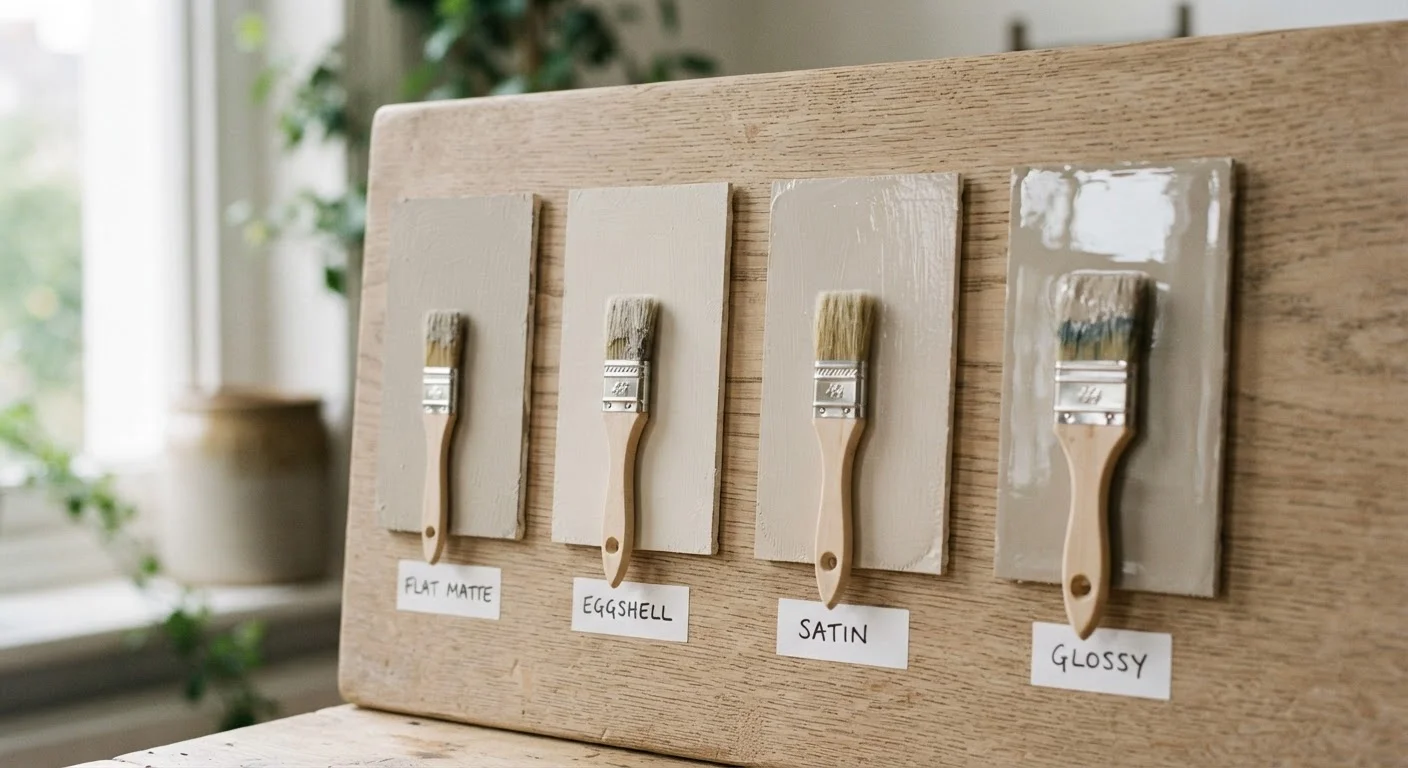
Why Paint Finish Matters More Than You Might Think
Most homeowners spend the bulk of their time choosing a color - and almost no time thinking about sheen. But the finish level you select determines how a wall holds up to scrubbing, how it hides surface imperfections, and how light bounces around a room. Picking the wrong finish for a space is one of the most common painting mistakes, and it's one that's easy to avoid with a little background knowledge.
Paint finishes are ranked by how much light they reflect, from completely flat (no sheen) to high-gloss (mirror-like). Each level has a practical sweet spot - certain finishes belong in kitchens and bathrooms, while others are better suited for ceilings and formal living rooms. As a general rule, the higher the sheen, the more durable and washable the surface - but also the more it will reveal every bump and roller mark. As you'll see in common DIY painting myths, assuming any finish works anywhere is a fast track to do-overs.
| Sheen levels (low to high) | Flat → Matte → Eggshell → Satin → Semi-Gloss → High-Gloss |
| Best finish for ceilings | Flat or matte |
| Best finish for kitchens & bathrooms | Satin or semi-gloss |
| Most washable finish | High-gloss |
| Best at hiding wall imperfections | Flat / matte |
| Standard trim finish | Semi-gloss or high-gloss |
The Finish Spectrum: From Flat to High-Gloss
Here's how the main finish types stack up and where each one performs best:
Flat / Matte
Flat paint absorbs light rather than reflecting it, which effectively camouflages surface flaws like minor dents, texture inconsistencies, and old repairs. That makes it a strong choice for ceilings and low-traffic living or dining rooms. The trade-off: it's the hardest finish to clean. Scrubbing a flat wall can damage the surface, so it's not well-suited to hallways, children's rooms, or anywhere spills happen regularly.
Eggshell
Eggshell sits just above flat on the sheen scale. It has a subtle, soft luster - somewhat like the surface of an actual eggshell - that adds a little depth without being shiny. It handles light cleaning better than flat paint, making it one of the most versatile choices for main living areas, bedrooms, and dining rooms where you want a polished look without high maintenance.
Satin
Satin has a noticeably smooth, velvety sheen and holds up well to regular cleaning. It's a practical pick for kitchens, bathrooms, laundry rooms, and kids' rooms. Keep in mind: satin does reflect enough light to show brush strokes and roller marks, so good application technique matters. Once dry, satin-painted walls can be wiped down without worrying about surface damage.
Semi-Gloss
Semi-gloss is the go-to for trim, doors, window casings, and cabinetry. Its higher sheen creates a crisp visual contrast against matte or eggshell walls and resists moisture and grime effectively. Many painters also use it in bathrooms and kitchens where durability is the priority.
High-Gloss
High-gloss is the most durable and easiest to clean of all finishes, but it shows every surface imperfection. It's rarely used on walls except for dramatic accent applications. It's most commonly reserved for furniture, cabinets, and exterior trim.
Sheen
The degree of light reflectivity in a dried paint film. Higher sheen means more light is reflected, resulting in a shinier surface.
VOC (Volatile Organic Compound)
Chemicals that evaporate at room temperature and can be released by paint as it dries. High VOC levels can affect indoor air quality; low-VOC formulas are widely available.
Eggshell finish
A paint sheen level with a subtle, low-luster appearance similar to the surface of an eggshell. It offers more washability than flat paint while still minimizing surface imperfections.
Semi-gloss
A paint finish with a noticeably shiny surface that reflects significant light. It is highly durable and moisture-resistant, commonly used on trim, doors, and cabinetry.
Choosing by Room: A Practical Framework
Rather than memorizing every finish, think about two questions for each space: How much traffic and moisture does this room see? and How smooth are the walls? Higher-traffic or higher-moisture rooms call for higher sheen. Walls with visible imperfections benefit from lower sheen.
- Ceilings: Flat or matte - ceilings are rarely touched, and the low sheen minimizes glare from overhead lighting.
- Bedrooms and living rooms: Eggshell or satin - easy to clean but still soft-looking.
- Kitchens and bathrooms: Satin or semi-gloss - moisture resistance and washability are the priorities.
- Hallways and entryways: Satin - these high-traffic areas need a finish that handles scuffs and hand prints.
- Trim, doors, and molding: Semi-gloss or high-gloss - provides durability and a sharp, finished appearance.
One more factor worth considering: paint finish affects indoor air quality in subtle ways. Low-VOC (volatile organic compound) formulas are available across all finish levels. If you're painting in a poorly ventilated space or a room used by children, look for low-VOC options and plan your ventilation carefully. Our article on indoor air quality and home improvement covers this in more detail.