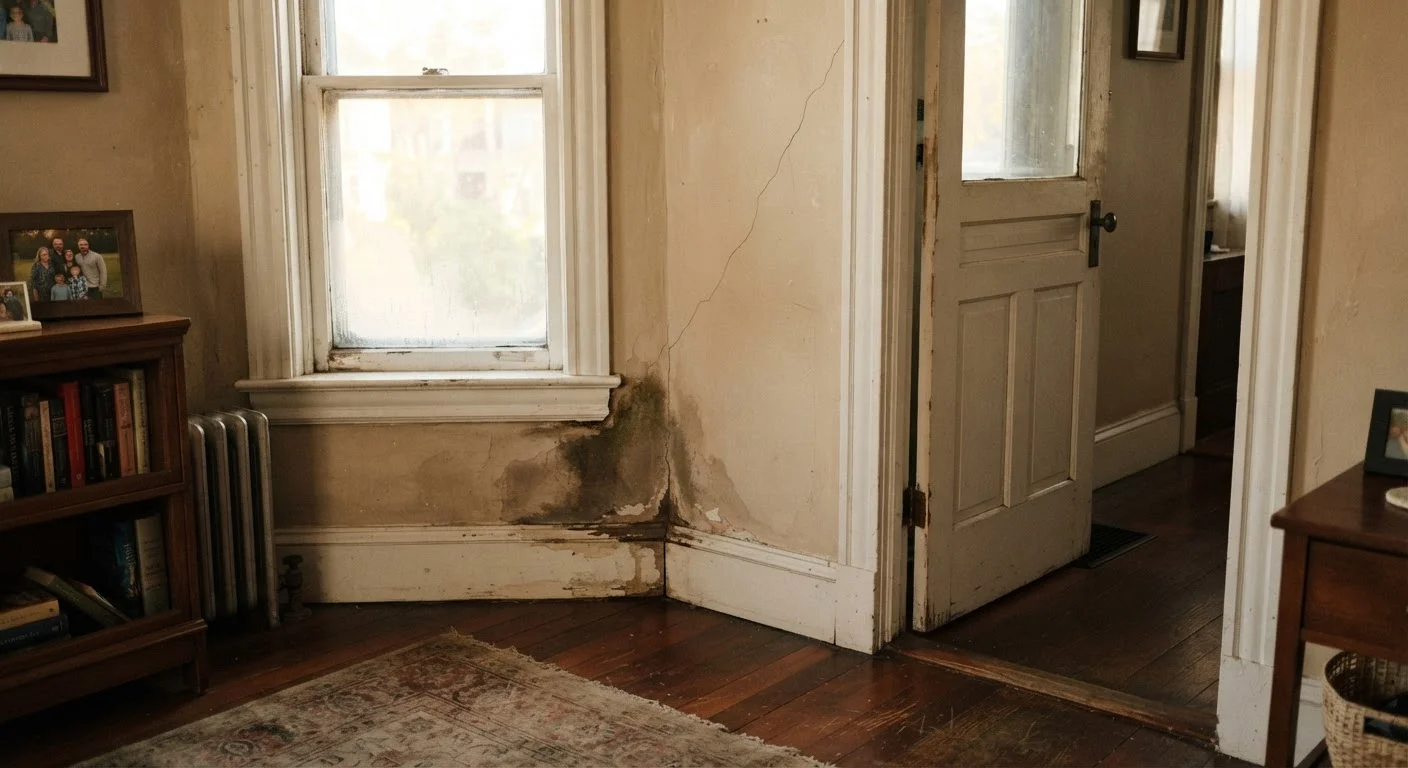
When Your House Starts Sending Signals
Homes communicate in subtle ways - a door that suddenly won't latch, a faint smell you can't quite place, a light switch that flickers for no obvious reason. These aren't random annoyances. They're often early indicators that something in your home's systems or structure deserves a closer look.
The good news is that most of these warning signs are visible long before they become expensive emergencies. Knowing what to look for - and what each symptom might mean - puts you in a much stronger position to maintain your home proactively rather than reactively. This list walks through some of the most common signals homeowners tend to overlook, and what they typically suggest.
When to Call a Professional Immediately
Some warning signs - such as the smell of gas, sparking outlets, a sagging roofline, or standing water near the foundation - require professional attention without delay rather than a watch-and-wait approach. If you're ever uncertain whether a symptom is urgent, erring on the side of getting a qualified evaluation is always the safer choice. Licensed contractors, structural engineers, and home inspectors each have specific areas of expertise depending on the symptom in question.
Common Warning Signs and What They Mean
Doors or windows that suddenly stick or won't close properly
When a door or window that previously operated smoothly starts sticking, binding, or misaligning with its frame, the cause is rarely the door itself. More often, the culprit is movement in the home's framing or foundation. Seasonal moisture changes cause wood to expand and contract, which can produce temporary sticking - but if the problem persists across seasons, it may suggest that part of the structure has shifted.
Sticking on one side of a door while a gap opens on the other is a particularly telling pattern. It's worth noting which doors are affected and whether the issue is spreading, as that context helps a qualified inspector or contractor assess the situation accurately.
Persistent sticking across seasons may signal foundation or framing movement, not just humidity.
Musty or earthy odors in specific rooms
A persistent musty smell - particularly in basements, crawlspaces, bathrooms, or rooms adjacent to exterior walls - often indicates moisture where it shouldn't be. Mold and mildew produce distinctive odors even before they're visible, meaning a smell without obvious staining still warrants investigation.
Common sources include slow plumbing leaks inside walls, condensation around poorly insulated pipes, and inadequate bathroom ventilation. If the smell intensifies after rain or humid weather, water intrusion from the exterior is worth investigating. Ignoring persistent musty odors tends to allow moisture damage and potential mold growth to worsen over time.
Musty odors often signal hidden moisture long before any visible mold appears.
Hairline cracks in walls, ceilings, or above door frames
Not all cracks are created equal. Thin, diagonal cracks radiating from the corners of door frames or windows are among the more meaningful patterns - they frequently indicate differential settlement, meaning one part of the foundation has shifted relative to another. Horizontal cracks in basement walls can be especially serious and typically warrant professional evaluation promptly.
By contrast, fine vertical cracks in drywall and minor hairline cracks along ceiling seams are often the result of normal seasonal movement and temperature cycling. The shape, location, and direction of a crack all matter. If you're uncertain about a crack - especially near load-bearing walls - it's worth consulting a structural professional. Our guide on load-bearing walls explains why certain wall evaluations should never be a DIY guess.
Diagonal cracks above door frames often point to differential foundation settlement.
Unexplained increases in energy bills
A meaningful and sustained jump in heating or cooling costs - without a change in usage habits or utility rates - usually points to a problem with the building envelope or HVAC system. Common causes include failing insulation, air sealing gaps around windows or doors, a deteriorating duct system, or an aging furnace or air conditioner that is working harder to maintain the same output.
Running a basic draft test (holding your hand or a lit incense stick near window edges, outlets, and door frames on a windy day) can reveal surprising air leaks. A professional energy audit provides more precise findings and is offered by many utility companies at low or no cost.
A sustained rise in energy bills without lifestyle changes often points to insulation or HVAC failure.
Water stains on ceilings or walls
A brown ring or yellowed patch on a ceiling is one of the clearest signals a home can send: water has been - or still is - present where it shouldn't be. These stains are often the visible result of roof leaks, plumbing leaks from an overhead fixture, or condensation from an HVAC component.
The tricky part is that the stain and the source are rarely in the same spot. Water travels along structural members before it finds somewhere to pool, so the actual leak point may be several feet away. If the stain is dry and old, the source may have resolved - but checking that no ongoing moisture remains is important, since sustained dampness creates conditions favorable to mold growth and wood rot.
Ceiling water stains rarely mark the exact source - the leak point is often several feet away.
Flickering lights or frequently tripping breakers
Occasional flickering when a large appliance starts up is generally normal - the motor draws a surge of power momentarily. But lights that flicker persistently, dim noticeably when other devices run, or breakers that trip repeatedly without obvious overloading can indicate wiring issues that deserve professional attention.
Possible causes range from loose connections in the panel or at outlets, undersized circuits, to more serious concerns like deteriorated wiring in older homes. Electrical faults are among the leading causes of residential fires, so this is one area where DIY investigation has clear limits. A licensed electrician should evaluate recurring electrical anomalies - this is not a situation to defer indefinitely.
Repeatedly tripping breakers or persistent flickering warrant a licensed electrician's evaluation.
Keep a Simple Home Symptom Log
When you notice a new sound, smell, stain, or structural change, jot down the date, location, and a brief description. This running record helps you track whether symptoms are worsening over time and gives any contractor or inspector useful context. Even a note in a phone app takes less than a minute and can be genuinely valuable at inspection time.
Staying Ahead of Your Home's Wear and Tear
None of these signals require immediate panic, but all of them deserve attention rather than dismissal. A useful habit is to do a slow walk-through of your home every few months, paying attention to doors, windows, walls, ceilings, and utility costs with fresh eyes - as if you were a buyer seeing the property for the first time.
For a more thorough approach, consider pairing this kind of ground-floor check with an overhead assessment. Our attic inspection checklist can help you spot insulation gaps, ventilation issues, and early moisture signs before they work their way into your living spaces.
It also helps to question assumptions. Many homeowners delay action because of common beliefs that turn out to be inaccurate - the kind discussed in our piece on home maintenance myths. And if past shortcuts in your home's history are a concern, our article on improvement project shortcuts is worth a read. Staying curious and consistent is the simplest long-term maintenance strategy available to any homeowner.