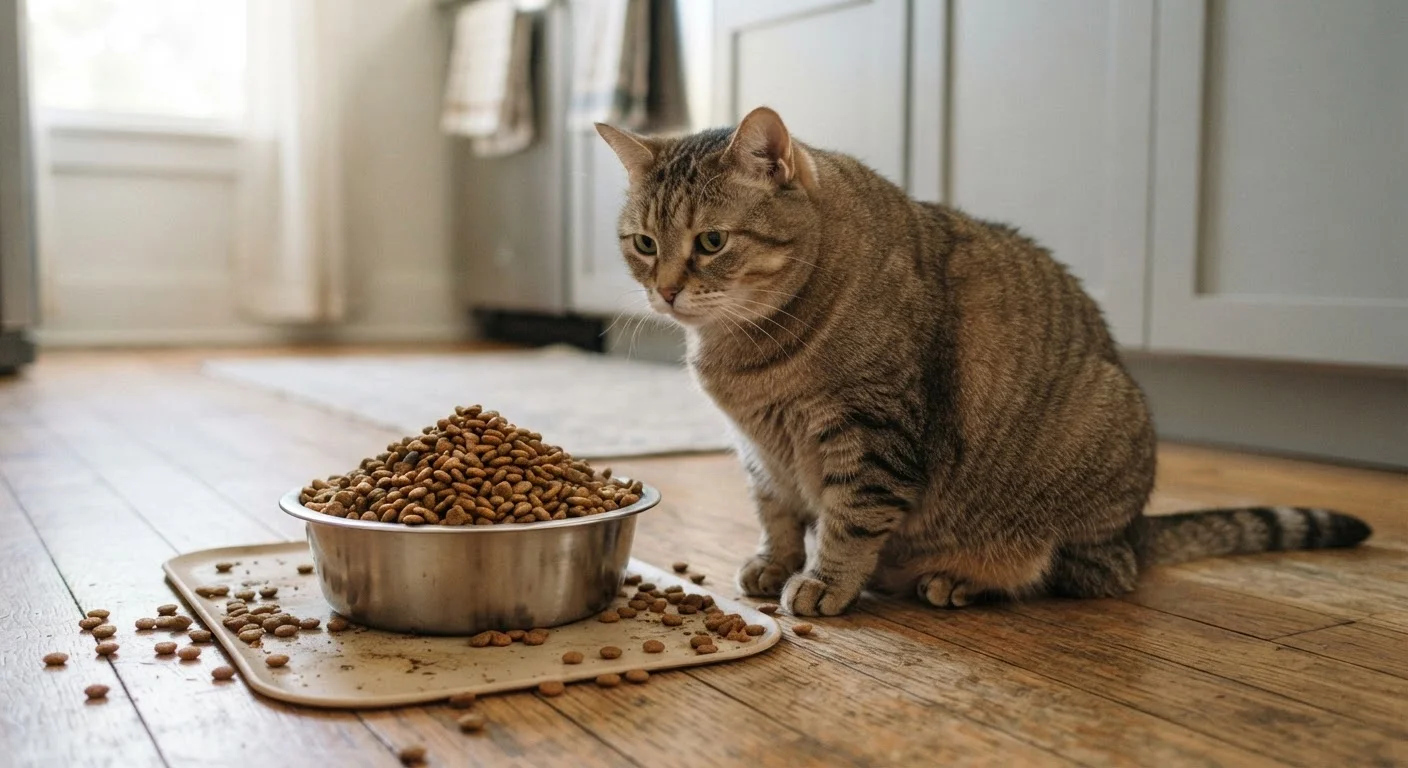
Why Feline Obesity Is a Feeding Problem First
Roughly half of all domestic cats in the United States are classified as overweight or obese, according to data gathered by veterinary associations over the past decade. Unlike wild cats, which hunt multiple small prey daily and rarely overeat, pet cats live in environments where food is abundant, movement is limited, and portion control depends entirely on human decisions.
Understanding what's going wrong requires looking at what cats actually need nutritionally and then examining where common feeding habits diverge from those needs. The mismatch between how owners feed and how cats are biologically designed to eat is where most excess weight originates.
The Problem With Free-Feeding and Oversized Portions
Free-feeding - leaving a full bowl of dry kibble available at all times - is extremely common and genuinely problematic for most cats. Cats allowed to graze continuously often consume 20 to 30 percent more calories than their bodies require, especially since dry food is calorie-dense. An average adult indoor cat typically needs only 180 to 250 calories per day, yet a standard cup of dry kibble can contain 300 to 400 calories. Even slightly generous portions, repeated twice a day, can add meaningful weight over months.
Wet food is not automatically portion-safe either. Many owners serve canned food by the can rather than by the measured serving, unaware that a single standard can may exceed a small cat's daily caloric need. Choosing between food types involves real trade-offs - the differences between wet and dry cat food go beyond texture and include calorie density, hydration, and satiety.
Habits That Quietly Accelerate Weight Gain
Several feeding behaviors contribute to gradual, hard-to-notice weight gain. Treats are often the overlooked variable - many commercial cat treats are high in fat and calories, and owners rarely account for them in daily totals. Feeding table scraps, offering extra portions in response to persistent begging, or using food as the primary form of enrichment all compound the problem.
Multi-cat households add another layer of complexity. Dominant cats may eat from multiple bowls, and owners can easily underestimate total intake per individual. Feeding cats separately and monitoring each one's consumption is usually necessary to maintain accurate portion control.
It's also worth noting that cats' caloric needs shift significantly with age, reproductive status, and activity level. A kitten, a nursing queen, a sedentary senior, and a newly spayed adult all require meaningfully different daily calorie amounts. Using a single, unchanged feeding approach across a cat's life stages is a common and correctable mistake.
Best Practices for Structured, Portion-Controlled Feeding
Transitioning from free-feeding to structured meals takes patience but pays real dividends for a cat's long-term health. Most adult cats do well with two measured meals per day, served at consistent times. This approach mimics the natural rhythm of hunting, supports better digestion, and gives owners a clear view of whether their cat's appetite is normal - a detail that matters during annual veterinary wellness exams.
If you're introducing a cat to a new home, building good feeding habits from day one is far easier than correcting established ones later. Our guide on bringing a cat home for the first time covers how to establish routines that support healthy weight from the start.
This article is for general informational purposes only and does not constitute veterinary advice. Always consult a licensed veterinarian before making changes to your cat's diet or if you have concerns about your cat's weight or health.