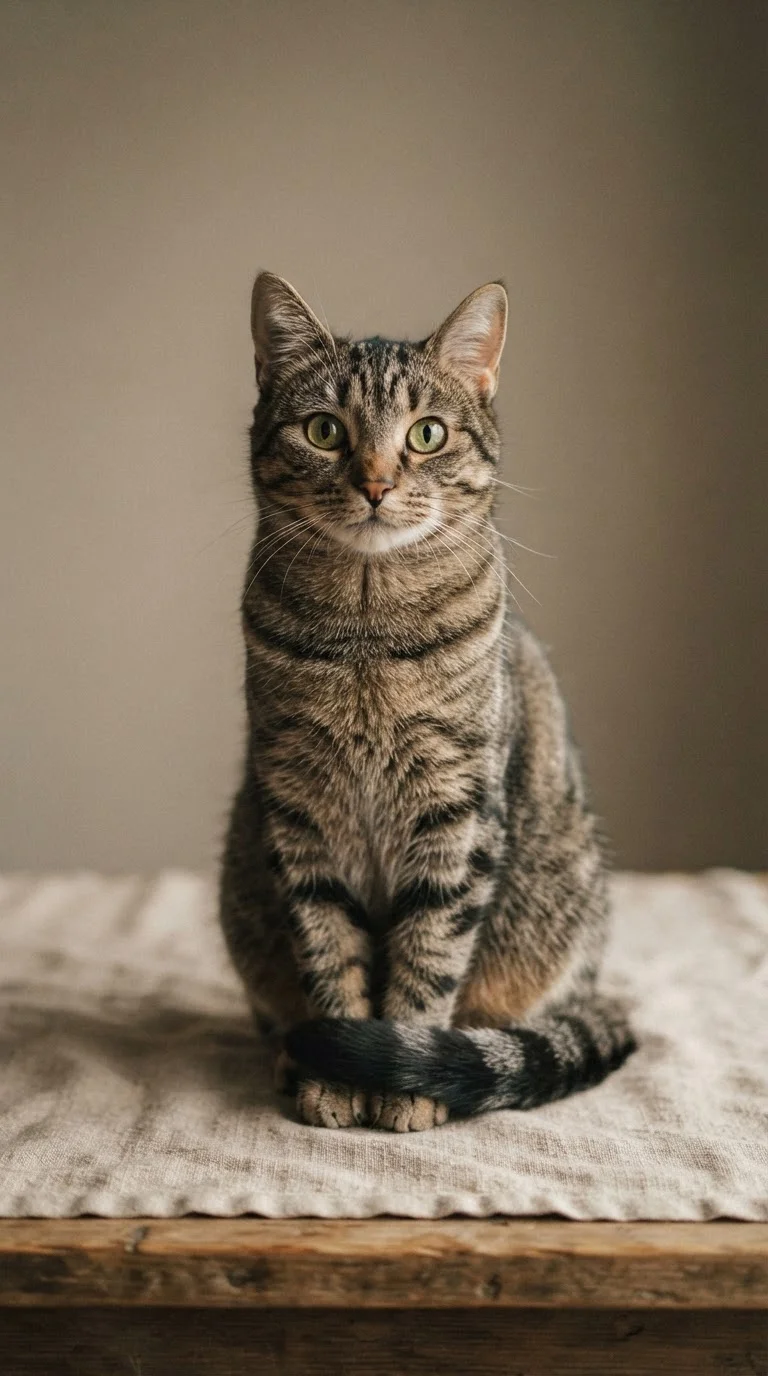
Why Feline Body Language Matters
Cats are often misread as aloof or unpredictable, but they are, in fact, highly expressive animals. Unlike dogs, cats evolved as both predators and prey, which shaped a communication style that is subtle, layered, and easily missed by the untrained eye. Reading your cat's signals accurately helps you respond to their needs before stress or discomfort escalates - and builds the kind of trust that makes cats genuinely sociable companions.
This reference covers the four key signal zones - ears, eyes, tail, and posture - along with vocalizations. For new owners, our guide to bringing a cat home for the first time provides broader behavioral context to pair with this quick reference.
| Number of muscles controlling each ear | Approximately 32 (Commonly cited in comparative anatomy literature) |
| Tail-up greeting meaning | Confidence and friendly intent |
| Slow blink function | Trust and social bonding signal |
| Belly exposure | Trust display - not always a petting invitation |
| Tail lashing (side to side) | Irritation or overstimulation - back off signal |
| Ears pinned flat | Fear or offensive aggression |
Reading Ears, Eyes, and Tail
Ears are among the most reliable indicators of a cat's emotional state. Forward-facing, slightly rounded ears signal relaxed curiosity or contentment. Ears swiveled sideways - sometimes called "airplane ears" - indicate growing anxiety or irritation. Ears pinned flat against the skull signal fear or aggression, and any interaction at that point risks a scratch or bite.
Eyes carry equally important meaning. Slow, deliberate blinking directed at you is a trust signal - many behaviorists describe it as a feline equivalent of a relaxed smile. Dilated pupils in bright light suggest fear or high arousal, while constricted pupils paired with a hard stare often indicate offensive aggression. A half-closed, soft gaze is a sign of deep comfort. If you notice sudden changes in your cat's gaze or eye appearance, see our guide to signs your cat may be in pain, as eye changes can sometimes signal a health issue.
Tail position is a continuous communication channel. A tail raised straight up signals confidence and a friendly greeting - this is the posture cats use when approaching littermates or trusted humans. A tail curved gently at the tip suggests playfulness. A low-carried or tucked tail indicates submission or fear. A puffed-up tail (piloerection) means the cat feels threatened and is attempting to appear larger. A rapidly lashing tail - side to side - is a clear signal to back off; this is not the same as a dog's happy wag.
Piloerection
The involuntary puffing up of fur along the tail and spine, caused by adrenaline. It makes the cat appear larger and signals fear or defensive aggression.
Bunting
Head-pressing or cheek-rubbing against a person or object to deposit scent from facial glands. It is a social bonding and territory-marking behavior.
Slow Blink
A deliberate, unhurried closing and reopening of the eyes directed at another individual. In cats, it functions as a trust and affiliative signal.
Displacement Behavior
An action a cat performs when in conflict between two drives - such as grooming suddenly during a tense interaction. It indicates stress or ambivalence, not a shift in focus.
Affiliative Signal
Any body language or vocalization that communicates friendliness, trust, or a desire for social closeness, such as tail-up greetings or trilling.
Posture, Touch, and Vocalizations
Whole-body posture tells the full story when paired with individual signals. A cat rolling onto its back and exposing its belly is displaying trust, but this is not always an invitation to touch - many cats will react defensively if you reach for their abdomen, as it is a vulnerable area. Crouching low with weight shifted to the rear indicates readiness to flee or defend. A cat that bumps its head against you (bunting) is depositing scent and reinforcing social bonds - this is a strong affiliative signal.
Vocalizations add another layer. Chirping or chattering at birds or insects is predatory excitement, not frustration. A trill or chirp directed at you is typically a friendly greeting. Growling, hissing, or spitting are unambiguous warnings that should be respected immediately. Excessive or sudden meowing in an adult cat can signal distress, hunger, or - particularly in senior cats - cognitive or medical changes that warrant veterinary attention.
Understanding these signals in isolation is useful, but context matters enormously. A puffed tail in a new environment means something different than a puffed tail during play. For a deeper look at the logic behind specific behaviors, see why cats do the puzzling things they do.
This article is for general informational purposes only. If your cat shows sudden, dramatic behavioral changes, consult a licensed veterinarian to rule out underlying health conditions.