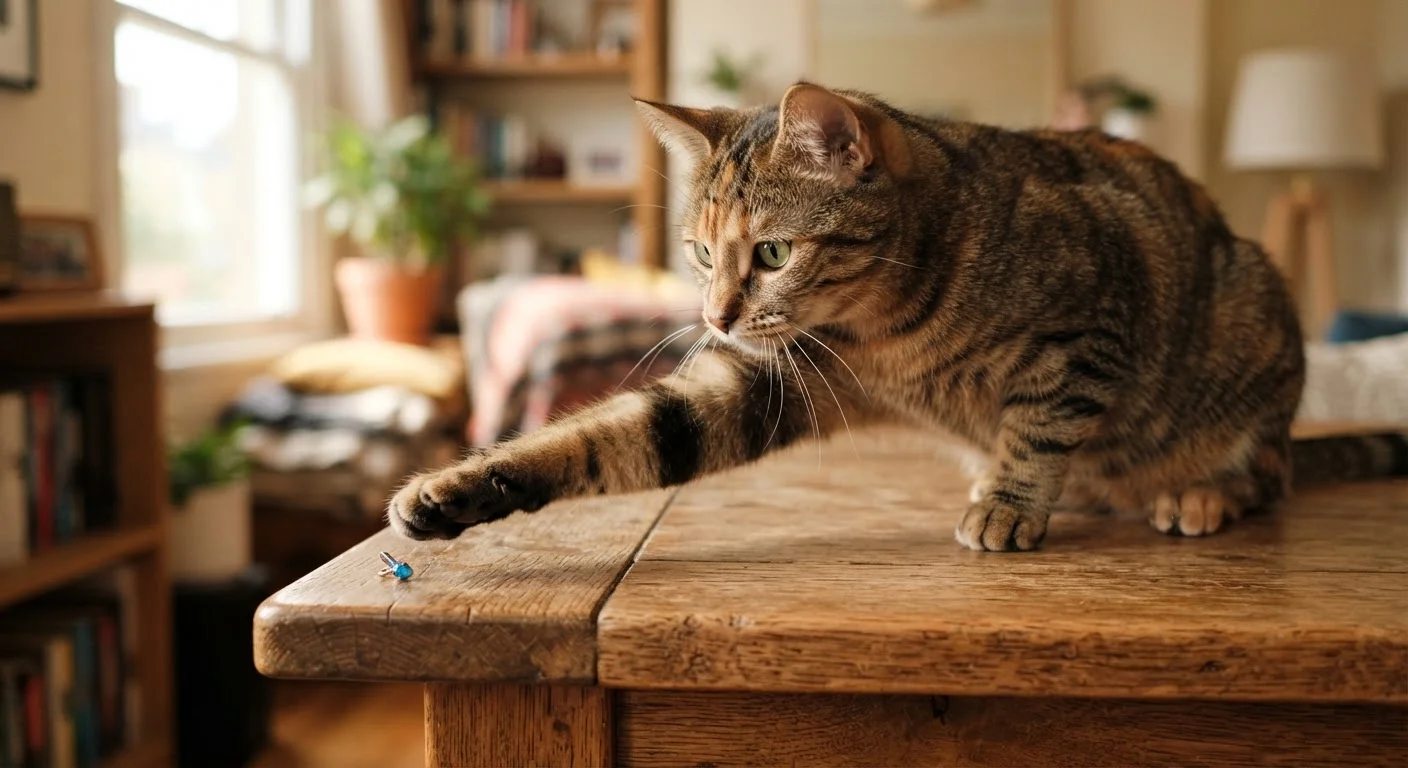
The Table-Clearing Habit: Predatory Curiosity, Not Sabotage
Your cat locks eyes with you, places one deliberate paw on your coffee mug, and pushes it off the edge. It feels personal. It isn't.
Cats have extraordinarily sensitive paw pads packed with touch receptors. Nudging an object and observing how it moves is essentially the same neural process a cat uses when investigating potential prey - testing for a reaction. Objects near edges are irresistible because they offer the most dramatic feedback. If your reaction (jumping up, making noise) follows consistently, the behavior gets reinforced through attention-seeking as well.
The fix isn't punishment - it rarely works with cats and can erode trust. Instead, reduce the reward by reacting calmly, clear high-value items from surfaces, and redirect that curiosity with puzzle feeders or interactive toys that give the same tactile payoff without consequences.
Redirect Before You Redirect
If your cat is fixated on sweeping things off surfaces, offer an alternative outlet before removing the temptation. A textured puzzle feeder placed near their favorite perching spot gives their paws and brain the same sensory engagement - without the collateral damage to your belongings.
Midnight Zoomies, Chattering, and Other High-Energy Behaviors
Frenetic Random Activity Periods - commonly called FRAPs or zoomies - are sudden bursts of sprinting, leaping, and apparent chaos. They're most common in the early morning or late evening, which aligns with cats' natural crepuscular (dawn-and-dusk) activity patterns. Indoor cats, especially those who spend long hours alone, often have surplus energy that gets compressed and released in short explosive bouts.
More structured play sessions before bed - at least two 10-15 minute sessions using wand toys or similar interactive play - can reduce the frequency and timing of nighttime zoomies. For new cat owners, a solid introduction to feline routine covers how to build enrichment habits from day one.
Window chattering is another behavior that startles first-time owners. That rapid, clicking jaw movement when a cat spots a bird or squirrel is an involuntary response tied to predatory excitement. It may mimic the killing bite, or simply reflect frustrated arousal - either way, it's completely normal and needs no intervention.
Crepuscular Doesn't Mean Nocturnal
Cats are often called nocturnal, but they're more accurately crepuscular - naturally most active around dawn and dusk. Domestic cats can shift their schedules somewhat to match their owner's routine, especially with consistent interactive play. If your cat's nighttime activity is severely disrupting sleep, a conversation with your vet can help rule out underlying causes like hyperthyroidism or anxiety.
Slow Blinks, Kneading, and the Language of Cat Affection
Cats are often misread as indifferent, but they communicate affection through subtle signals. The slow blink - a long, deliberate closing and reopening of the eyes - is one of the clearest. Research published in Scientific Reports found that cats slow-blink more at humans who slow-blink at them first, suggesting it functions as a positive social signal. Try it with your cat: make soft eye contact and slowly close your eyes. A returned slow blink is a meaningful response.
Kneading - that rhythmic pushing motion against soft surfaces - originates in kittenhood, when nursing stimulates milk let-down. Adult cats retain it as a comfort behavior associated with warmth and safety. If your cat kneads your lap, it's a sign of deep relaxation and trust.
For a broader breakdown of how posture, tail position, and ear angle carry meaning, the feline body language visual reference is a useful companion to this article.
When Quirky Becomes a Warning Sign
Most of the behaviors above are normal expressions of feline instinct. The important distinction is between established quirks and sudden changes. A cat who has always knocked things off tables is expressing curiosity. A cat who abruptly starts hiding, stops grooming, or avoids the litter box after years of reliable use is telling you something different.
Cats instinctively conceal signs of pain or illness - a survival trait from their wild ancestors. That means behavioral shifts are often the earliest signal that something is wrong. Signs your cat may be in pain explains the subtle cues that are easy to overlook. Separately, litter box avoidance is so commonly misread as behavioral defiance that it deserves its own attention - litter box problems have a range of medical and environmental causes that owners often miss.
If your cat's behavior shifts noticeably without an obvious trigger - a move, a new pet, a change in schedule - contact your veterinarian. Behavioral changes are clinical data, and vets use them to help identify health issues early.
This article is for general informational purposes only and is not a substitute for professional veterinary advice. Always consult a licensed veterinarian with concerns about your cat's health or behavior.