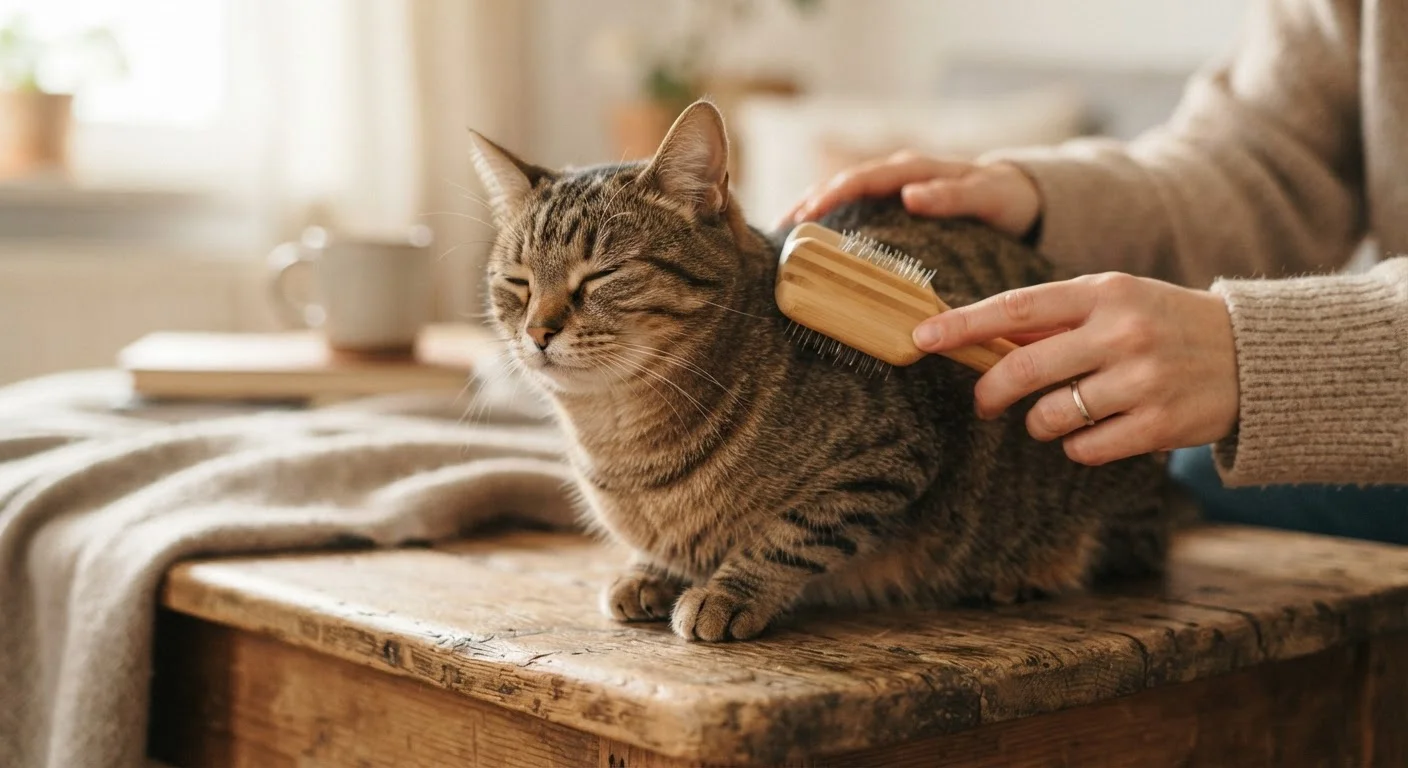
Why Home Grooming Matters Beyond Appearances
Regular grooming is a health practice as much as an aesthetic one. Brushing removes loose fur that would otherwise be ingested during self-grooming, reducing the frequency and size of hairballs. It also gives you routine, hands-on contact with your cat's body - which means you're far more likely to notice early signs of lumps, skin irritation, parasites, or weight changes between annual wellness exams.
Nail maintenance protects your furniture, but more importantly it prevents nails from curling back into the paw pad - a painful condition that develops gradually in cats who don't scratch on appropriate surfaces or receive regular trims. Ear checks catch early signs of infection or mite infestation before they become serious.
The relationship built during calm grooming also matters. Cats who are handled gently and regularly tend to be less stressed during veterinary visits and more comfortable with physical examination generally. If you're still in the early days of cat ownership, our new cat owner preparation checklist covers the supplies worth having on hand from day one.
Slicker brush or de-shedding comb
Removes loose fur, prevents mats, and distributes natural skin oils through the coat.
Cat nail clippers
Designed for feline nail anatomy; scissors-style or guillotine clippers provide clean, safe cuts.
Cotton balls
Used to gently wipe the outer ear canal during ear inspections.
Vet-approved ear cleaning solution
Helps loosen mild debris from the outer ear during routine checks.
Styptic powder
Stops minor bleeding immediately if a nail quick is accidentally clipped.
High-value treats
Reinforces calm behavior during grooming and builds positive associations with the process.
Reading Your Cat's Stress Signals
The most common grooming mistake isn't technique - it's ignoring what the cat is communicating. Feline stress signals range from subtle to obvious, and catching them early prevents grooming from becoming a feared event.
- Early signals: skin twitching, tail flicking, ears rotating backward, dilated pupils, cessation of purring
- Escalating signals: low growling, attempts to leave, turning the head to face you, crouching low
- Stop immediately: hissing, swatting, biting, flattened ears, yowling
A cat who has reached escalation needs the session to end - not to be restrained so you can finish. Forcing through these signals creates lasting negative associations that make every future session harder. Short, frequent, positive sessions always outperform long, stressful ones.
Know When to Stop and Call the Vet
Home grooming is for routine maintenance - not for addressing medical issues. If you notice persistent mats close to the skin, unusual lumps or sores, excessive scratching at ears, eye or nasal discharge, or significant changes in coat quality, these are veterinary concerns. Attempting to handle these at home can delay diagnosis and cause your cat unnecessary discomfort.
Step-by-Step: The Full Grooming Routine
Follow these steps in order, and feel free to split them across multiple sessions - especially when starting out. There's no rule that brushing, nail trimming, and ear checks must happen in a single sitting.
What you will need
Choose the right moment and setting
Grooming goes far better when your cat is already relaxed - after a play session or meal, not mid-zoomies. Choose a quiet room, eliminate other pets, and keep the session short: five to ten minutes is plenty to start. Sit on the floor or a low surface rather than restraining your cat on a table, which can feel threatening.
Introduce tools before using them
Place the brush, clippers, or cotton balls near your cat and let them sniff each item. Reward calm investigation with a treat. On a separate occasion, gently touch the tool to your cat's body without using it - again rewarding tolerance. This desensitization phase is the single most effective thing you can do to prevent lifelong grooming resistance.
Brush the coat in the direction of fur growth
Begin at the neck and work toward the tail, using gentle strokes that follow the direction of fur growth. Pay extra attention to areas prone to matting: behind the ears, under the arms, and along the belly. Long-haired cats may need daily brushing; short-haired cats typically benefit from one to three sessions per week. If you encounter a mat, do not pull - hold the base of the mat firmly against the skin and work it apart with your fingers or a mat-splitter before attempting to brush through.
Trim nails using proper two-step technique
Gently press the toe pad to extend the nail. Identify the pink quick - the blood vessel running through the center of the nail - and clip only the clear, curved tip beyond it. Clip one or two nails per session if your cat is new to the process, rewarding each clip. Most cats need a trim every two to three weeks.
Inspect and clean the outer ears
Look into each ear for redness, swelling, dark debris, or an unusual odor - all of which warrant a veterinary visit rather than home cleaning. For a healthy ear, use a cotton ball (dampened with vet-approved ear cleaning solution if desired) to gently wipe only the visible outer ear folds. Never insert anything into the ear canal.
End every session on a positive note
Stop before your cat shows frustration - flattened ears, a lashing tail, skin rippling, or attempts to move away are clear signals to pause. Give a treat, offer calm praise, and allow your cat to walk away freely. Ending sessions voluntarily preserves trust and makes the next session easier. Over time, most cats develop genuine tolerance - some even enjoy parts of the routine.
Bathing Is Rarely Necessary for Cats
Most cats are highly effective self-groomers and rarely need a bath. Exceptions include hairless breeds, cats who've gotten into something toxic or sticky, and cats with certain skin conditions diagnosed by a vet. If a bath is needed, use lukewarm water, a cat-safe shampoo, and keep the session as brief and calm as possible - never submerge a cat's head.
When to Ask a Professional for Help
Home grooming covers the routine - but some situations genuinely call for professional intervention. A certified cat groomer can safely handle severe matting, full sanitary trims, and long-haired coat maintenance that goes beyond what most owners can reasonably manage. If your cat's fear response is severe enough that grooming consistently results in biting or significant distress, speak with your veterinarian: behavioral strategies, or in some cases veterinary-supervised sedation for necessary grooming, may be more humane options than repeated stressful home attempts.
Never Use Human Grooming Products on Cats
Human shampoos, conditioners, and ear drops are formulated for different skin pH levels and may contain ingredients toxic to cats - including essential oils and certain preservatives. Always use products specifically formulated and labeled safe for feline use, and when in doubt, ask your veterinarian before applying anything new to your cat's skin or coat.
Keeping your cat well-groomed at home is one of many ways to stay attuned to their overall wellbeing. Pair it with regular enrichment - a mentally stimulated indoor cat is generally calmer and easier to handle - and your grooming routine will feel less like a battle and more like a natural part of daily care.