What's Actually Happening in Your Dog's Brain
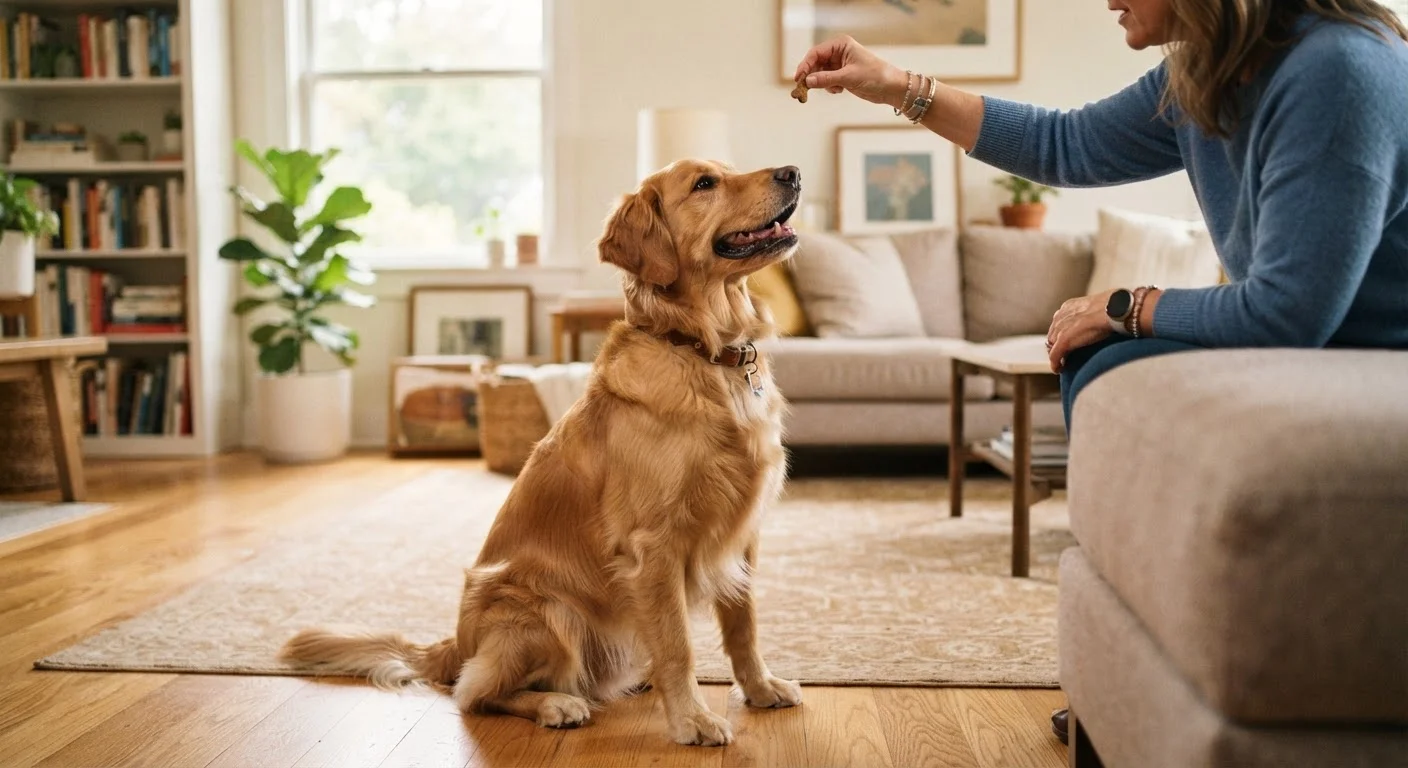
When your dog sits on command and receives a treat, something measurable happens neurologically. The brain releases dopamine - a neurotransmitter associated with anticipation and reward - reinforcing the neural connection between the behavior and the positive outcome. Over repeated trials, this connection strengthens until the behavior becomes reliably performed. This is the foundation of operant conditioning, specifically the principle of positive reinforcement: adding something desirable immediately after a behavior increases the likelihood that behavior will recur.
Dogs are highly capable associative learners. Their brains are constantly mapping cause and effect. Reward-based training leverages this by making the dog an active participant in learning - they figure out that a specific action produces something good. Research in applied animal behavior has consistently shown that this approach not only teaches behaviors effectively, but also produces dogs that are more confident, engaged, and willing to work with their owners.
“The strength of positive reinforcement as a training method lies not just in what it teaches, but in how it shapes the relationship between animal and handler - building a working partnership based on trust rather than avoidance.”
— American Veterinary Society of Animal Behavior, Professional organization publishing position statements on humane animal training
Best Practices for Effective Positive Reinforcement
Understanding the science is only the first step. Applying it well requires attention to several key variables that determine whether training sticks or fades.
Deliver rewards within one to two seconds of the target behavior
The dog's brain associates the reward with whatever it was doing at the moment of delivery. A delayed treat can accidentally reinforce a different behavior - for example, rewarding a dog for standing up when you intended to reward the sit. Precision timing is the single most impactful variable in early training.
Use high-value rewards for new or difficult behaviors
Not every reward carries equal motivational weight for every dog. Novel, especially palatable treats - small pieces of chicken, cheese, or soft commercial treats - produce stronger dopamine responses and accelerate learning for challenging skills. Once a behavior is reliable, you can shift to lower-value rewards or intermittent reinforcement to maintain it.
Keep training sessions short and end on success
Dogs learn better in frequent, brief sessions than in long, exhausting ones. Mental fatigue reduces responsiveness and can increase frustration for both dog and handler. Ending each session with a behavior the dog performs well builds positive associations with the training context itself.
Maintain consistency across all people in the household
Dogs generalize rules slowly. If one family member allows jumping on the couch while another does not, the dog receives conflicting signals and the behavior never fully extinguishes. Shared cues, rules, and reward criteria accelerate learning and reduce confusion.
Pair verbal markers or a clicker with rewards to build a communication bridge
A consistent marker - a click or a short word like 'yes' - tells the dog precisely which moment earned the reward, bridging the gap between behavior and treat delivery. This is especially valuable when the treat takes a few seconds to reach the dog's mouth.
Quick Wins to Start Today
You don't need a formal training program to begin. These immediately actionable steps can meaningfully improve your dog's responsiveness starting with your next interaction.
Training also intersects naturally with other aspects of your dog's daily life. If you're thinking through how your dog spends time at home, our guide on crate training vs. free roaming offers useful context for structuring safe, low-stress environments that support learning. And for dogs that need more mental and physical outlets, meeting your dog's activity needs year-round covers how exercise supports overall behavior.
For those working with rescue dogs or adult pets new to structured learning, the principles here apply broadly - though the pace may differ. See our article on socializing an adult dog for guidance on building trust and confidence with dogs that didn't have early training foundations.
This article is for general informational and educational purposes only. For individualized guidance on your dog's behavior or training needs, consult a certified professional dog trainer or your veterinarian.